As an Amazon Associate I earn from qualifying purchases. These links may earn this site a commission when you buy, at no extra cost to you.
Choosing the right oil for your air compressor motor can extend life, reduce wear, and keep performance consistent across seasons. This guide reviews five well-regarded options, highlighting how each performs under typical American workshop conditions—from home garages to small automotive shops. We compare viscosities, synthetic blends, and compatibility with rotary, vane, screw, and reciprocating compressors. Use the buying guide at the end to match oils to your machine’s specifications and climate.
| Product | Brand | Viscosity/Type | Best For |
|---|---|---|---|
| Milton 1002 High Performance Conventional Air Compressor Oil ISO-100 | Milton | ISO-100, Conventional | General purpose, budget-friendly |
| TRIAX Kompressor MV 100 SAE 30, Full Synthetic | Triax | SAE 30, Full Synthetic | High-temp, heavy-duty duties |
| DEWALT Compressor Oil, 1-Quart | DEWALT | 1-Quart, Conventional | Standard compressors, easy availability |
| Mag 1 Air Compressor Oil 1 Gallon | Mag 1 | Multi-Vis/Non-Detergent style | Smooth operation, extended life |
| TRIAX Kompressor MV 46 SAE 20, Full Synthetic | Triax | SAE 20, Full Synthetic | Low-temperature performance, longevity |
Milton 1002 High Performance Conventional Oil

Milton 1002 is a conventional ISO-100 compressor oil designed for broad compatibility with most oil-lubricated units. The oil’s conventional formulation emphasizes dependable lubrication without detergents, helping minimize valve carbon buildup in many reciprocating systems. It is packaged in a one-gallon container, suitable for home shops and light commercial use. The key benefit is predictable performance across typical operating temperatures, making it a reliable first choice when OEM recommendations permit conventional oils.
TRIAX Kompressor MV 100 Full Synthetic Oil

TRIAX MV 100 is a full synthetic, industrial-grade oil designed to deliver exceptional load-bearing capacity and film strength. It supports high-temperature operation and extreme climates, reducing metal-to-metal contact. This multi-viscosity fluid performs well across a wide temperature range, which can simplify maintenance by reducing seasonal oil changes. The formulation targets longevity, often delivering extended service life and robust bearing protection, making it a strong option for busy shops and equipment with demanding cycles.
DEWALT Compressor Oil, 1-Quart
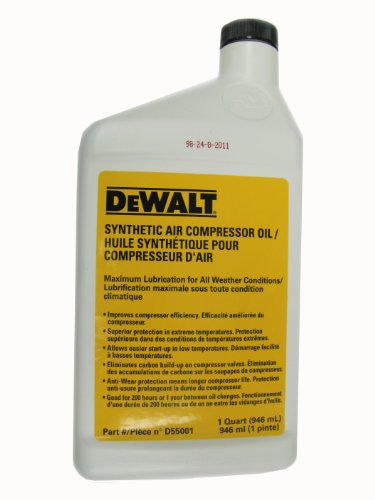
DEWALT’s 1-quart compressor oil is a conventional, single-viscosity option designed for compatibility with a broad range of oil-lubricated compressors. Its compact packaging makes it convenient for on-site top-offs and small maintenance jobs. The oil emphasizes steady lubrication and straightforward usage, aligning with standard OEM recommendations for many mid-range machines. This option is well-suited for users who prefer a familiar, reliable product without additional synthetic benefits.
Mag 1 Air Compressor Oil, 1 Gallon

Mag 1 Oil is a multi-viscosity, non-detergent blend designed to smooth compressor operation and extend component life. The formula emphasizes anti-foam properties and long-lasting lubrication to help prevent buildup and wear in various units, from portable compressors to larger shop machines. This option is suitable for users who value a balance between protective film strength and ease of maintenance in several climates.
TRIAX Kompressor MV 46 / SAE 20 Synthetic Oil

TRIAX MV 46 SAE 20 stands out with full synthetic formulation designed for long life and high-temperature resilience. The MV 46 line emphasizes extended service life, often claiming up to 20,000 hours of operation with proper filtration and maintenance. Its multi-viscosity approach makes it versatile across seasons and climates, reducing the need for frequent oil changes. This oil targets demanding commercial-duty compressors and those operating in tough environments.
Wolf’s Head Hydraulic Compressor Non Detergent Oil

Wolf’s Head 30 Non-Detergent Oil is a practical choice for reciprocating compressors and hydraulic systems that specify API SA or ashless SAE 30/ISO 100. The non-detergent formulation helps prevent residue buildup and works well in classic equipment or light-duty applications. This option is suitable for users maintaining older systems or those who follow specific OEM recommendations for mineral-based lubricants.
TRIAX Kompressor MV 46 / SAE 20 Synthetic (Additional)

This entry reinforces TRIAX MV 46 vs MV 100 distinctions for readers comparing synthetic oils. The MV 46 SAE 20 variant emphasizes longevity and steady performance across fluctuating temperatures, with its synthetic base providing more stable lubrication and reduced volatility during heavy-duty cycles. It remains a strong option for workshop environments where reliability is critical.
Buying Guide: Key Purchase Considerations And Comparisons
- Oil type: Conventional vs. synthetic. Conventional oils are affordable and adequate for many older or lightly used machines, while synthetic oils offer superior stability under high heat and heavy use, often providing longer service life.
- Viscosity and grade: Match the manufacturer’s recommendation (often SAE 20, 30, or ISO-100). Multi-viscosity blends simplify seasonal changes but verify compatibility with your compressor seals and gaskets.
- Temperature tolerance: For shops in hot climates or with continuous duty, high-temperature formulas reduce breakdown and wear. For cold environments, lower-viscosity options help start-up wear.
- Detergents and detergency: Non-detergent oils are common for certain compressors and hydraulics; detergents can remove varnish but may create sludge in older units. Follow OEM guidance.
- Longevity and maintenance: Some oils advertise very long service life (e.g., 20,000 hours). Real-world results depend on filtration, air intake quality, and maintenance schedules.
- System compatibility: Reciprocating, rotary screw, vane, and hydraulic systems have different lubrication needs. Ensure the selected oil is suitable for your compressor type and any OEM-restricted formulations.
- Availability and packaging: Quart or gallon sizes impact cost per use and convenience. Keep an extra on-hand supply to avoid mid-project delays.
- Environmental and safety considerations: Ensure proper disposal of used oil and follow local regulations. Some synthetic oils require specific handling compared to mineral-based products.
The best choice depends on your compressor’s design, duty cycle, and climate. For cost-conscious maintenance with broad compatibility, conventional ISO-100 oils often suffice. For high-heat or heavy-duty operations, synthetic options like MV 100 or MV 46 provide extra protection and longer life. Always consult your machine’s manual and adhere to manufacturer specifications to maximize performance and longevity.