As an Amazon Associate I earn from qualifying purchases. These links may earn this site a commission when you buy, at no extra cost to you.
Choosing the right non-ferrous miter saw blade can dramatically improve precision, reduce distortion, and extend blade life when cutting aluminum, copper, brass, and other non-ferrous metals. This guide highlights top-rated options designed for aluminum and similar materials, balancing durability, clean cuts, and vibration control. Each blade features carbide teeth and coatings that resist wear and corrosion, helping professional users and DIY enthusiasts achieve consistent results.
Below is a quick summary of the five highlighted products, showing how they fit common non-ferrous cutting needs, from thin aluminum to thicker extrusions. The table lists each blade, its brand, and a core feature to look for when evaluating fit for your saw and project scope.
| Product | Brand | Key Feature |
|---|---|---|
| TOMAX 12-Inch 100 Tooth | TOMAX | High-density carbide teeth with electrophoretic coating |
| FOXBC 100-Tooth TCG, 5/8-In Arbor | FOXBC | TCG grind for clean cuts, stabilizer vents to reduce vibration |
| COMOWARE 12″ 100T TCG | COMOWARE | Anti-vibration design with TCG teeth and 1″ arbor |
| X-YEAH 10″ 80T Aluminum Blade | X-YEAH | TCG teeth, electrophoretic coating for rust resistance |
| Diablo D12120N 12″ 120T | Diablo | Thin-kerf for fast, precise aluminum and metal cuts |
TOMAX 12-Inch 100 Tooth TCG Blade
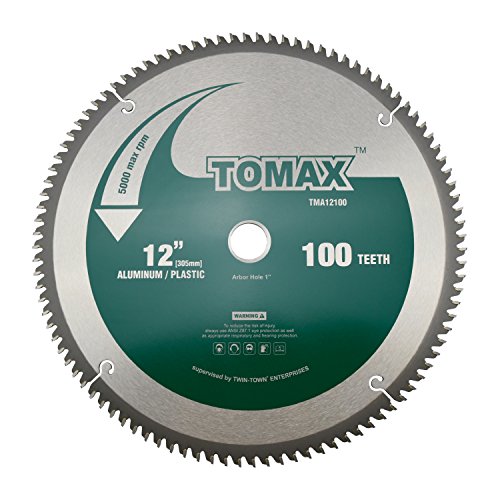
The TOMAX blade uses carbide teeth designed for aluminum and non-ferrous metals, providing a robust kerf and a long cutting life. Its electrophoretic coating helps resist rust and corrosion, making it suitable for tools stored in humid environments or used on outdoor projects. The 1-inch arbor matches common miter saws, and construction-grade teeth balance durability with efficient material removal.
FOXBC 10-Inch 80-Tooth TCG Blade

This 10-inch FOXBC blade features an 80-tooth TCG configuration ideal for aluminum and non-ferrous metals. It includes a 5/8-inch arbor and laser-cut stabilizer vents to trap noise and reduce vibration, promoting accuracy and a smoother cut. The blade’s high-density tungsten carbide teeth deliver toughness and wear resistance for longer service between sharpenings.
FOXBC 10-Inch 100-Tooth TCG Blade
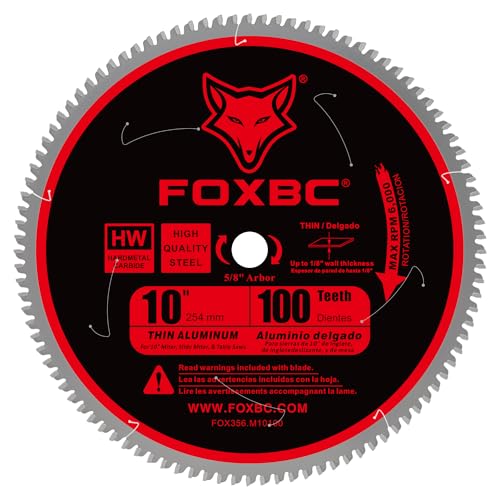
Designed for slim to thicker aluminum sections, this 10-inch blade uses 100 teeth to provide ultra-clean finishes with minimal tear-out. The 5/8-inch arbor aligns with most consumer miter saws, and the tungsten carbide teeth are engineered to stay sharp through many cycles of cutting non-ferrous materials. Its kerf is optimized to balance speed and precision on machine-set tolerances.
COMOWARE 12″ 100T TCG Blade

The COMOWARE blade features tungsten carbide teeth and a 1-inch arbor suitable for common cutting machines. Its TCG design initiates clean initial scoring with trapezoidal teeth and maintains material removal efficiency to reduce heat buildup. An anti-vibration feature helps maintain stable cuts, while the coating minimizes sticking and heat transfer, extending blade life during repeated aluminum cuts.
X-YEAH 10-Inch 80T Aluminum Blade

The X-YEAH blade employs an 80-tooth configuration with a 5/8-inch arbor and electrophoretic coating to resist rust. Its 80 teeth are well-suited for general aluminum cutting, offering a smooth surface with reduced burrs. The triple chip grind (TCG) tooth geometry helps reduce deformation and provides clean exit cuts for non-ferrous materials with moderate thickness.
Diablo D12120N Aluminum Blade

The Diablo D12120N is a 12-inch blade with 120 teeth designed for thin and medium aluminum cuts, and also suitable for copper, brass, plastics, and fiberglass. Its high-precision cut quality makes it a good choice where finish surface is paramount. The blade’s construction accommodates up to a high RPM range, providing efficient material removal with minimal heat buildup.
Buying Guide: Key Considerations For Non-Ferrous Miter Saw Blades
Blade selection depends on thickness of aluminum or non-ferrous material, saw compatibility, and desired finish. Consider the following factors to choose the best blade for your project:
- Tooth count: Higher tooth counts (80–120) yield smoother finishes and less tear-out on thin to medium aluminum but may cut more slowly. Lower tooth counts cut faster but can leave rougher edges.
- Tooth geometry: Triple Chip Grind (TCG) teeth balance rough material removal with clean edges, especially on non-ferrous metals. Fine-tooth designs reduce burrs on delicate surfaces.
- Arbor size: Ensure the blade arbor matches your saw’s arbor (commonly 1″ or 5/8″). Some blades offer multiple options or universal holes.
- Coatings: Electrophoretic coatings help resist rust and corrosion, extending blade life in humid or outdoor environments.
- Vibration reduction: Features like stabilizer vents or anti-vibration designs improve accuracy on long cuts and reduce saw wear.
- Kerf: Thin-kerf blades minimize material waste and cut resistance, useful for lighter-duty cuts, while standard kerf blades can handle tougher jobs.
- Material compatibility: While optimized for aluminum, проверяйте producent’s guidance for copper, brass, or plastics to ensure clean cuts without gumming or tearing.
Compared to standard ferrous-metal blades, non-ferrous blades are designed for lower heat buildup and reduced galling, which helps prevent workpiece deformation. For best results, use proper feed rates, secure clamping, and appropriate blade speed in accordance with the saw’s manual. When in doubt, test on a scrap piece to validate finish before proceeding with final cuts.
For buyers, consider whether you need a dedicated blade for a specific material family (aluminum-only) or a versatile blade that handles multiple non-ferrous metals with acceptable performance. Durability features like carbide teeth and protective coatings will influence long-term cost and downtime.
In summary, the TOMAX, FOXBC, COMOWARE, X-YEAH, and Diablo blades highlighted here offer strong blends of carbide durability, non-ferrous suitability, and vibration control. Selecting the right blade depends on your material thickness, desired finish, and saw compatibility.