
Best Energy Efficient Water Heaters for American Homes in 2026
Finding the most energy efficient water heater can reduce utility bills and provide dependable hot water for daily tasks. This guide compares highly rated options across heat pump, gas tankless, and electric tankless models, highlighting efficiency metrics, installation considerations, and suitability for different home sizes. Below you’ll find a quick product digest and a detailed buying guide to help you choose the best fit for your needs.
| Product | Type | Typical Use | Key Efficiency Feature |
|---|---|---|---|
| Rheem 50 Gal. Smart High Efficiency Hybrid Heat Pump Water Heater | Hybrid Heat Pump | Residential | High efficiency with smart controls |
| Rheem RTGH-95DVELN-3 | Condensing Tankless Gas | Large homes | Ultra-high efficiency with WiFi |
| EcoSmart ECO 11 | Electric Tankless | Small to mid homes | Self-modulating, compact |
| Rheem RTGH-84DVLN3701171 | Condensing Gas Tankless | Mid to large homes | Condensing design with strong GPM |
| Rheem RTG-70DVLN-3 | Non-Condensing Gas Tankless | Mid homes | High efficiency with compact install |
Below are five top options selected for broad suitability, energy savings, and performance. Each product section includes a concise overview, essential specs, and practical considerations to help you compare quickly.
Rheem 50 Gal. Smart Hybrid Heat Pump Water Heater
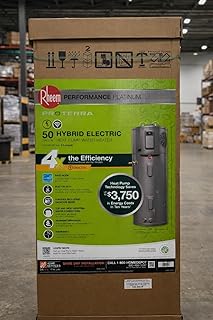
The Rheem 50 Gal. Smart High Efficiency Hybrid Heat Pump Water Heater combines heat pump technology with traditional electric heating to maximize energy savings. It requires a dedicated electrical circuit similar to large electric appliances, reflecting its high-performance design. This model aims to minimize standby losses and optimize hot water recovery for mid- to large-family usage.
Key considerations: Requires proper electrical wiring and space for airflow around the unit; best suited for homes with ample space and a place with good ventilation. Energy savings depend on climate, water usage patterns, and installation quality.
Rheem RTGH-95DVELN-3 Condensing Indoor Tankless Gas Water Heater

This indoor tankless gas unit delivers up to 9.5 GPM with 199,900 BTUs, making it suitable for homes with 3–4 bathrooms and simultaneous water use. Its condensing design achieves an energy factor (UEF) around .93, delivering notable energy savings versus traditional tank systems. The unit is powered by natural gas and is designed for fast hot water delivery during peak demand.
Key considerations: Requires gas line installation and venting; installation should be performed by a qualified professional; best for households with higher hot water needs and where continuous supply is critical.
EcoSmart ECO 11 Electric Tankless Water Heater

The EcoSmart ECO 11 provides on-demand hot water with self-modulating technology to match water usage. It’s compact (about 11.5 x 8 x 3.75 inches) and designed for wall mounting or point-of-use installation. With 99% thermal efficiency and electricity-only operation, it heats water only when needed, reducing energy waste.
Key considerations: Suitable for small apartments or single/compact bathrooms. Electric supply must meet 54 A amperage; ensure panel capacity and circuit protection are adequate for safe operation. May require multiple units for larger homes or higher flow needs.
Rheem RTGH-84DVLN-3 Condensing Tankless Gas Water Heater

This condensing tankless gas model delivers strong performance with energy-efficient operation ideal for mid- to large-sized homes. The unit’s high GPM output helps satisfy multiple hot-water demands simultaneously, while the condensing technology improves overall efficiency compared with non-condensing units.
Key considerations: Gas installation, venting, and professional hookup required. Suitable for households seeking reliable, on-demand hot water with modern efficiencies and WiFi-enabled monitoring.
Rheem RTG-70DVLN-3 High Efficiency Indoor Tankless Gas Water Heater

The RTG-70DVLN-3 provides up to 7.0 GPM and 160,000 BTUs for dependable hot water in indoor applications. Its compact design supports easy wall mounting by a qualified installer, making it a practical option for mid-sized homes with multiple hot-water needs, including showers and laundry.
Key considerations: Efficient gas-powered operation with a compact footprint; ensure proper installation clearances, venting, and gas line sizing to maintain performance and safety.
Buying Guide: Key Purchase Considerations
- Source of energy: Electric, natural gas, or hybrid systems each have distinct operating costs and installation requirements. Gas models can deliver rapid hot water but require venting and gas line work; electric units avoid venting but rely on electrical service capacity.
- Household hot water demand: Determine gallons per minute (GPM) needs for simultaneous uses (showers, appliances). Tankless models scale with demand, while hybrid or larger tank units store hot water for ready access.
- Energy efficiency metrics: Look for uniform energy factors (UEF) for gas and EF or COP for electric models. Higher ratings indicate lower operating costs over time, though climate and usage patterns influence savings.
- Installation space: Tankless systems require venting (gas) or electrical readiness (electric). Hybrid heat pumps need space with adequate airflow. Ensure mounting surfaces and clearances meet manufacturer specs.
- Maintenance and longevity: Consider serviceability, warranty terms, and ease of access for routine maintenance. Condensing tankless units may offer superior efficiency but can be more complex to service.
- Smart features and controls: Some models offer WiFi monitoring, fault alerts, and usage analytics. These can help optimize performance and energy savings over time.
- Climate considerations: Heat pump and hybrid units benefit from moderate to warm climates for maximal efficiency. In colder regions, supplementing with auxiliary heat may be necessary.
- Professional installation: Many high-efficiency units require professional installation for electrical, gas, venting, and code compliance. Factor in installation costs when comparing total value.
Choosing the most energy efficient water heater involves balancing upfront cost, installation complexity, and long-term savings. The options listed above cover a range of home sizes and energy sources, helping you align a purchase with your energy goals and daily hot-water needs.