As an Amazon Associate I earn from qualifying purchases. These links may earn this site a commission when you buy, at no extra cost to you.
When tackling masonry projects with a miter saw, choosing the right blade is essential for smooth cuts, reduced chipping, and long blade life. This guide highlights top masonry blades that perform well in dry or wet cutting conditions, specifically designed for brick, concrete, stone, and pavers. Each option balances durability, cut quality, and value, helping you select the best blade for your project needs.
Below is a quick overview table of the five featured blades, including brand, blade size, and primary use. Use this as a starting point to compare key specs before reading detailed product sections.
| Product | Blade Size | Best For |
|---|---|---|
| WHIRLWIND USA LSS 10 Diamond Saw Blades | 10 inch | Concrete, granite, stone, brick, masonry |
| DEWALT DW4712 Masonry Blade | 7 inch | Block and brick; dry or wet cutting |
| KimiBEE 10 Inch Masonry Blade | 10 inch | Brick, concrete, stone; precision cuts |
| ALSKAR DIAMOND 10 Inch Blade | 10 inch | Concrete, stone, brick; versatile dry or wet cuts |
| EZARC 14 Inch Diamond Blade | 14 inch | Concrete, masonry, brick; heavy-duty cutting |
Whirlwind Usa Lss 10 Diamond Saw Blades

Designed for both dry and wet cutting, these 10-inch blades use a dense diamond matrix to offer extended life on concrete, granite, stone, and other masonry materials. The LSS design emphasizes low amplitude and reduced noise during high-speed operation, with a 10 mm segment height and a 5/8″–7/8″ arbor. This blade is suitable for general purpose masonry work and fast cutting in demanding conditions.
DEWALT Dw4712 Masonry Blade

DEWALT’s DW4712 is a 7-inch masonry blade built for dry or wet cutting on block and brick. It features an advanced diamond matrix for longer life and efficient material removal, with a thinner kerf designed to cut faster and generate less dust. The product claims substantially longer life than traditional bonded abrasives, making it a strong option for frequent masonry cutting tasks.
KimiBEE 10 Inch Diamond Concrete Blade

KimiBEE offers a 10-inch diamond blade with a 5/8–7/8 inch arbor and a robust 10 mm segment height. The blade uses laser-welded construction for durability and features high-quality diamond materials to deliver sharp, accurate cuts in brick, concrete, stone, and paving materials. It emphasizes precision and clean finishes with a focus on endurance in repetitive cuts.
ALSKAR DIAMOND 10 Inch Blade
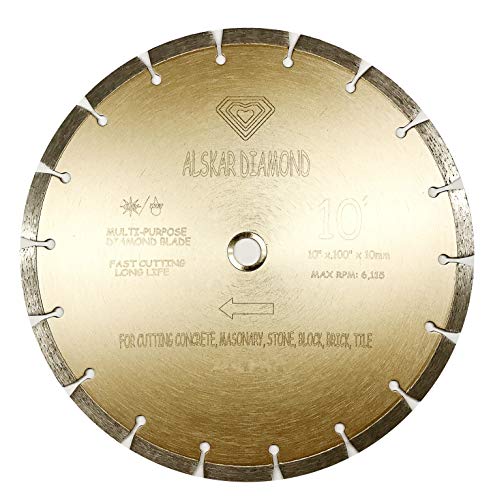
ALSKAR DIAMOND’s 10-inch blade is designed for fast, smooth cutting across concrete, stone, brick, and related masonry materials. It supports wet or dry operation and is suitable for light- to medium-duty cutters. The blade uses sintered diffusion bonding to balance durability with efficient cutting and is a versatile option for various masonry projects.
EZARC 14 Inch Diamond Blade

EZARC presents a 14-inch segmented diamond blade intended for heavy-duty cutting of concrete, granite, masonry, and brick. It integrates premium diamonds and a laser-welded segment design to reduce vibration and maximize resistance to impact. The blade is suitable for large power saws and is a strong choice for bigger masonry applications requiring high cutoff rates.
Buying Guide
Key purchase considerations help you pick the right blade for your miter saw and project needs:
- Blade size and arbor: Ensure the blade diameter and arbor fit your miter saw. Common home-duty miter saws handle 7-10 inch blades, while larger workshop models may use 12-14 inch blades. Verify arbor size (often 5/8″ or 7/8″).
- Material compatibility: Choose blades specifically rated for masonry materials like concrete, brick, stone, or tile. Some blades are optimized for dry cutting, others for wet cutting; some perform well in both modes.
- Diamond bond and segment design: Softer bonds cut faster but wear quickly; harder bonds last longer but may cut slower. Segment height and configuration affect cutting speed, chip control, and heat management.
- Cut quality vs. durability: For fine finishes, look for blades with smooth cutting edges and stable segments. For frequent heavy use, prioritize durability and life.
- Dust and debris management: Thinner kerfs reduce dust but may wear faster. Consider dust control practices and protective equipment when cutting masonry.
- Dry vs. wet cutting: Wet-cut blades stay cooler and extend life but require access to water; dry-cut blades are more convenient on job sites without water access but may wear faster and create more dust.
- Brand and warranty: Reputable brands often provide better warranties and consistent performance. Check return policies and product warranties for heavy use.
When selecting a blade, align the blade’s intended masonry material with the saw’s capabilities and the job’s scale. For general masonry cutting, multi-material blades with robust diamond segments provide versatility, while dedicated blades may optimize performance for brick or stone-specific cuts. Always follow manufacturer safety guidelines, wear protective gear, and ensure proper blade installation and alignment on the miter saw for best results.