As an Amazon Associate I earn from qualifying purchases. These links may earn this site a commission when you buy, at no extra cost to you.
Choosing the right finish blade for a miter saw can dramatically improve cut quality, reduce tear-out, and shorten finishing time on woodworking projects. This guide highlights top-rated finish blades from reputable brands, with performance notes to help you compare tooth count, kerf, and arbor compatibility. Whether you’re trimming fine hardwoods or softwoods, the right blade can deliver smoother edges and sharper results with every pass.
Overview of selected products (summary table below):
| Product | Brand | Tooth Count | Diameter | Arbor | Notable Feature |
|---|---|---|---|---|---|
| WEN BL1080 | WEN | 80 | 10″ | 5/8″ | Ultra-thin kerf for clean cuts |
| WEN BL1060 | WEN | 60 | 10″ | 5/8″ | Fine-finish performance |
| WEN BL1200 | WEN | 100 | 12″ | 1″ | Ultra-fine finish, high-quantity teeth |
| DEWALT DWA112100 | DEWALT | 100 | 12″ | 1″ | Low-vibration, optimized tooth geometry |
| Diablo D1280X | Diablo | 80 | 12″ | 1″ | Hi-Density carbide for durable, fine finishes |
WEN BL1080 10-Inch Finish Blade
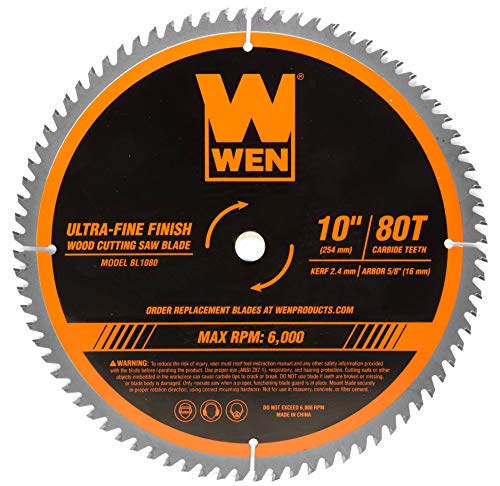
The WEN BL1080 is a versatile 10-inch blade designed for fine woodworking finish cuts. It features an 80-tooth carbide-tipped profile with an ultra-thin 0.10-inch kerf, enabling precise crosscuts with minimal tear-out. A standard 5/8-inch arbor makes it compatible with most miter and compound miter saws. Rated up to 6000 RPM, it handles both hard and soft woods effectively, delivering smooth edges suitable for finishing or pre-sanding stages.
Key advantages include its balance of tooth count and kerf, which supports clean scrap-free surfaces. It’s particularly well-suited for cabinetmaking, trim work, and fine furniture where edge quality matters. Careful alignment and steady feeds maximize results with this blade, ensuring crisp lines across a variety of wood species.
WEN BL1060 10-Inch Fine-Finish Blade
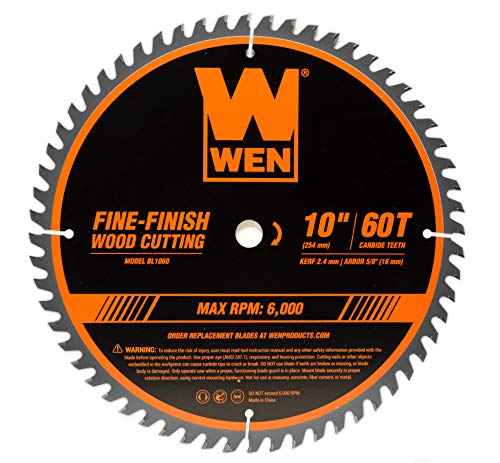
The WEN BL1060 is a 60-tooth finish blade designed for fine crosscuts, offering smooth finishes on both hard and soft woods. Its 0.10-inch kerf helps minimize waste while maintaining precision through each pass. With the same 10-inch diameter and 5/8-inch arbor, this blade fits a broad range of miter and table saws, making it a practical option for finish carpentry, cabinetry, and decorative trim projects.
Users can expect refined edge quality, reduced tear-out on end grain, and dependable performance under typical shop workloads. For projects prioritizing finish quality over rapid stock removal, the BL1060 provides reliable results with consistent results across multiple cuts.
WEN BL1200 12-Inch Ultra-Fine Finish Blade

The WEN BL1200 expands to 12 inches and 100 teeth, delivering ultra-fine finish cuts with a meticulous edge. Its 1-inch arbor supports heavier saws, while the ultra-thin kerf of 0.112 inches aids in minimal waste and precise crosscuts. This blade excels in fine finish work on varied woods, providing smooth surfaces for finishing, staining, or clear coats. It’s a strong option for workshop setups requiring longer reach and finer tooth geometry for high-quality results.
Performance notes emphasize consistent cut quality and low vibration thanks to refined tooth geometry. For cabinetmakers and furniture builders seeking very clean finishes, the BL1200 is a high-value choice that balances blade width, tooth count, and durability.
WEN BL1280 12-Inch Fine-Finish Blade
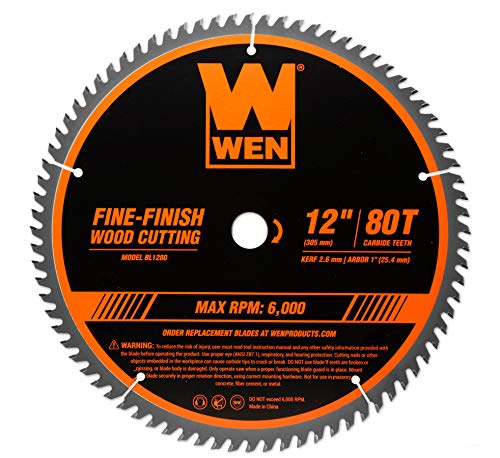
The WEN BL1280 offers a 12-inch diameter and an 80-tooth setup optimized for fine finish work on larger boards. Its 1-inch arbor supports robust miter and table saws, while the ultra-thin kerf helps minimize waste in precision cuts. This blade is well-suited for long crosscuts, crown molding, and large panels where finish quality is paramount. Expect smooth, even surfaces with minimal tear-out, especially on hardwoods where finish quality matters most.
Overall, the BL1280 provides a reliable balance of blade size, tooth count, and kerf that make it a strong candidate for serious finish carpentry and cabinetry projects, particularly when cutting larger stock or wider panels.
Buying Guide: Key Considerations for Finish Blades
- Tooth count vs. kerf: Higher tooth counts yield finer finishes but can slow material removal. Ultra-thin kerfs reduce waste and improve edge quality, especially on end grain.
- Blade diameter and arbor compatibility: Match diameter to your saw and ensure the arbor size (commonly 1″ or 5/8″) is compatible with your equipment and any arbors or adapters you use.
- Material and coating: Carbide-tipped blades provide durability across hardwoods and softwoods. Consider Hi-Density carbide options for wear resistance in busy shops.
- Rim geometry and body design: Blades with optimized tooth geometry reduce vibration and improve cut accuracy. A body slot design can contribute to smoother operation with less vibration.
- Finish quality and application: For cabinetmaking and fine furniture, prioritizing a blade with a fine tooth count and precise grind will yield the best finish with minimal tear-out.
- Maintenance and compatibility: Keep blades clean and sharp. Use the correct speed rating and ensure the blade is properly aligned to avoid cut imperfections.
- Cost vs. value: Higher-tooth blades typically last longer on finish work, but consider your typical material mix and cutting frequency when assessing value.
- Brand support and warranty: Reputable brands like WEN, DEWALT, and Diablo provide traceable performance data and replacements, which can be helpful for ongoing projects.
Considerations by Project Type
Fine finish cabinetry favors blades with 60–100 teeth and ultra-thin kerfs to minimize splintering. For large panels, a 12-inch blade with 80–100 teeth balances reach and finish. When cutting hardwoods with intricate moldings, prioritize controlled tooth geometry and low vibration to preserve detail and reduce post-cut sanding.
Compatibility Checklist
- Confirm blade diameter and arbor size matches your saw’s specification.
- Check for anti-vibration design features if your saw tends to vibrate under load.
- Inspect coating and carbide quality to gauge expected blade life for your wood types.
- Consider whether you need a single blade for finish work or a combo pack for different tasks in your shop.