As an Amazon Associate I earn from qualifying purchases. These links may earn this site a commission when you buy, at no extra cost to you.
Miter saw blades designed for wood can dramatically improve cut quality, reduce tear-out, and speed up project work. The blades below represent top-performing options across finish cuts, general purpose work, and fine crosscuts. Each blade features carbide tips, optimized kerf, and tooth geometry aimed at delivering smooth, accurate results for both hard and soft woods.
| Product | Brand | Type | Tooth Count | Arbor |
|---|---|---|---|---|
| WEN BL1080 | WEN | Ultra-fine finish | 80 | 5/8 inch |
| WEN BL1280 | WEN | Fine finish | 80 | 1 inch |
| Diablo D1280X | Diablo | Fine finish | 80 | 1 inch |
| FOXBC 12″ 80T | FOXBC | Fine finish | 80 | 1 inch |
| ANGELSWORD 100T Pack | ANGELSWORD | Ultra finish (100T) | 100 | 1 inch |
Note: The selections cover a balance of fine finishes and versatile crosscut capabilities, suitable for a wide range of woods. Each blade lists its arbor size and tooth geometry to help match your miter saw setup.
WEN BL1080 10-Inch 80-Tooth Ultra-Fine Finish Blade
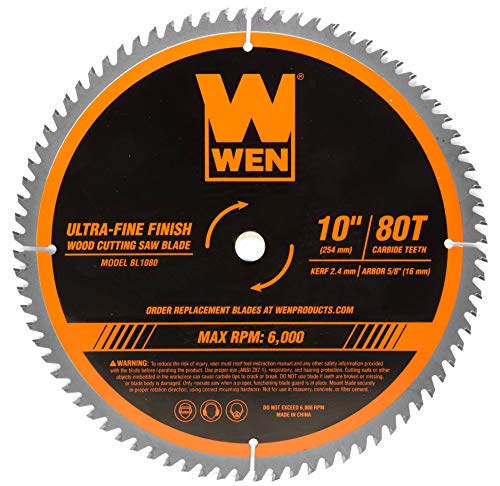
The WEN BL1080 is a 10-inch carbide-tipped blade designed for ultra-fine finish cuts. With an 80-tooth configuration and a 1/10-inch kerf, it is optimized for clean crosscuts in both hardwoods and softwoods. The blade uses a 5/8-inch arbor and supports speeds up to 6000 RPM, making it a strong choice for finish work on miter and table saws. Its fine-tooth design minimizes tear-out and leaves a smooth surface on molding, trim, and fine carpentry projects.
WEN BL1280 12-Inch 80-Tooth Fine-Finish Blade
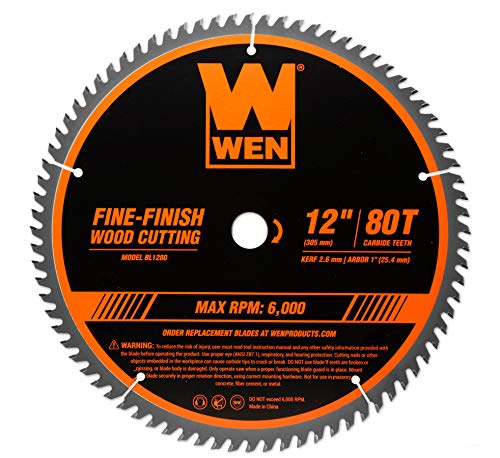
This 12-inch blade brings an 80-tooth count to fine finishes with a 1-inch arbor for heavier saws. The ultra-thin 1/10-inch kerf (2.6 mm) minimizes waste while delivering precise crosscuts and smooth surfaces on detailed woodwork. Capable of handling both hardwoods and softwoods, the blade maintains low resistance, helping to reduce heat and warping during precision cuts.
Diablo D1280X 12-Inch Fine Finish Blade
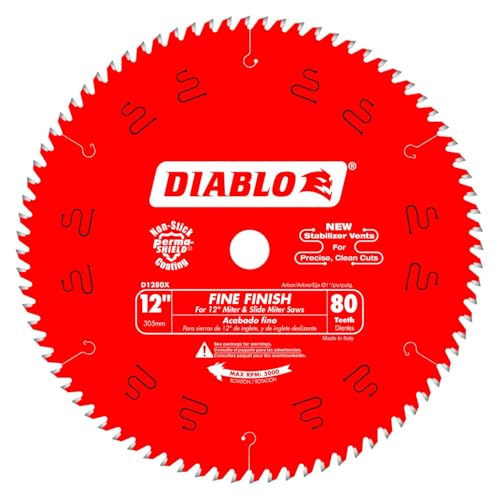
The Diablo D1280X is designed for fine crosscuts with a Hi-Density carbide formulation. Its 80-tooth setup and 12-inch diameter provide smooth finishes on both hardwoods and softwoods. The blade’s alternate top bevel geometry reduces tear-out, producing cleaner edges while maintaining solid durability through repeated cuts in demanding projects.
FOXBC 12 Inch 80-Tooth Fine Finish Blade

The FOXBC 12-inch blade features 80 teeth and a 1-inch arbor designed for fine finishing on crosscuts. Laser-cut stabilizer vents help manage noise and vibration, aiding blade stability and reducing warp during long runs. Its 0.118-inch kerf keeps waste to a minimum while producing consistent, clean cuts suitable for premium woodwork and cabinetry projects.
ANGELSWORD 12 Inch 100T Fine Finish Pack

The ANGELSWORD 100T blade (2-pack) is built for ultra-fine finishes with a high tooth count. The 1-inch arbor and 0.106-inch kerf support precise, smooth cuts across a range of woods, including hard hardwoods. Tungsten carbide teeth offer excellent wear resistance and long blade life, making this option suitable for frequent crosscuts on finish carpentry, cabinetry, and furniture projects.
Buying Guide: Key Purchase Considerations
Choosing the right miter saw blade depends on the type of wood, projects, and saw compatibility. Consider the following factors to guide your decision:
- Tooth count and geometry: Higher tooth counts (80-100) yield cleaner finishes and less tear-out, especially on hardwoods. Alternate Top Bevel (ATB) geometry helps produce smooth crosscuts.
- Blade diameter and arbor: Match the blade diameter to your saw’s capacity (10″ or 12″ common). Verify arbor size (5/8″ or 1″) to ensure proper fit and safe operation.
- Kerf width: Ultra-thin kerfs (around 0.106″ to 0.118″) reduce material waste and limit blade deflection, which improves precision on fine cuts.
- Material build: Carbide-tipped blades offer longer life and consistent cuts across a variety of woods, including hardwoods, softwoods, and laminated panels.
- RPM compatibility: Blades are rated for specific maximum speeds. Ensure your saw can safely operate at or near the blade’s RPM rating to prevent overheating and warping.
- Vibration control: Features like laser-cut stabilizers and venting can reduce vibration, contributing to steadier cuts and longer blade life.
- Pack and value: For frequent crosscutters, consider multi-pack options that provide consistent performance while offering cost efficiency over time.
- Intended use: If your project favors ultra-fine finishes (cabinetry, cabinetry molding, trim), prioritize high-tooth blades with ATB geometry. For rough cutting or framing, lower tooth counts may perform adequately with speed.
When evaluating blades, compare the blade size, tooth count, kerf, arbor, and recommended RPM. Reading user reviews and manufacturer guidance helps anticipate performance on your typical stock, such as pine, oak, maple, or plywood. Always follow manufacturer recommendations for safe operation and blade maintenance to maximize lifespan and cut quality.