As an Amazon Associate I earn from qualifying purchases. These links may earn this site a commission when you buy, at no extra cost to you.
Choosing the right miter or table saw blade for metal ensures cleaner cuts, less heat buildup, and longer tool life. This guide highlights five high-performance blades designed for ferrous and non-ferrous metals, including aluminum and steel. Each option balances durability, cut quality, and compatibility with common miter and table saws. Read on to compare features, fitment, and intended applications so you can select the blade that best fits your metalworking needs.
| Product | Brand | Arbor | Key Use |
|---|---|---|---|
| JINSINA 10″ Miter Table Saw Blade | JINSINA | 5/8″ | Iron, steel, aluminum, ferrous metals |
| TOMAX 10-Inch 80 Tooth | TOMAX | 5/8″ | Plastic, aluminum, non-ferrous metals |
| IVY Classic 40088 Swift Cut | IVY Classic | 5/8″ | Steel, angle iron, sheet metal |
| FOXBC 100-Tooth TCG | FOXBC | 5/8″ | Aluminum and non-ferrous metal |
| COMOWARE 12” 100T TCG | COMOWARE | 1″ | Aluminum and non-ferrous metals |
JINSINA 10″ Miter Table Saw Blade
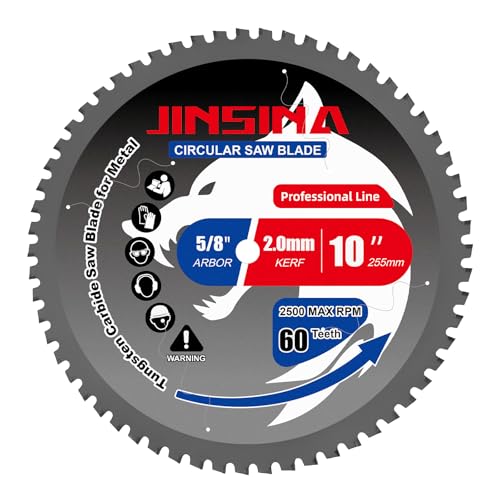
The JINSINA blade is a 10″ tungsten carbide tipped (TCT) metal-cutting blade with 60 teeth and a 5/8″ arbor. It is designed for versatile use on miter saws, slide miter saws, stationary table saws, and portable table saws, making it suitable for ferrous metals including iron, steel, and aluminum. The blade’s ATB (alternate top bevel) tooth design reduces cutting resistance and smooths the cutting process, contributing to cleaner edges and less wear on the tool. With a maximum operating speed up to 2500 RPM, this blade emphasizes durability and efficiency for metalworking tasks that require precise, repeatable cuts.
Key features include universal 10″ size, premium tungsten carbide tips for extended life, and a design that minimizes load on cutting equipment. This makes it a good all-around option for workshop projects that mix ferrous and non-ferrous metals without switching blades frequently.
TOMAX 10-Inch 80 Tooth TCG Blade

The TOMAX blade is tailored for cutting plastic, aluminum, and non-ferrous metals, featuring 80 teeth and a 5/8″ arbor. Its construction uses construction-grade carbide teeth to extend blade life and resist wear. An electrophoretic coating helps reduce rust and corrosion, making it a solid choice for environments where tools face moisture or humidity. This blade emphasizes long life and steady performance for non-ferrous metal tasks and mixed-material projects, reducing the need for frequent blade changes in professional or hobby settings.
IVY Classic 40088 Swift Cut 10-Inch
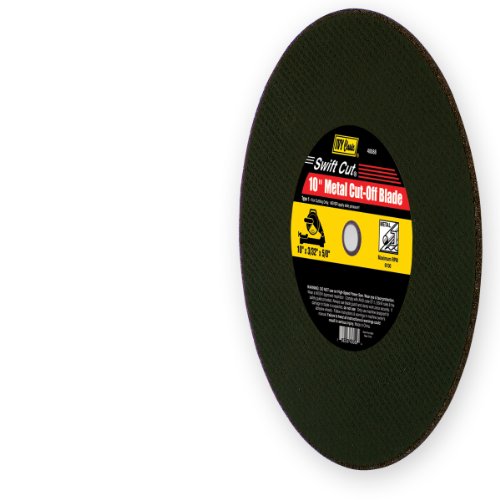
The IVY Classic Swift Cut blade is designed for cutting steel, angle iron, sheet metal, and other ferrous metal products. It is a 10″ blade with a 5/8″ arbor and Type 1 designation, intended for metal cutting on chop saws rather than high-speed saws. The blade uses a resin-bonded aluminum-oxide grain to achieve faster cutting and increased durability. It is double reinforced with fiberglass mesh for added safety and resilience in demanding cutting tasks, where robust edge retention and fracture resistance are essential.
FOXBC 100-Tooth TCG for Aluminum
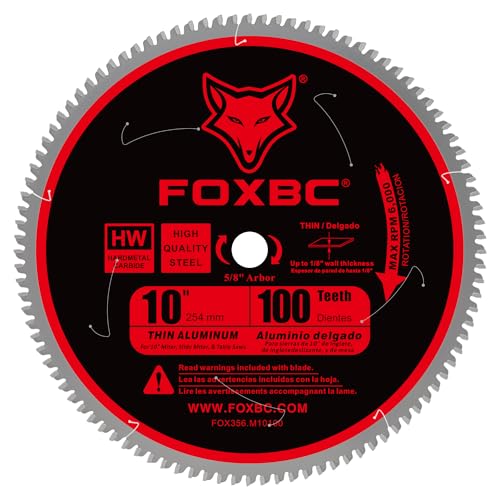
The FOXBC 100-Tooth TCG blade is designed for aluminum and non-ferrous metal cutting with a 5/8″ arbor. It features a thin kerf of 0.095″ and is optimized for precision cuts on thin to medium thickness aluminum sections. Made from high-density tungsten carbide, this blade aims to deliver toughness, wear resistance, and long life, providing smoother cuts with reduced vibration. It is a practical choice when the material requires fine finishes and minimal material waste.
COMOWARE 12” 100T Metal Cutting Blade

The COMOWARE 12” 100T blade uses a 1″ arbor and features a TCG (Triple Chip Grind) tooth design to facilitate fast cutting with reduced tear-out. The 15-degree hook angle supports controlled cutting action, while trapezoidal teeth help move material away efficiently. The blade’s tungsten carbide tips contribute to durability and heat resistance, making it suitable for tough applications in aluminum and other non-ferrous metals. The universal 1″ arbor ensures compatibility with a wide range of circular saws and miter saw setups.
Buying Guide: Key Purchase Considerations
Selecting the right metal-cutting blade involves weighing cut quality, tool compatibility, and project requirements. Consider these factors when choosing a blade for a miter or table saw:
- Material compatibility: Ferrous metals (steel, iron) versus non-ferrous metals (aluminum, brass) may benefit from different tooth geometries. Blades labeled for aluminum or non-ferrous metals often minimize galling and heat buildup.
- Tooth count and kerf: Higher tooth counts (60–100T) provide cleaner finishes but cut slower; lower counts cut faster but with rougher edges. A thin kerf reduces material waste and can improve cutting efficiency, especially on thinner sections.
- Arbor size: Ensure the blade’s arbor matches your saw’s arbor (commonly 5/8″ or 1″). Some blades offer universal adapters, but mismatches can cause runout and safety concerns.
- Coatings and coatings durability: Coatings like electrophoretic coatings help resist rust and corrosion in damp environments. They can extend blade life in challenging shop conditions.
- Tooth grind style: ATB (alternate top bevel) cuts efficiently on ferrous materials with smoother edges. TCG (triple chip grind) is often used for hard materials and aggressive cutting with reduced heat buildup.
- Performance trade-offs: Some blades are optimized for no heat and no burrs, which is desirable for finishing tasks but may require more careful feed rates and slower cutting.
- Tool safety and compatibility: Verify that the blade is rated for your saw’s RPM and that the blade’s diameter does not exceed the saw’s designed cutting capacity.
- Application consistency: For mixed-material projects, carrying a dedicated blade for aluminum or steel can minimize cross-material contamination and prolong blade life.
Across these options, users should match blade design to their primary metalworking tasks, whether rapid rough cuts on ferrous stock or precise, clean finishes on aluminum components. When in doubt, rely on blades with proven carbide durability, appropriate tooth geometry, and a fit that aligns with your saw’s specifications.