As an Amazon Associate I earn from qualifying purchases. These links may earn this site a commission when you buy, at no extra cost to you.
Choosing the right miter saw blade for trim work ensures razor-clean crosscuts, minimal tear-out, and faster project completion. The blades below are all designed for fine finish work, with thin kerfs, carbide teeth, and precision-ground teeth geometry to deliver crisp edges on both hardwoods and softwoods. This guide presents five top performers to help you find the best blade for trim tasks, from ultra-fine finish blades to crosscut-focused designs.
Product Overview
| Product | Brand | Diameter | Teeth | Arbor |
|---|---|---|---|---|
| WEN BL1080 Ultra-Fine Finish | WEN | 10 in | 80 | 5/8 in |
| Makita D-65486 Ultra-Fine Crosscut | Makita | 10 in | 100 | 5/8 in |
| WEN BL1060 Fine-Finish | WEN | 10 in | 60 | 5/8 in |
| DEWALT DWA112100 Fine Finish | DEWALT | 12 in | 100 | 1 in |
| Diablo 12″ 80T Fine Finish | Diablo | 12 in | 80 | 1 in |
Note: These blades prioritize clean finishes and minimal tear-out for trim work. Each option offers distinct advantages, including kerf width, tooth geometry, and compatibility with common miter saws. In the table above, you can compare diameter, tooth count, and arbor size at a glance to match your saw and project needs.
WEN BL1080 10-Inch 80-Tooth Ultra-Fine Finish Blade

The WEN BL1080 is a premium 10-inch blade designed for ultra-fine finishes. It features an ultra-thin 1/10-inch kerf to minimize material removal and reduce cutting resistance, allowing smoother, cleaner crosscuts on trim work. The blade’s carbide-tipped teeth provide long life and reliable performance at up to 6000 RPM, suitable for both hard and soft woods. The 5/8-inch arbor is a common fit for most miter saws. This blade excels in producing minimal tear-out on delicate trim profiles, especially when paired with clean feed pressure and a steady cut rhythm.
Makita D-65486 10″ 100T Ultra-Fine Miter Blade

The Makita D-65486 uses an Alternate Top and Alternate Face (ATAF) tooth design to deliver ultra-precise crosscuts. Its 100T configuration creates a finer finish with smoother edges and less noticeable tear-out on trim work. The thin-kerf carbide-tipped construction reduces kerf drag, helping to preserve motor life while delivering precise, clean cuts. The blade’s plates are hardened and hand-tensioned for accuracy, making it a strong choice for detailed moldings and trim profiles that demand consistent results over many cuts.
WEN BL1060 10-Inch 60-Tooth Fine-Finish Blade
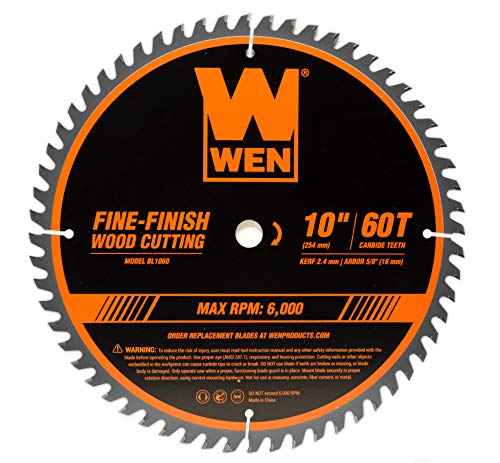
The WEN BL1060 offers a fine-finish blade option with a 60-tooth count and a 1/10-inch kerf. While featuring fewer teeth than high-tooth variants, this blade is optimized for clean crosscuts with less resistance, making it suitable for trim tasks where a bit more aggressive cutting action is acceptable without compromising finish quality. The robust construction and compatibility with 10-inch miter saws make it a versatile option for hobbyists and professionals alike.
DEWALT Miter Saw Blade, 12 Inch, 100 Tooth Fine Finish

The DEWALT DWA112100 blade is designed for lengthy service life and finish quality. With 100 teeth on a 12-inch platform, this blade excels at fine crosscuts on trim, reducing tear-out and delivering smooth edges. The patented body slot design helps minimize vibration, contributing to more stable cuts and better accuracy. This blade is a strong option for cabinets, baseboards, and other trim applications where a precise, pristine surface is essential.
DEWALT 12-Inch Crosscut, 80-Tooth And 32-Tooth Set
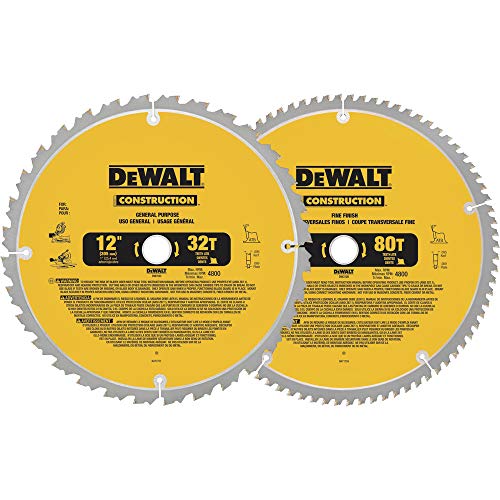
This DEWALT two-pack includes an 80-tooth blade for fine crosscuts and a 32-tooth blade for more aggressive but still clean cuts. The versatility helps trim specialists adapt to different wood types and profiles without swapping blades mid-project. The high tooth count promotes precision and a smooth finish, while the 12-inch size ensures broad, stable cuts on larger trim pieces. The dual-pack is convenient for shop setups that handle varying trim scenarios.
FOXBC 12 Inch 80T Fine Finish Miter Blade

The FOXBC 12″ 80-Tooth Fine Finish blade features ATB geometry with a 1-inch arbor, designed for smooth, precise crosscuts in trim work. The laser-cut kerf and stabilizer vents help reduce heat buildup and vibration for cleaner cuts and longer blade life. This blade is well-suited to hardwoods and softwoods alike, making it a reliable choice for baseboard, crown, and door trim applications where high-quality edges matter most.
Metabo HPT 10-Inch Fine-Finish Miter Blade
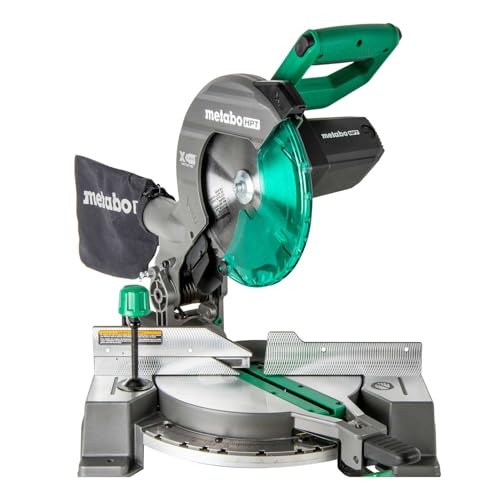
The Metabo HPT blade is designed for precise miter cuts with a no-load speed up to 5,000 RPM. Its 10-inch, 40T blade variant is built for accuracy and ease of use, providing dependable miter cuts with a focus on visibility and control. The blade is light enough for portable setups while offering a stable platform for trimmed profiles, moldings, and decorative woodwork. Its thoughtful design emphasizes accurate miter angles and clean finishes for trim projects.
Buying Guide: Key Considerations For Miter Saw Blades For Trim
Choosing the best blade for trim work involves balancing several factors. Here are essential considerations from multiple perspectives:
- Tooth Count And Geometry: Higher tooth counts (e.g., 80–100T) with ATB or alternate-face designs yield finer surfaces and less tear-out on hardwoods and softwoods. For trim, prioritize blades with a fine finish geometry and minimal kerf.
- Kerf Width: Ultra-thin kerf blades remove less material and require less power, resulting in smoother cuts and less vibration. Thin kerf is especially beneficial for trim work where edge quality is critical.
- Arbor Size And Compatibility: Ensure the blade arbor matches your saw’s arbor (commonly 5/8 in or 1 in). Using the correct arbor minimizes runout and improves accuracy.
- Material Durability: Carbide-tipped teeth provide longer life and consistent performance through many crosscuts, making them ideal for professional trim work.
- Cut Type And Finish: For precise crosscuts, select blades labeled for fine finish or crosscutting, often with polished finishes and advanced tooth geometry to cut with minimal chip-out.
- Blade Size And Saw Compatibility: 10-inch and 12-inch blades cover common miter saws. Confirm your saw’s maximum cut width and RPM rating to avoid blade warp or speed-related wear.
- Application Type: Trim work often requires clean profiles on baseboards, crown molding, and casing. Blades designed for fine finishes help achieve sharp, consistent edges across varied wood species.
- Brand And Availability: Reputable brands offer durable blades with predictable performance. Availability of spare teeth and replacement blades can also influence long-term cost and project planning.
Practically, for trim work, you will typically migrate toward blades with 60–100 teeth, thin kerfs, and carbide tips. For interior trim that involves hardwoods (oak, maple, cherry), prioritize finer teeth and tooth geometry that reduces tear-out. If your project includes softwoods or delicate woods, a blade with smooth cutting action and minimal vibration is advantageous. Regular inspection of blade condition and alignment helps preserve finish quality across projects.
In summary, the blades listed above provide a range of options to fit different miter saws and trim tasks. When choosing, align blade characteristics with your wood type, desired edge quality, and saw compatibility to achieve professional-looking trim work consistently.