
Best Microwave Ovens With Inverter Technology for Even Cooking
When choosing a microwave, inverter technology matters for even cooking, defrosting precision, and energy efficiency. This guide highlights five top models that leverage inverter power to deliver more consistent results. Ideal buyers include busy households seeking reliable reheating, cooks who defrost delicate proteins, and anyone who wants faster, energy-efficient performance without sacrificing texture. The table below compares key options at a glance.
| Product | Capacity | Inverter Tech | Best For |
|---|---|---|---|
| TOSHIBA Flatbed Microwave Oven with Inverter | 1.3 cu ft | Yes | Small to mid-size households needing easy cleanup and quiet operation |
| TOSHIBA Countertop Microwave with Inverter | 1.6 cu ft | Yes | Families wanting larger capacity and smart sensor features |
| LG Countertop Microwave, 0.9 cu ft | 0.9 cu ft | Yes | Compact kitchens needing precise control and reliable auto options |
| TOSHIBA OptiChef Pro Max Air Fryer Combo | 1.3 cu ft | Yes | Healthier cooking with air fry plus microwave functions |
| Emerson 1.2 Cu. Ft. Microwave Oven with Inverter | 1.2 cu ft | Yes | Budget-conscious buyers seeking consistent results and classic design |
TOSHIBA Flatbed Inverter 1.3 Cu Ft

The Toshiba Flatbed model uses a turntable-free interior to simplify cleaning and accommodate various dish sizes. Inverter technology provides even heating, precise temperature control, and energy efficiency. Best for small to mid-size kitchens where quiet operation and easy maintenance matter. It suits daily reheating, light cooking, and single-dish meals with improved texture compared to traditional microwaves.
Who it’s best for: apartment dwellers or small households that value a flat interior and silent performance. Limitations: no turntable means some users may need to adjust stacking for very large platters.
TOSHIBA Countertop Inverter 1.6 Cu Ft
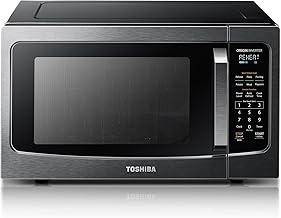
This model combines a larger 1.6 cu ft capacity with Origin Inverter Technology for even heating and faster cooking. Features include a 13.6″ glass turntable and a two-step child lock for safety. Best for families needing more cooking space and reliable defrosting. Choose this if you regularly prepare multi-serving meals. Caution: heavier unit may require stable counter space and venting considerations in compact kitchens.
LG NeoChef Smart Inverter 0.9 Cu Ft

LG’s 0.9 cu ft model emphasizes Smart Inverter for precise power control and even heating. With 1000 watts and seven auto cook options, it’s well-suited for small kitchens, quick meals, and simple defrosting. Best for users who want dependable auto features and compact footprint. Better for lightweight daily use; avoid if you need a larger cavity for big dishes.
TOSHIBA OptiChef Pro Max Air Fryer Combo

This combo model blends microwave with air fryer capabilities, featuring a 2.4-inch color screen and Origin Inverter Technology for even heating and moisture retention. The ChefFry Plus top fan enables healthier air-fried results. Best for health-conscious cooks seeking one appliance with multiple functions. Limitation: higher price and a larger footprint may be a consideration in smaller kitchens.
Emerson Inverter 1.2 Cu. Ft

Emerson’s 1.2 cu ft model emphasizes inverter-based even cooking with a straightforward control panel. It includes 10 power levels and removable glass turntable plus a child safety lock. Best for budget-conscious buyers who still want reliable inverter performance. Caution: some users may prefer a larger interior for bigger dishes or multiple items simultaneously.
Buying Guide
- Inverter technology: Look for models labeled as inverter or inverter-assisted for steady power delivery and improved defrosting and texture.
- Interior design: Flatbeds offer easy cleaning and more versatile plate sizes, while glass turntables can handle typical dish shapes but require more cleaning care.
- Capacity: Choose based on typical meal size and family needs. Smaller flats are fine for singles or couples; larger capacities suit families and batch reheating.
- Power and pre-set options: Higher wattage provides faster heating. Auto-cook or sensor options simplify cooking for common foods.
- Safety: Child locks are important for households with kids. Consider several security features if relevant.
- Footprint and placement: Ensure counter space, ventilation, and clearance around the unit fit your kitchen layout.
FAQ
- What is inverter technology in microwaves? Inverter technology provides a consistent, adjustable power level, resulting in even cooking and better defrosting compared to traditional on/off microwaves.
- Is a turntable necessary in a microwave? No; many inverter microwaves offer flatbed interiors for easier cleaning and flexible dish sizes, though some still use a turntable.
- What size microwave should I buy? Choose capacity by household size and typical dishes. 1.0–1.6 cu ft suits most families, while compact kitchens may prefer 0.9 cu ft.
- Are sensor-based microwaves better? Sensor or auto-cook options simplify timing for common foods, improving results without guesswork.
- Do inverter microwaves use more energy? They can be more energy-efficient due to precise power control, especially during defrosting and cooking at lower power levels.
- What’s the difference between a microwave with air fryer capability? It combines convection heat with a top fan to deliver air-fried results without a separate air fryer unit, useful for healthier meals.