
Best Low Profile Solar Panels for RVs and Boats
The demand for low profile solar panels has surged among RV enthusiasts, boaters, and off-grid homeowners who value aerodynamics, flexibility, and durability. The right ultra-thin, high-efficiency panels can conform to curved surfaces, resist harsh weather, and deliver reliable power for generators, vans, and rooftop systems. This guide highlights five top options that balance light weight, performance, and resilience—so you can power adventures without bulk or drag.
| Product | Brand | Key Benefit |
|---|---|---|
| Callsun 100W Ultra-Thin Flexible Solar Panel | Callsun | 240° bendable, marine-grade resilience |
| Callsun 50 Watt Solar Panel 12V | Callsun | 25% efficiency, compact and lightweight |
| STAR 100 Watt Solar Panels | STAR | Full-screen design, maintenance-free |
| Weznbtev 100W Flexible Solar Panel | Weznbtev | Ultra-thin, 23% efficiency, IP67 waterproof |
| Renogy 200W ShadowFlux Panel | Renogy | Anti-shading tech, compact footprint |
Each option is designed to maximize space and minimize weight while delivering dependable power for mobile and offshore applications. The selections below emphasize low-profile fits for curved surfaces, saltwater exposure, and off-grid setups, with considerations on flexibility, efficiency, durability, and compatibility with popular power stations and inverters.
Callsun 100W Ultra-Thin Flexible Panel
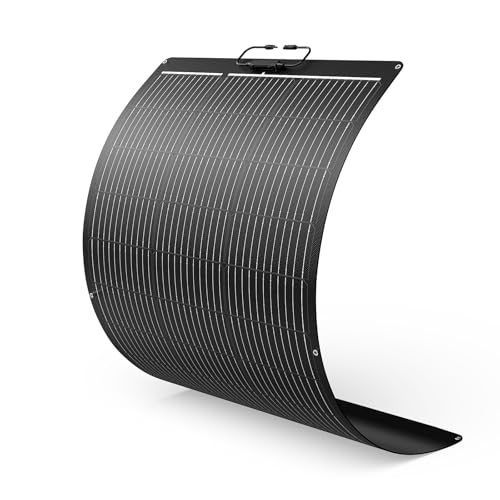
This Callsun model is engineered for curved surfaces with a 240° bendable design, enabling a seamless fit on RV roofs, 5th wheels, or metal van rooftops. It weighs roughly half the mass of rigid panels, improving portability and mounting options. The ETFE-coated construction adds saltwater resilience for marine use, protecting against UV-yellowing, hail, and salt spray. Its 12V output makes it a suitable partner for solar generators and battery banks, offering plug-and-play compatibility with common power stations for a straightforward setup on yachts, campers, and off-grid rigs.
Key features include ultralight construction, heavy-duty environmental resistance, and broad compatibility with EcoFlow Delta/Mini, Jackery, Bluetti, Anker, and Rockpals power stations. The 240° flexibility supports dynamic mounting on irregular contours, while the marine-grade materials help sustain long-term performance in harsh climates. For users prioritizing aerodynamics and curve-fitting, this panel provides a strong combination of lightness and resilience.
Callsun 50 Watt Solar Panel 12V

This 50-watt panel uses N-type solar cells to achieve high efficiency, around 25%, which generally delivers more power under the same design constraints compared with traditional P-type cells. The design incorporates 16BB technology to reduce micro-cracks and hot spots, extending the module’s lifespan. It is compact and lightweight, with pre-drilled holes for versatile mounting on RVs, boats, and trailers. The combination of efficiency and a smaller footprint makes it suitable for limited roof space or portable solar setups where weight matters.
Designed for quick installation, the panel suits off-grid cabins, campers, and small-scale solar projects. The 16BB configuration helps ensure steady performance in variable conditions, while the durable construction supports repeated outdoor use. If you need a mobile, space-conscious solution without sacrificing output, this Callsun panel is a practical option.
STAR 100 Watt Solar Panels

STAR’s 100-watt solar panels feature a full-screen, frameless design that minimizes dust and water buildup, reducing maintenance needs. The rain-self-cleaning capability helps maintain efficiency in outdoor installations. Certified by ETL, ISO 9001, CE, and US patents, these panels emphasize reliability and standardized quality. The design claims a power boost through its frameless configuration, with Star Cleanedge aiming to reduce shading and obstruction while improving performance by about 15% compared to typical panels. They are suitable for RV roofs, marinas, and off-grid homes seeking a low-profile, low-maintenance option.
With strong weather resilience and a focus on minimal frame interference, these panels are often chosen for rooftop buses, camper vans, and rooftop decks where a sleek appearance matters. The 100W rating provides a balance of output and flexibility for mid-sized systems, including battery banks and inverter setups used in portable off-grid environments. If you want a maintenance-light option that retains robust performance, STAR panels are a compelling pick.
Weznbtev 100W Flexible Solar Panel

Weznbtev offers an ultra-thin, flexible 100W panel designed for curved surfaces, with a weight around 4.19 pounds, enabling easy transport and deployment for RVs, boats, and camping setups. The panel uses high-efficiency PERC cells with around 23% efficiency, producing substantial daily output in a compact form. Its IP67 waterproof rating and durable build help it withstand rain, splashes, and temperature fluctuations, making it suitable for outdoor environments where shading and irregular mounting surfaces are common.
Key attributes include a 240-degree bend tolerance, which helps in conforming to irregular roof profiles, and robust materials capable of withstanding exposure to sun and salt in marine settings. The panel’s compatibility with standard connectors supports quick connection to battery banks and inverters, making it a practical option for portable solar carts, marine vessels, and off-grid vehicles seeking a flexible, resilient solution.
Renogy 200W ShadowFlux Anti-Shading Panel

Renogy’s 200W panel uses ShadowFlux anti-shading technology to maintain power in partially shaded areas—an important feature for rooftop installations near trees or buildings. The panel employs N-Type cells with 16BB technology to achieve around 25% efficiency, reducing hot spots and micro-cracks for longer lifespan and reliable output. It is designed to be more compact than typical PERC panels, facilitating space-saving installations on RVs and boats. This product is a robust choice for those building larger off-grid systems or upgrading existing arrays with a need for shade tolerance and consistent performance in variable weather.
The panel’s strength lies in combining high efficiency with anti-shading performance, making it suitable for rooftop solar systems where shading is unavoidable. Its durable construction supports extended outdoor use, and the smaller footprint helps with installation on smaller roof areas or unconventional spaces where a larger panel would not fit. For users aiming to maximize energy yield in mixed sunlight, Renogy’s ShadowFlux solution provides a credible balance of output, durability, and space efficiency.
Buying Guide
Key purchase considerations for low profile solar panels include flexibility versus durability, efficiency, weight, and mounting options. The following points help compare typical choices:
- Flexibility and Form Factor: Panels labeled as ultra-thin or flexible (e.g., 240° bend capability) excel on curved surfaces and irregular rooftops. They are ideal for RVs, marine tops, and curved vehicle skins, though some trade a bit of durability for flexibility.
- Efficiency: N-type and PERC technologies often yield higher conversion efficiency (20–25%). Higher efficiency helps maximize output in limited space but may come at a higher price.
- Durability and Weather Resistance: Marine-grade coatings (ETFE), IP ratings (IP67/IP68), and robust frames or frameless designs influence longevity in sun, salt spray, and rain. Consider UV resistance, hail tolerance, and joint reliability.
- Weight: Lighter panels improve ease of installation on mobile platforms but verify that reduced weight does not compromise structural support or mounting hardware.
- Mounting and Compatibility: Look for pre-drilled holes, universal connectors, and compatibility with popular power stations and battery systems. Quick-connects and plug-and-play solutions simplify setups for RVs and boats.
- Maintenance: Frameless or full-screen designs reduce dirt accumulation and cleaning needs. Self-cleaning or low-maintenance options offer lower long-term upkeep.
- System Sizing: Match panel wattage to your typical daily energy needs. For off-grid use, assess average daily consumption (Wh) and plan for an appropriately sized battery bank and charge controller.
Depth of choice varies by use case. For mobile RVs and trailers, weight and bendability are often decisive, whereas for fixed off-grid cabins or boats, a higher wattage with robust weatherproofing can be more valuable. Assess your roof shape, climate, and available mounting options to select the best combination of efficiency, durability, and ease of installation. Always verify compatibility with your existing solar generator or battery system to ensure a seamless setup.