
Best Load Cell With Digital Readout for Precision Weighing
When accurate force measurement is critical, a load cell with a clear digital readout helps streamline calibration, monitoring, and control. The following selections prioritize reliable sensing, easy data display, and versatile outputs to support industrial weighing, process automation, and quality assurance. Each option below offers a digital readout, multiple units, and practical features like peak-hold or dual relays for automated control.
| Product | Brand | Display and Readout | Key Features | Links |
|---|---|---|---|---|
| Load Cell Sensor with Indicator Display, 0-5T | QILICHUANGAN | Five-digit LED display; peak hold | Bellows sensor, anti-bias stability, two relay outputs | Amazon |
| Load Cell Sensor Indicator Display, 0-2000KG | QILICHUANGAN | Six-digit readout (digital); multiple units | High precision; dual relay output | Amazon |
| Load Cell Amplifier With Digital Readout (4-20mA) | ATO | 6-digit LED display; 4-20mA output | Direct readout; unit conversion | Amazon |
| ATO Load Cell Amplifier (0-10V Output) | ATO | 6-digit LED display; 0-10V output | Flexible units; precise readout | Amazon |
| Load Cell Sensor Amplifier With RS485 | QILICHUANGAN | LED display; RS485 interface | Multiple outputs (0-5V/0-10V/4-20mA); configurable | Amazon |
Note: The products listed here provide digital readouts and robust sensing capabilities to support a range of weighing and monitoring applications. The selections emphasize reliability, readability, and integration potential with automation systems.
Bellows Load Cell With Indicator
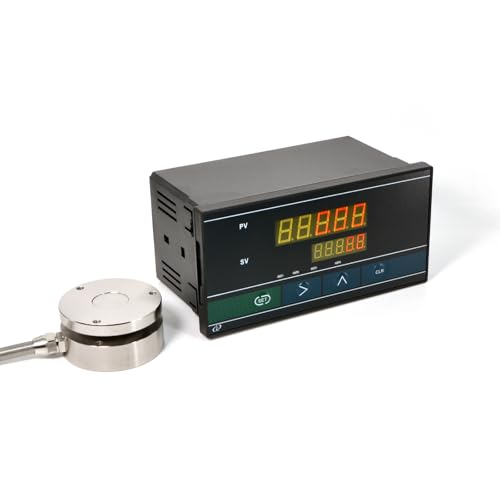
The Load Cell Sensor with Indicator Display (0-5T) uses a bellows weighing sensor designed for high stability and resistance to bias under varying loads. The five-digit LED readout provides clear weight data, making it suitable for industrial weighing, packaging lines, and material handling. A peak-hold function captures the maximum weight value, helping operators analyze peak data and verify process limits. The unit’s dual relay outputs enable straightforward automation and alarm signaling within control systems. This configuration supports kilolgs, pounds, and other units via user settings, aiding integration with existing dashboards.
Precision Tension and Compression Sensor

This S-type load cell supports both tension and compression, featuring two hanging rings for convenient setup. It provides high-precision measurement with a wide range (0-2000kg) and a 0.2% accuracy specification, adequate for static weighing and dynamic testing. The dual relay outputs support automatic state switching according to preset thresholds, enabling automated control, alarms, or data logging. The device can display readings in multiple units (kg, g, kN, ton), making it adaptable for laboratory and industrial workflows while maintaining straightforward readability on the indicator.
Digital Readout Weight Sensor Amplifier

This Load Cell Sensor Indicator Display combines a weight sensor amplifier with a five-digit display and peak-hold capability. It supports measurements from one kilogram up to several tons with high precision and an integrated LCD-like interface for easy calibration and operation. The device is designed for use in environments requiring quick readouts and stable performance, including batching, inventory control, and QA checks. It also provides a user-friendly menu system that simplifies parameter adjustment and instrument calibration, with the ability to accumulate weight and perform tare operations.
Digital Readout Load Cell Amplifier

The ATO digital load cell amplifier combines a 6-digit LED display with a precise 0-±20 mV input range and 4-20 mA output. It supports direct readouts of load cell data and offers unit conversions to kilograms, grams, tons, and newtons. This makes it suitable for automated control loops, data logging, and process monitoring in manufacturing or research environments. The robust output options enable integration with PLCs, SCADA, and other industrial control systems for real-time decision-making and archival of measurement data.
ATO Readout Load Cell Amplifier 0-10V
This ATO amplifier provides a digital readout on a six-digit display and outputs a 0-10V signal for downstream data acquisition or monitoring. It supports multiple units (kg, g, ton, newtons) and is designed for tight integration with load cells in automated weighing systems, process controls, or test rigs. The combination of precise measurement, flexible output, and a readable display facilitates transparent monitoring and data traceability across batches or production lines.
Multiplatform Analog and Digital Transmitter
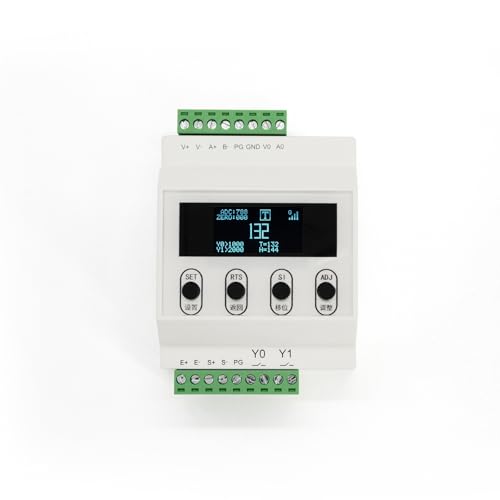
This digital reading unit provides RS-485, 4-20mA, 0-5V, and 0-10V outputs, enabling flexible integration with varied control architectures. The built-in LED display presents direct measurements while enabling unit selection in kg, g, ton, and newtons. The device supports multiple data interfaces for centralized monitoring, archival logging, and remote sensing. It is suitable for factory automation, test benches, and quality assurance environments where robust, multi-format signaling is essential.
Buying Guide
- Readout clarity: Choose a device with a bright, legible display and a peak-hold or track mode if you need to capture transient max loads.
- Output compatibility: Verify available outputs (4-20mA, 0-10V, RS485) align with your controller, PLC, or DAQ system.
- Accuracy and range: Consider the load cell’s rated capacity, accuracy (e.g., ±0.2% or better), and whether static and dynamic weighing requirements are met.
- Relays and automation: Dual relay outputs can automate alarms, cutoffs, or data logging when thresholds are reached.
- Units and calibration: Ensure unit options (kg, g, ton, N) fit your workflow, and confirm ease of calibration and tare/peel features.
- Environmental fit: Check sensor construction (bellows or robust housings) for vibration, temperature, and exposure to industrial settings.
- Connectivity and expansion: If you anticipate future integration, prioritize RS485 or Ethernet-ready devices with compatible software or drivers.
- Support and documentation: Look for clear manuals, setup wizards, and vendor support to simplify installation and calibration.