
Best Light Bulb for Heat: Reliable Reptile and Poultry Heating
Choosing the right heat bulb is essential for maintaining safe, healthy temperatures for reptiles, poultry, and other small animals. This guide reviews five well-regarded ceramic and infrared heat bulbs that deliver consistent warmth without disturbing sleep cycles or causing glare. While all options focus on heat, some also offer targeted basking spots, fast warm-up times, or durability for demanding environments. Use this overview to compare performance, installation, and suitability for your pets or livestock.
| Product | Brand | Type | Key Benefit |
|---|---|---|---|
| Simple Deluxe Ceramic Heat Emitter Bulb, 100W | Simple Deluxe | Ceramic Heat Emitter | No light emission; long life; standard E26 base |
| LUCKY HERP Ceramic Heat Emitter, 150W (2-Pack) | LUCKY HERP | Ceramic Heat Emitter | Fast heat up; durable ceramic; long life |
| BULBMASTER 250W Red Heat Lamp (2 Pack) | BULBMASTER | Infrared Red Heat Lamp | Radiant heat for bathrooms, brooders, and coops |
| LUCKY HERP 250W Infrared Red Heat Lamp | LUCKY HERP | Infrared Red Heat Lamp | Warm lighting while heating; broad application |
| Wesome Lighting 250W Infrared Heat Lamp | Wesome Lighting | Infrared Heat Lamp | High heat efficacy; suitable for brooders and pets |
| Fluker’s 60W Basking Spotlight | Fluker’s | Incandescent Spotlight | Direct heat and light for basking |
The following sections highlight five curated options most aligned with the keyword “light bulb for heat,” spanning ceramic emitters and infrared heat lamps. Each entry includes installation notes, typical use cases, and what makes it suitable for reptile care, brooders, or small animal warmth needs. Consider wattage, LED/no-light requirements, base compatibility, and the intended environment when selecting a bulb.
Simple Deluxe 100W Ceramic Heat Emitter Bulb

This ceramic heat emitter uses a standard E26 base and is designed to run without emitting light, helping to minimize disturbance to sleep cycles for nocturnal or sensitive pets. The bulb is rated for up to 10,000 hours, offering extended service life in reptile enclosures, incubators, and brooders. It operates on 110-120V AC and draws 100W, delivering steady warm air to the enclosure without visible light. After turning off, allow at least one hour for the bulb to cool before handling to avoid scalding.
LUCKY HERP 150W Ceramic Heat Emitter (2-Pack)
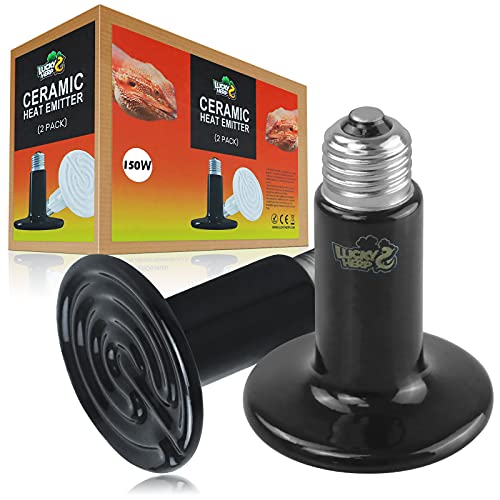
These 150W ceramic emitters generate heat without light, ideal for night-time warmth in reptile enclosures, chicken coops, and small animal habitats. They heat rapidly—noticeable warmth within seconds and full-rated temperature in minutes—while maintaining durability thanks to a thick ceramic construction. Compatible with standard E26 sockets and 120-volt power, they offer an estimated lifespan up to 10,000 hours and are designed for easy installation and reliable operation.
BULBMASTER 250W Red Heat Lamp (2 Pack)

This infrared red heat lamp is designed for radiant heat, often used in bathrooms for post-shower warmth, brooders for chicks, and general pet warmth. It uses a clear infrared-emitting bulb in the R40 reflector format with an E26 base. The red tone can help create a calming environment and supports comfortable warmth without relying on overhead white light. It is suitable for indoor use in enclosures and small animal habitats that require steady warmth noted by rapid heating performance.
LUCKY HERP Infrared Heat Lamp, 250W Red

Designed for broad heating needs, this 250W infrared lamp provides strong, rapid warmth and a soft red glow that reduces visual stimulation for pets. It’s suitable for chicken coops, brooders, and various small animals, and works well for reptiles that benefit from infrared warmth. The red light helps maintain circadian rhythms in animals, particularly at night, while delivering effective heating for larger spaces or roomy enclosures.
Wesome Lighting 250W Infrared Heat Lamp

Wesome Lighting’s 250W infrared lamp provides high heat efficacy with an infrared emitter designed to quickly raise temperatures in brooders, reptile enclosures, or bathrooms needing consistent warmth. The bulb’s reflective coating helps concentrate heat, improving efficiency. It can serve multi-species needs—from poultry and small mammals to reptiles—by creating a reliable warm environment while keeping heat distribution manageable and predictable.
Fluker’s Basking Spotlight Bulbs, 60W

This 60W incandescent spotlight targets basking areas for reptiles, directing heat and light to a specific spot to aid in regulating core body temperature. The infrared component supports heating, while the focused beam provides a controlled basking zone. It’s particularly suitable for snakes and lizards that require a defined heat source with a visible basking site for observable behavior adjustments.
Buying Guide: Key Purchase Considerations
When selecting a heat bulb, consider the environment, species, and enclosure size. Ceramic emitters provide steady heat without light, making them ideal for nocturnal pets and incubators. Infrared red bulbs deliver radiant warmth with a lower visible glow, often preferred in brooders and poultry setups where quiet, nighttime warmth is desired. Wattage should align with enclosure dimensions: too little power won’t reach target temperatures, while too much can overheat and stress animals. Base compatibility (typically E26) and electrical safety are essential—avoid touching bulbs when hot, and ensure proper housing to prevent burns or fire hazards.
Other considerations include:
– Light emission: choose no-light ceramic emitters for animals sensitive to light at night.
– Heat distribution: reflectors and bulb geometry affect heating patterns; decide between broad or spot heating based on enclosure layout.
– Durability and lifespan: ceramic emitters excel for long-term use; filament-based bulbs may fail sooner in humid environments.
– Temperature control: pairing bulbs with thermostats or heat mats helps maintain stable ambient temperatures.
– Cleaning and maintenance: consider materials that withstand cleaning and disinfectants in animal habitats.
In practice, use ceramic emitters for nocturnal reptile habitats or incubation setups where light is undesirable, and infrared heat lamps for brooders, poultry housing, or multi-species enclosures requiring visible warmth. For focused basking zones, spotlight bulbs offer precise temperature targeting. Always monitor enclosure temperatures with a reliable thermometer and adjust wattage or position as needed to sustain the recommended range for your pets or livestock.