
Best Intercom System for Building: Clear Communication Across Hallways
The following selection highlights five intercom systems that suit multi-unit buildings, offices, or complex homes. Each option focuses on scalability, reliability, and ease of use, with coverage ranges suitable for hallways, lobbies, and common areas. The list includes wired-style building sets and wireless solutions to fit various installation needs and budgets.
| Product | Brand | Key Benefit | Range / Scope |
|---|---|---|---|
| Hosmart UltraSpeak Pro Intercoms | H HOSMART | Real-time two-way wireless, clear sound | Up to ~1200 ft outdoor |
| Commax 4-Apartment Building Intercom | Commax | 4 apartments, flush-mount lobby unit | 4-door/4-handsets |
| Commax 6-Apartment Building Intercom | Commax | 6 apartments, scalable for mid-size builds | 6-door/6-handsets |
| SANZUCO 4 Pack Intercoms Wireless | SANZUCO | Full duplex, group calls, long range | About 5300 ft |
| UHAXZ Wireless Intercoms | UHAXZ | Hands-free, long range, multi-volume | Up to 1500 ft open, 100–150 ft through walls |
Hosmart UltraSpeak Pro Intercoms

The Hosmart UltraSpeak Pro Intercoms deliver real-time full-duplex wireless communication suitable for home offices and small buildings. Setup emphasizes simplicity: plug in and start talking without extensive pairing. The system emphasizes superior audio quality for stable, clear conversations between rooms, with a wireless range reported around 1200 feet in open outdoor environments. Because the units are wireless, placement flexibility is high for hallways, lobbies, and multi-room layouts. The product is designed for hands-free, one-button channel selection to streamline conversations across spaces.
Key considerations for building applications include ease of use for staff and tenants, and the reliability of long-range audio transmission. While the units are advertised as wireless, they require power via wall outlets (no battery operation). This makes them a practical choice for fixed intercom stations on every floor or at main entry points, allowing quick inter-floor communications without complex wiring.
What to weigh for building deployments
- Coverage needs: verify realistic range in your building environment, including walls and furniture.
- Number of endpoints: ensure the system supports the required number of rooms or units.
- Maintenance: wireless systems reduce wiring but require outlet availability and occasional firmware updates.
Commax 4-Apartment Building Audio Intercom

This 4-apartment intercom system is a robust option for small multi-unit buildings. It includes a lobby panel with four call buttons and four apartment handsets (DP-ML) that are surface-mounted. The system uses a flush-mounted lobby unit (DR-4UM) crafted from aluminum for a clean, built-in appearance. Residents can call their unit by selecting the corresponding button, receive audio, and respond through the handset. The design emphasizes simple access control with straightforward door-release integration where applicable.
Assess suitability by considering building layout, the preferred lobby aesthetic, and the desired ease of maintenance. The aluminum lobby panel supports a tidy installation, and surface-mounted handsets provide accessible communication points for tenants without requiring ongoing technician intervention. Installation requires a compatible door strike if access control is part of the plan.
Pros and considerations
- Pros: Compact four-unit solution, flush lobby panel, clear audio.
- Considerations: Wiring and mounting complexity, potential need for compatible door release hardware.
Commax 6-Apartment Building Audio Intercom

The 6-apartment Commax intercom system expands access for mid-sized buildings. It provides a 6-button lobby unit, six DP-ML handsets for each apartment, and a DC12V power supply. Like the four-unit model, the lobby unit is designed with aluminum for flush mounting, delivering a low-profile look in common entry spaces. Tenants can call their apartment, answer the lobby call, and communicate clearly through handsets. The system supports standard door strike control where connected to the setup.
In building planning, this option offers scalable capacity without moving to a full property-wide system. It balances installation complexity with future-proofing if unit counts rise. Consider electrical supply availability and whether additional wiring for door release is required to align with security needs.
Pacific Electronics Single Entrance Intercom System

This single-entrance intercom from Pacific Electronics is described as a compact option suitable for door intercom and entry control in smaller buildings. It references Dortronics hardware and uses a single entry frame to connect to a doorbell or intercom system. While not explicitly a multi-unit system, it provides a pathway for integrating intercom calling with entry access in small facilities or as a supplemental unit in larger setups. The product listing notes compatibility with door relays and intercom functionality.
When evaluating for a building, determine whether a single-entry configuration suffices or if you need a scalable multi-unit solution. Compatibility with existing door hardware and future expansion should guide purchasing decisions. Ensure that the receiver housing and mounting options align with lobby or entry hall aesthetics.
Wuloo Intercoms Wireless for Home
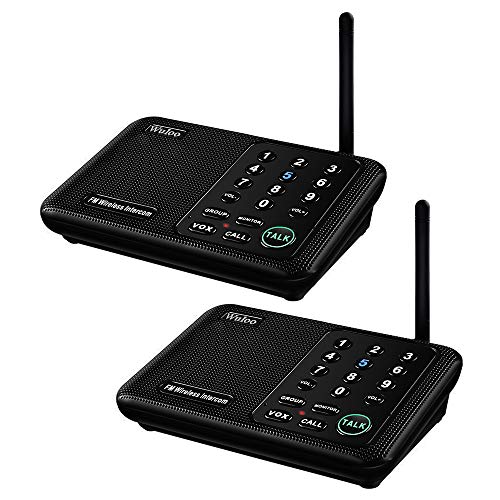
The Wuloo wireless intercom system offers a long-range option with up to 5280 feet in open space and a 10-channel setup with 3 digital codes. This model is well-suited for larger homes or small offices where movement between rooms requires reliable, multi-channel communication. The system emphasizes secure coding to reduce interference and supports a quick-start approach with user guides included. It is particularly attractive for users prioritizing easy install-and-use capability in a building environment without extensive wiring.
Important considerations include interference management in dense building environments and whether the 10 channels meet your operational needs. Also assess whether you need encryption-like digital codes for privacy across office floors or residential units. With a wireless approach, plan for wall obstructions and potential signal-penetration limits.
Buying Guide: Key Purchase Considerations for Building Intercom Systems
- Type and scale: Choose between wired, semi-wired, or wireless systems based on building size, existing infrastructure, and future expansion goals.
- Range and environment: Consider the effective range in your building’s layout, including walls, floors, and metal partitions. Open-air ranges may differ from indoor performance.
- Number of endpoints: Ensure the system supports the required number of entrances, lobby panels, and apartment handsets for your building.
- Call features: Full duplex, automatic answer, group calls, conference capabilities, and door release integration influence daily operations.
- Power and mounting: Wired and flush-mounted lobby panels offer a cleaner look but require electrical work; wireless units provide flexibility but rely on outlets and stable power sources.
- Security and privacy: Digital codes or multiple channels can help minimize cross-talk and protect conversations in shared spaces.
- Maintenance and support: Availability of spare parts, ease of installation, and vendor support impact long-term reliability.
- Budget and installation time: Weigh upfront costs against installation complexity and ongoing maintenance needs.
- Compliance and safety: Ensure compatibility with local building codes and building security requirements, including door-release hardware.