
Best in Home EV Charger Options for 2026
Answering the need for safe, reliable, and easy-to-use home charging, these Level 2 EV charging stations are designed for residential garages and driveways. They suit buyers who want a plug-in solution, a hardwired setup, or a portable option for at-home charging. The top picks here balance compatibility, ease of use, and connectivity to help you pick the right charger for Ford, Chevy, Tesla (with adapters), and most common J1772-equipped electric vehicles. The summary table below highlights key distinctions.
| Product | Best For | Outlet Type | Cable Length | |
|---|---|---|---|---|
| EVIQO Level 2 EV Charger J1772 40A | Most non-Tesla cars, mid-range daily charging | 240V NEMA 14-50 (plug-in) | 25 ft | Yes |
| WOLFBOX Level 2 EV Charger 40A | Weatherproof, indoor/outdoor use | 240V NEMA 14-50 (plug-in) | 25 ft | Yes |
| MSI EZgo NACS 40A | Portable charging flexibility | NEMA 14-50/NEMA 5-15 (multi-plug options) | Not stated | Limited (portable) |
| EVIQO Level 2 EV Charger NACS 48A | Higher-speed residential charging | Hardwired 240V | 25 ft | Yes |
| ChargePoint HomeFlex Level 2 | Smart, scalable home charging | Hardwired or plug-in (depending on install) | 23 ft | Yes |
The following sections describe each option in detail to help you compare features, installation needs, and real-world usability.
EVIQO Level 2 40A J1772 240V Charger

This charger uses a standard J1772 connector, compatible with most non-Tesla EVs and plug-in hybrids. It delivers up to 40A on a 240V NEMA 14-50 outlet, ideal for overnight charging on a dedicated 50A circuit. The 25-foot cord helps reach multiple parking spots. Built-in WiFi supports a mobile app for start/stop charging, speed adjustments (6-40A), reminders, and energy tracking. Best for drivers seeking a reliable plug-in solution with smart controls. A potential limitation is the need for a 2.4 GHz network and a proper 50A circuit to realize full 40A output.
Who it’s best for: Homeowners with a standard 50A circuit, who want a robust, weatherproof charger that works across many EV brands without adapters beyond the included J1772 connector.
Note: Confirm your vehicle’s port type and ensure your electrical panel supports a 50A dedicated circuit before purchasing.
WOLFBOX Level 2 40A EV Charger

The WOLFBOX model emphasizes weather resistance and a robust WiFi-enabled experience. It is best for buyers who want a charger that can live outside and still perform well, with RFID access and a 25-foot cable for flexible installation. Limitations can include slightly more complex setup for non-standard networks and cable management in tight spaces.
Who it’s best for: Homeowners needing outdoor durability and smart features, with easy access control via RFID and strong connectivity.
Important note: Ensure your installation location accommodates a 14-50 outlet if you choose a plug-in version or plan a hardwired alternative if required by local codes.
MSI EZgo NACS 40A Portable Charger

The MSI portable charger stands out for those who want a flexible, travel-friendly option (though intended for home use). It includes dual plug configurations (NEMA 5-15 and NEMA 14-50), offering versatility when you need a backup or temporary setup. Limitation: portable units typically require careful cable management and may lack some advanced smart features found in fixed installations.
Who it’s best for: EV owners who want a portable, multi-configuration charger for occasional home use or travel, with the option to connect to different outlets as needed.
EVIQO 48A NACS Hardwired Charger

The ChargePoint HomeFlex is designed around smart connectivity and scalability. It supports a 50A configuration and can be hardwired or plugged in, depending on install preferences. The charger offers a robust mobile app for charging management, reminders, and energy data. It’s a strong choice for users who want to leverage ChargePoint’s network and smart features as they expand their home charging capabilities. A potential limitation is that some advanced features require app connectivity and network reliability to function optimally.
Who it’s best for: Homeowners seeking a scalable, network-backed charging solution with strong app support and broad compatibility, ideal for future-proofing a smart home charging setup.
MSI EZgo Portable 40A Charger (NACS/NEMA)
This MSI portable unit supports Level 1/2 charging with a flexible plug set (NEMA 5-15 and NEMA 14-50). Its portability makes it useful for temporary setups or shared spaces. Best for drivers who want a backup option for home charging or who routinely move between locations. Limitation: not as deeply integrated with smart-home ecosystems as fixed installations; may require manual setup for different outlets.
Who it’s best for: EV owners who want a portable, adaptable charger for occasional home use or when traveling between properties.
ChargePoint HomeFlex Level 2 EV Charger
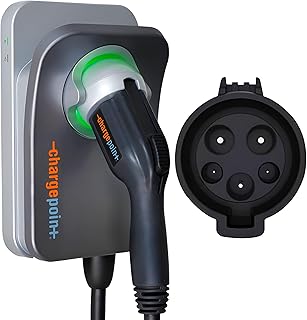
ChargePoint HomeFlex focuses on smart charging and easy app control. It supports 50A configurations and offers up to 37 miles of range per hour of charging depending on the vehicle. The charger is suitable for indoor or outdoor use, with a network that enables tracking, reminders, and energy data. Best for households invested in a larger charging network and energy management. Limitation: some features require ongoing connectivity, and the best experience depends on reliable WiFi.
Who it’s best for: Buyers seeking a premium smart charger with broad app capabilities and future expansion potential in a connected home environment.
Buying Guide: Key Considerations For In Home EV Chargers
- Installation type: Decide between plug-in (uses a NEMA 14-50 outlet on a dedicated circuit) or hardwired. Plug-in units are easier to retrofit; hardwired units can be cleaner and more secure but may require professional installation.
- Amperage and charging speed: Higher amperage (40A, 48A, 50A) enables faster charging but requires compatible EVs and a suitable electrical service. Consider how quickly you want to replenish an overnight battery and whether you’ll ever need higher speed in the future.
- Cable length and reach: Choose a length that fits your garage or driveway layout. A 25-foot cord is common and versatile for many spaces.
- Weatherproofing: If you plan to install outdoors, ensure IP ratings and NEMA protection meet local climate conditions. Indoor/outdoor-rated units simplify weather concerns.
- Smart features and app control: Apps can start/stop charging, schedule off-peak charging, monitor energy usage, and provide remote management. Ensure your home WiFi supports the device’s frequency (2.4 GHz often required).
- Vehicle compatibility: Most Level 2 chargers use J1772 connectors, compatible with nearly all non-Tesla EVs; Tesla drivers may need an adapter. Confirm compatibility with your specific model.
- Security and access: Features like RFID or app-based access can prevent unauthorized use, especially in shared driveways.
- Customer support and network: Chargers from established brands often provide robust support and added benefits via their ecosystems.
Frequently Asked Questions
- What amperage should I choose for a home charger?
Answer: A 40A–50A charger is common for faster at-home charging, but ensure your electrical panel and outlet support it and that your EV can accept that rate. - Do I need a professional to install a hardwired Level 2 charger?
Answer: Yes. A licensed electrician should assess your panel capacity, wiring, and local codes before hardwiring a charger. - Is WiFi required for the charger to function?
Answer: Basic charging works without WiFi, but many smart features depend on a reliable 2.4 GHz WiFi or network connection. - Can I use a portable charger at home?
Answer: Portable units are convenient for occasional use or travel, but fixed installations generally offer more predictable performance and integration. - Will these chargers work with Tesla vehicles?
Answer: Most non-Tesla EVs with J1772 ports will work directly. Tesla drivers can charge with adapters that come with the car, depending on the model. - What should I consider about cable length?
Answer: Measure your typical parking spot distance from the outlet or mounting point to ensure the cord reaches comfortably without strain.