
Best Hub Motor Solutions for Electric Scooters: Top 5 in-Depth Reviews
The best hub motor for your electric scooter depends on your riding style, terrain, and maintenance preferences. This guide highlights five reliable hub motors that work across common scooter setups, from off-road readiness to city commutes. It targets riders seeking straightforward upgrades or replacements with clear, objective comparisons. The buyer’s quick-start table below helps you scan key picks at a glance.
| Product | Wheel Size | Power | Best For |
|---|---|---|---|
| Bnineteenteam 10 Inch Hub Motor | 10 inch | 800W | Rugged, all-weather performance |
| QnQ 8.5″ Front Motor Wheel | 8.5 inch | 350W | Urban commutes, light duty |
| Oreilet 10 Inch Hub Motor (M4/M4 Pro) | 10 inch | 800W | Powerful elevation and climbs |
| doinal 8 Inch Hub Motor Kit | 8 inch | 500W | Compact builds, easy install |
| KZU 10 Inch Hub Motor (Ninebot MAX G30) | 10 inch | 350W | Replacement for Ninebot MAX G30 |
Bnineteenteam 10 Inch Hub Motor — 800W, Off-Road Ready

Off-road capable hub motor designed in a 10-inch form factor. Aluminum alloy construction keeps weight manageable while supporting high load capacity. Water resistance supports riding in wet conditions, reducing maintenance concerns. The motor is described to support rapid startups and long range with customizable firmware, making it suitable for riders who tune performance.
Best for: Enthusiasts who want a strong, upgrade-ready rear drive with weather resilience and the option to tailor torque and speed via firmware.
Limitation: Firmware customization requires technical know-how and monitoring to ensure safe operation across terrains.
QnQ 8.5″ 350W Front Motor Wheel

8.5-inch front motor wheel offering 350W with peak torque around 464W. Noted for smooth sinusoidal control, low noise, and high efficiency. Designed to fit 8.5″ e-scooters with plug-and-play compatibility.
Best for: Urban commuters seeking a compact, quiet, easy-to-install motor wheel for smaller scooters or front-drive experiments.
Caution: Front-wheel installation may affect weight distribution; verify scooter geometry before swapping.
Oreilet 10 Inch Hub Motor Rear Wheel — 800W

Rear-wheel hub motor designed for easy installation on 10-inch scooters. Claimed to deliver strong output with support for climbing and acceleration on varied terrains. It emphasizes energy efficiency and extended range for longer rides.
Best for: Riders upgrading a heavier or steeper-riding scooter who want a straightforward, rear-drive solution with solid energy efficiency.
Limitation: Specific installation details may vary by model; ensure compatibility with existing wheel and brake systems.
doinal 8in Hub Motor Kit — 500W

An 8-inch motor wheel with 500W power, drum brake and a rugged aluminum alloy hub. It emphasizes water and rust resistance with a focus on easy installation and reliable operation. The accompanying controller is designed for steady speed control and effective braking response.
Best for: Builders seeking a compact, cost-effective kit for smaller scooters or custom builds with a reliable drum brake setup.
Limitation: 8-inch form factor may restrict tire choice and overall wheel diameter compatibility with some frames.
KZU 10 Inch Hub Motor — Ninebot MAX G30 Compatibility
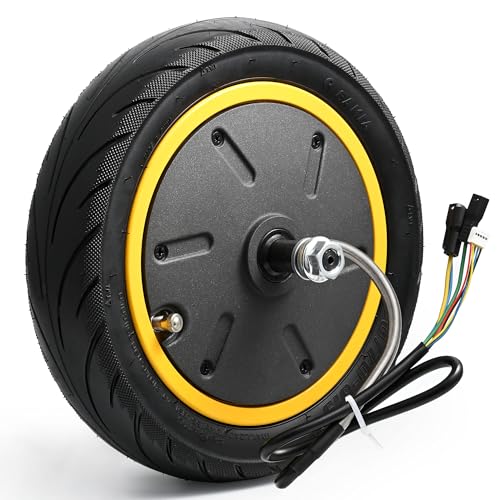
10-inch rear-wheel motor designed as a replacement for Ninebot MAX G30 scooters. It highlights a robust aluminum alloy wheel hub with a focus on bearing capacity and durability. It’s positioned as a straightforward replacement for popular models.
Best for: Ninebot MAX G30 owners seeking a reliable, direct-fit hub motor upgrade or replacement without extensive modification.
Limitation: Compatibility is tied to Ninebot MAX G30 variants; confirm connector type and wiring before purchase.
Buying Guide: Hub Motors For Electric Scooters
- Power needs: Choose higher wattage for lifting hills and heavier riders. If you ride mostly on flat city streets, a 350–500W unit may suffice.
- Wheel size compatibility: Smaller wheels (6–8 inches) suit compact builds; larger (10 inches) offer better shock absorption and stability on rough roads.
- Drive type: Rear-wheel hubs generally provide better traction and acceleration; front-wheel hubs can reduce drivetrain load but may affect steering feel on steep grades.
- Maintenance and weather: Aluminum construction and water resistance help longevity in varying weather. Look for sealed bearings and robust tires if you ride in rain or dusty conditions.
- Installation effort: Some kits are plug-and-play with minimal wiring, while others require firmware setup or wiring reconfiguration. Consider your DIY comfort level.
- Compatibility checks: Confirm motor diameter, axle size, brake compatibility, and hub type with your scooter model or frame before purchasing.
- Firmware and tuning: More powerful motors may benefit from tuning for efficiency and range; improper firmware changes can affect safety and reliability.
FAQ
- What is the main difference between 8-inch and 10-inch hub motors? Answer: 8-inch motors are more compact and lighter, good for smaller scooters, while 10-inch motors offer better ride comfort, stability, and load capacity on rough surfaces.
- Is a higher wattage motor always better? Answer: Not always. Higher wattage improves torque and top speed but can reduce range and require more robust controllers and batteries.
- Can I upgrade my scooter to a hub motor from a different wheel size? Answer: Upgrades may require frame or brake adjustments. Confirm wheel diameter, axle width, and mounting compatibility before purchasing.
- Do hub motors need special maintenance? Answer: Regular checks for loose bolts, tire wear, and wiring integrity support longevity. Keep water out of connectors and ensure proper alignment with the frame.
- Are waterproof hub motors worth it for frequent rain riders? Answer: Yes, but verify the motor’s IP rating and sealing quality. Even with water resistance, avoid soaking or submerging electrical components.
- Is rear-wheel drive better for hills? Answer: Generally yes, as rear-wheel traction improves acceleration and climbing ability, but front-wheel offers lighter steering in some builds.