
Best Home Use Solar Panel Solutions for Reliable Power Anywhere
Looking for dependable solar power options for home, backup, or off-grid living? This guide highlights five top Amazon picks that fit different home-use scenarios—from compact portable kits for emergencies and camping to full home backup systems. Each option is explained with who it’s best for, why it matters, and practical limits to consider. The buyer can compare at-a-glance features and choose the best fit for their energy needs.
The following table summarizes the five products discussed, focusing on suitability, capacity, and typical use case. Use this as a quick reference when deciding which system to explore further.
| Product | |||
|---|---|---|---|
| ZeroKor 300W Portable Solar Generator | Portable Power Station | 280Wh battery, 300W rating | Camping, RVs, weekend getaways, off-grid use |
| Jackery HomePower 3600 Plus | Home Backup Power Station | 3584Wh capacity, up to 3600W AC (6000W surge) | Home backup, emergencies, multi-room support |
| Renogy 200W Portable Solar Panel | Portable Solar Panel | 25% efficiency, foldable 200W panel | |
| OSCAL PowerMax 6000 | Solar Generator | 3600Wh, 6000W AC output, 2200W fast charging | Emergency home power, multi-appliance support |
| Powkey 200W Solar Generator | Portable Power Station | 146Wh, 200W output | Compact travel backup, mobile charging |
ZeroKor 300W Portable Solar Generator

The ZeroKor 300W system includes a foldable 60W solar panel and a 280Wh lithium battery pack. It provides two 300W max AC outlets, a DC port, three USB ports, and a quick-charge USB port. It also includes a built-in SOS flashlight. Best for individuals who need a compact power source for phones, tablets, cameras, and small appliances while camping, while traveling in an RV, or during short-term outages. The unit is ideal for off-grid micro-use but may struggle with high-wattage devices like hair dryers or coffee makers. The integrated MPPT solar panel charger supports recharging from solar or home AC outlets.
Who it’s best for: weekend campers, minimalist RV travelers, and anyone needing a lightweight, portable charging hub for small devices.
Limitations to note: sustained loads over 300W can damage the power station; heavy appliances may exceed its capacity. Solar charging depends on sunlight; charging speed varies with weather.
Jackery HomePower 3600 Plus
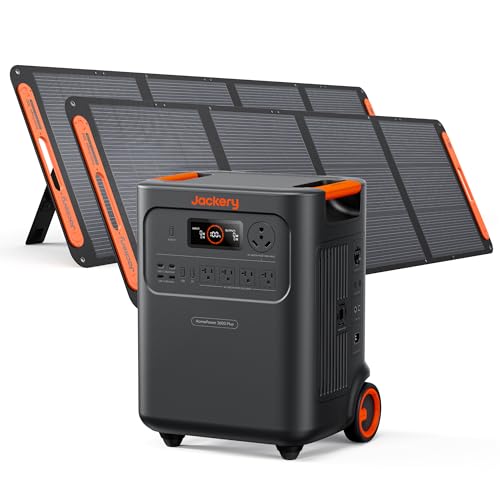
The Jackery HomePower 3600 Plus is a high-capacity home backup solution offering 3600W continuous output (7200W in parallel) and a 3584Wh base capacity, expandable to a multi-unit 21kWh or more. It supports 120V/240V split-phase operation for home compatibility and is designed for long-term reliability with high-temperature battery cells and a long cycle life. It’s positioned for emergencies, home use, and RV scenarios where stable power is essential. It’s straightforward to use with plug-and-play operation and minimal setup.
Who it’s best for: households seeking robust backup power for essential appliances during outages, including pumps, heaters, and small electronics.
Limitations to note: higher upfront cost and larger footprint; integration with existing home electrical systems may require planning for parallel operation.
Renogy 200W Portable Solar Panel

Renogy’s 200W foldable solar panel emphasizes efficiency and portability. With 25% cell efficiency, lightweight design (about 14 lb), and a compact foldable form, it is easy to pack for travel or small-vehicle setups. It includes MC4 outputs and USB-C PD and USB-A ports for device charging, enabling direct charging for power stations or compatible batteries. It’s best for charging portable power stations, cameras, laptops, and small devices when space is limited. It’s a solid option for off-grid scenarios with moderate sun exposure.
Who it’s best for: travelers and campers needing a high-efficiency panel in a compact package.
Limitations to note: requires compatible charge controllers or power stations; high-widelity performance depends on sun conditions.
OSCAL PowerMax 6000
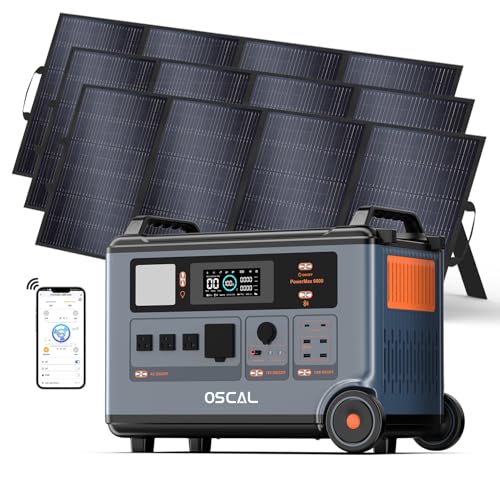
The OSCAL PowerMax 6000 is a robust solar generator with 3600Wh capacity and 6000W continuous output, plus a 9000W surge. It supports 120V/240V split-phase, three charging modes including fast solar charging (2400W) and AC charging (2200W), and LiFePO4 chemistry for safety and cycle life. It’s designed for home emergency use, camping, and outdoor work environments where multiple high-draw appliances may be used. The device provides strong performance for powering pumps, heaters, and other essentials during outages.
Who it’s best for: households needing substantial, multi-appliance support during outages or off-grid events.
Limitations to note: larger and heavier unit; initial setup and transport require space.
Powkey 200W Solar Generator

Powkey offers a compact 200W portable power station with a foldable solar panel. It provides 146Wh capacity with two 110V AC outlets and multiple USB ports. The unit is designed for outdoor use, travel, and emergency charging for phones, laptops, cameras, and essential devices. It is a practical choice when portability and quick setup are prioritized. The included solar panel enables on-the-go recharging, making it suitable for hikers, campers, and small-family trips.
Who it’s best for: travelers and outdoor enthusiasts needing lightweight, quick-charge capabilities.
Limitations to note: lower total capacity means more frequent recharges; not ideal for powering larger appliances for long periods.
Buying Guide
What matters most when choosing a home-use solar setup? Consider the following.
Power needs and scalability
Estimate your essential loads and daily usage. If outages are possible, a system with higher continuous power and parallel expansion (multiple units) can be more reliable. For camping or portable use, prioritize battery capacity and AC outlet count.
Battery chemistry and lifespan
LiFePO4 chemistries offer longer lifespans and better safety in home contexts, especially with frequent charge-discharge cycles. If you expect long-term daily use, prioritize units with durable cells and safe management systems.
Recharging options
Solar panel input, AC charging speed, and vehicle charging compatibility determine how quickly you regain power. A higher wattage solar input reduces downtime after outages or long trips.
Portability vs. capacity
Portable systems are easy to move and set up but usually have smaller capacities. Larger home backup units provide more sustained power but require space and potentially more complex installation.
Outlets and compatibility
Ensure the device offers the outlets you need (AC, DC, USB-C PD) and is compatible with your devices, especially if you rely on high-watt appliances. Some devices require additional adapters or specific power stations to operate certain loads.
Durability and weather resistance
Outdoor use demands weather-resistant enclosures and IP-rated panels. For security cameras or outdoor devices, rugged panels that withstand sun, rain, and temperature changes are important.
Safety features
Look for BMS protection, overcharge/over-discharge safeguards, short-circuit protection, and thermal safety. These features protect both devices and users in home or outdoor settings.
Price-to-value
Compare capacity, output, and expandability with the total ownership cost. A higher upfront cost may be justified by longer lifespans, more reliable backup power, and future scalability.
FAQ
- What is the best option for a home backup with multiple appliances? A high-capacity system like Jackery HomePower 3600 Plus or OSCAL PowerMax 6000 offers robust output and expandability for home use.
- Can solar generators run heavy appliances? Some units support high-wattage loads up to several kilowatts, but confirm continuous output and surge ratings before attempting to run heaters or hair dryers.
- Do I need an electrician to install a home solar generator? Many units are plug-and-play and require minimal setup, but integrating with home wiring may require professional guidance depending on local codes and systems.
- Is LiFePO4 better than AGM batteries? LiFePO4 typically offers longer cycle life and safer thermal performance, which matters for home backup or frequent use.
- How important is solar panel efficiency? Higher efficiency panels generate more power from limited sun, benefiting setups with fixed space constraints or cloudy climates.
- Can I expand a portable system later? Some models support parallel expansion or multi-unit configurations; check compatibility with additional modules or power stations.