
Best Heat Tape for Water Pipes With Thermostat for American Homes
Protecting water pipes from freezing is essential in winter, especially in regions with harsh cold snaps. Using heat tape with a built‑in thermostat offers automatic, energy‑efficient freeze protection for metal and plastic pipes, RVs, and roofs. This article reviews top options, highlighting safety certifications, thermostat behavior, and compatibility. Read on to compare features, usage, and installation considerations to help you choose the right heat tape for your needs.
| Product | Length | Thermostat | Materials | Uses |
|---|---|---|---|---|
| Cupohus Heat Tape for Water Pipes with Thermostat (3 ft) | 3 ft | Built‑in thermostat | Self‑regulating cable | Metal & Plastic Pipes, Roof & RV |
| HEATIT 100 ft Pipe Heating Cable | 100 ft | Thermostat control | Self‑regulating cable | Wide pipe range, indoor use |
| Cupohus Heat Tape for Water Pipes with Thermostat (12 ft) | 12 ft | Built‑in thermostat | Self‑regulating cable | Metal & Plastic Pipes, Roof & RV |
| Radiant Solutions Intelligent Heat Tape | 3 ft | Built‑in GlowCap thermostat | Self‑regulating cable | All common pipe types |
| XPORTION 3 ft Heat Tape with Thermostat | 3 ft | Built‑in thermostat | UL & ETL certified | Metal & Plastic Pipes |
Cupohus 3 Ft Heat Tape With Thermostat

Cupohus offers a compact, self‑regulating heat tape designed to preserve water flow in cold weather. The full‑length heating cable elevates water temperature to above 59°F (15°C), ensuring smooth flow even when overnight lows drop to -40°F (-40°C). The system activates when water drops below 41°F (5°C) and deactivates at 59°F (15°C) to conserve energy. When used with a 120V power source, the external GFCI outlet minimizes overheating risk, and the build includes waterproofing features to resist moisture intrusion.
Key considerations include the cable length for reach and the safety of a fully enclosed heating element. This model is suitable for metal and plastic pipes, and it can be used on roofs or in RV plumbing as part of a broader winterization strategy. The product emphasizes energy efficiency through its auto‑start/stop behavior and keeps water moving even in frigid conditions.
Safety notes: ensure a properly rated outlet with GFCI protection, and install according to local electrical codes. The 3 ft length is ideal for shorter runs or point protections near vulnerable joints or spigots. For larger installations, pairing with longer options may cover more pipe surface area.
HEATIT 100 Ft Pipe Heating Cable

HEATIT’s 100‑foot self‑regulating heat tape is designed for extensive piping runs, offering thermostat control and energy efficiency. The product carries ETL certification for safety, with the plug also UL certified. It maintains flow in temperatures down to -40°F (-40°C), helping to protect metal and plastic pipes alike. The kit typically includes a 2 ft power cord and options from 3 ft to 160 ft to accommodate varying layouts. A strong warranty and liability coverage provide added purchase security.
Performance notes focus on safety certifications as indicators of reliability, and the self‑regulating core adapts heat output to ambient conditions. This makes it suitable for longer installations where consistent heat along the entire length reduces cold spots. It’s compatible with most standard indoor environments and can support a range of pipe materials, reducing the risk of freeze damage in harsher climates.
Installation considerations include routing the cable away from sharp edges and avoiding contact with direct heat sources. Use a grounded outlet and protect connections from moisture. The long length offers flexibility for garages, basements, and crawl spaces where pipes run irregularly.
Cupohus 12 Ft Heat Tape With Thermostat

The 12‑foot Cupohus heat tape extends freeze protection across longer pipe spans, maintaining flow by keeping water above 59°F (15°C) when conditions drop to -40°F (-40°C). The thermostat engages as water approaches 41°F (5°C) and turns off at the target temperature, reducing energy use while delivering dependable performance along the entire length. As with other Cupohus products, the design emphasizes safety with 120V operation and moisture shielding to prevent seepage issues.
This option is well suited for mid‑sized runs, including attic or roof lines where pipes may be exposed to cold air. The 12 ft length helps cover elbows and joints more effectively, minimizing cold spots. It also supports a broad array of pipe materials, making it a versatile addition to a winterization toolkit.
Radiant Solutions Intelligent Heat Tape With GlowCap

Radiant Solutions offers an intelligent heat tape with GlowCap, a built‑in thermostat feature designed for intuitive operation. The tape is self‑regulating and suitable for a range of pipe types, including copper, steel, PVC, ABS, and PEX. This approach emphasizes an easy install and a clear, visible indicator for thermostat status, with a focus on reliability and a long‑term warranty. The kit is intended for indoor use and is positioned as a heavy‑duty option for persistent cold spells.
As this option notes, the thermostat needs ambient exposure to trigger heating, which requires careful placement away from direct heat sources or freezing corners. While the product excels in indoor utility rooms and basements, ensure it is not used in outdoor plumbing scenarios unless specifically rated for such use. It is a strong pick for homeowners who want straightforward operation with a durable build and a solid warranty.
XPORTION 3 Ft Heat Tape With Thermostat
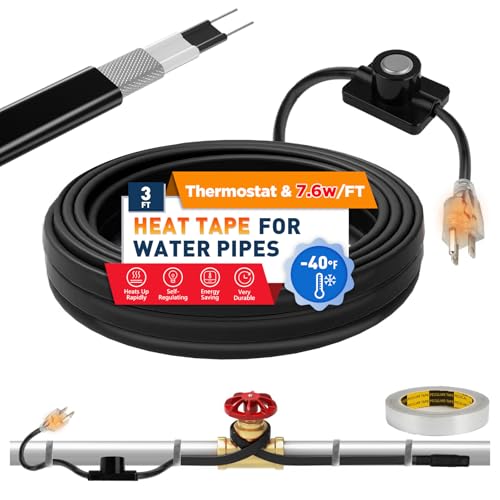
XPORTION’s 3 ft heat tape offers UL and ETL certifications, signaling compliance with widely recognized safety standards. This compact option includes a built‑in thermostat that starts heating at approximately 38°F (3°C) and stops near 59°F (15°C), with a ±3°C adjustment to respond to ambient changes. It’s designed for both metal and plastic pipes, delivering 7.6 W per foot for effective freeze protection in small to mid‑sized layouts. The waterproof jacket and end seals contribute to long‑term durability in winter conditions.
For installations with limited run lengths or where pipes pass through tight spaces, this model provides a reliable, easy fit. Its emphasis on certified safety and adjustable cooling/heating balance can help manage energy costs while maintaining water flow during subzero weather. This makes it a good fit for laundry rooms, crawl spaces, or sheltered outdoor segments that stay dry and accessible.
Buying Guide
Key considerations
- Length and coverage: Measure the total pipe run and choose a cable length that minimizes seams to avoid cold spots. Longer cables cover elbows and multiple joints more effectively.
- Thermostat behavior: Look for a built‑in thermostat that starts heating below 40°F (4°C) and stops near 59°F (15°C) for efficient energy use. Some models offer ±1–3°C adjustments for ambient conditions.
- Certifications: ETL and UL certifications indicate compliance with safety standards. Ensure the entire heating cable, not just the plug, carries certification.
- Pipe material compatibility: Most heat tapes work with metal and plastic pipes, but verify compatibility with copper, PVC, or PEX as listed by the manufacturer.
- Indoor vs outdoor use: Some products are designed for indoor use only; outdoor use requires weatherproof ratings and outdoor‑rated installations.
- Electrical safety: Use a grounded GFCI outlet when installing near water. Follow local electrical codes and keep connections dry and accessible for inspection.
- Installation ease: Self‑regulating cables reduce the risk of overheating. Look for end seals, waterproof jackets, and easy routing options to simplify setup.
Performance comparisons
- Energy efficiency: Self‑regulating tapes automatically moderate heat, which lowers energy usage compared to constant heating. Longer runs with built‑in thermostats help maintain consistent temperatures along the pipe.
- Durability: Look for sealed end caps and protective jackets to withstand cold temperatures and moisture exposure, especially in basements, attics, or rooflines.
- Safety features: Grounded plug, moisture resistance, and proper insulation reduce the risk of electrical faults. Always pair with appropriate protective housings where needed.
- Warranty and support: A longer warranty and accessible customer support improve long‑term value, especially for hard‑to‑reach installations.
Practical installation tips
- Plan cable routing to minimize bends and avoid torsion, which can reduce efficiency.
- Keep the thermostat sensor protected from direct cold drafts or radiant heat sources that could skew readings.
- Test the system with an ice pack before finalizing the installation to confirm activation and shutdown points.
- Label circuits and document the installation for future maintenance or upgrades.