
Best Heat Tape for Headers: Top Heat Wraps for Cars and Motorcycles
Choosing the right exhaust header heat wrap can help reduce under-hood temperatures, improve engine performance, and protect components from heat exposure. The following selections focus on durability, heat resistance, and ease of installation. Read on to compare top-rated wraps and their key features, plus a practical buying guide to help you select the best option for your vehicle.
| Product | Brand | Heat Resistance | Install Ties | Notes |
|---|---|---|---|---|
| SunplusTrade 2″ x 50′ Black Exhaust Heat Wrap | SunplusTrade | 1400°F direct / 2000°F radiant | 6 ties included | Fiberglass wrap, durable, abrasion resistant |
| LEDAUT 2″ x 50′ Titanium Wrap | LEDAUT | 1800°F direct / 2500°F intermittent | 16 ties included | Titanium-coated, strong and heat resistant |
| Tooomplus 2″ x 16′ Fiberglass Wrap | Tooomplus | 1832°F / 1000°C | 10 ties included | Premium fiberglass, easy install |
| NEZUIBAN 2″ x 50 Ft Black Wrap | NEZUIBAN | 1200°F direct / 2500°F intermittent | 10 ties included | Flexible fiberglass, versatile use |
| ARTR 2″ x 50′ Titanium Wrap | ARTR | 1800°F direct / 2500°F intermittent | 20 ties included | High-performance, reduces vibration |
SunplusTrade Heat Wrap: Durable Fiberglass with Stainless Ties
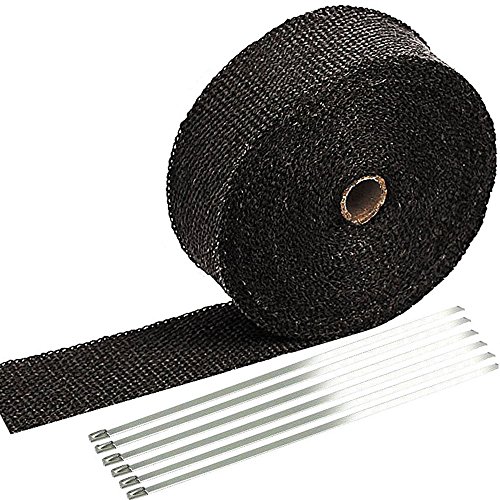
The SunplusTrade 2″ x 50′ Black Exhaust Heat Wrap offers a practical option for motorcycle and car headers. It comes with a pack of six 12″ stainless steel locking ties, enabling secure wrapping and tidy finishes. The wrap is designed to withstand up to 1400°F direct heat and 2000°F radiant heat, making it suitable for high-heat exhaust systems. Its fiberglass composition provides high resistance to abrasion, oil spills, temperature fluctuations, and vibration, helping to maintain performance while reducing heat soak in the engine bay. For owners seeking a cost-effective, reliable wrap with solid thermal performance, this option balances value with durability.
LEDAUT Titanium Wrap: Heavy-Duty Heat Shield for Exhausts
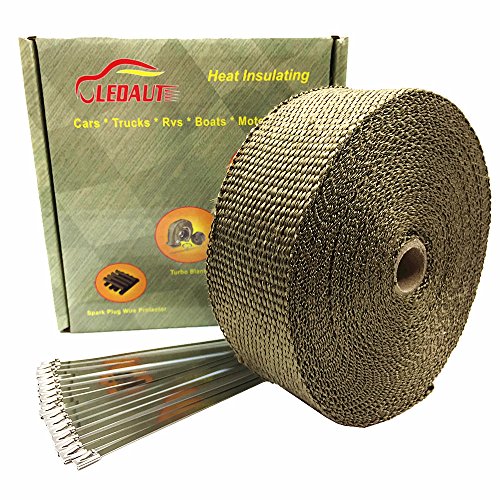
LEDAUT’s 2″ x 50′ Titanium Exhaust Heat Wrap features a robust titanium-coated fiberglass wrap plus a generous set of stainless steel locking ties (16). Before installation, it’s common to soak the wrap in water to minimize fiber fallout during wrapping. The kit emphasizes high abrasion and heat resistance, and its titanium composition provides a cool, durable finish. This wrap is well-suited for riders and gearheads who want a long-lasting shield with a premium look and strong thermal performance for both motorbikes and cars.
Tooomplus 2″ x 16′ Exhaust Wrap: Quick-Install Shield

Tooomplus offers a 2″ x 16′ fiberglass heat wrap designed to maximize horsepower by reducing under-hood temperatures and maintaining exhaust gas velocity. With a maximum rated temperature up to 1832°F (1000°C), this wrap supports high-heat environments while keeping wear resistance and durability in focus. The kit includes 10 stainless steel ties, simplifying secure installation. To minimize fiber dispersion, it is recommended to soak the wrap in water before application. These features make it a practical choice for many enthusiasts seeking strong thermal protection and service life in a compact length.
NEZUIBAN Black Exhaust Heat Wrap: Flexible, High-Temp Insulation

NEZUIBAN’s 2″ x 50 ft Black exhaust wrap uses fiberglass yarn to create a pliable wrap that withstands up to 1200°F direct and 2500°F intermittent heat. It’s marketed as offering excellent thermal insulation for motorcycle headers and automotive turbo applications, and can also be used for protecting gas water heater exhaust pipes or household gas pipelines. The wrap’s design emphasizes high resistance to abrasion, oil spills, temperatures, and vibration, giving users a durable option that also delivers a visually appealing carbon-fiber-like finish when installed on exposed exhausts.
ARTR Titanium Wrap: High-Performance Header Insulation

ARTR’s 2″ x 50′ Titanium Exhaust Header Wrap includes 10 locking ties (11.8 inches) and is designed for universal application. It withstands a direct heat of 1800°F and intermittent heat up to 2500°F, offering robust protection against temperature and vibration breakdown. The wrap is positioned to improve exhaust flow and performance by constraining heat around the exhaust system while reducing under-hood heat exposure. It is marketed as outperforming cheaper aftermarket wraps, making it a strong choice for serious enthusiasts seeking reliability and high-temperature endurance.
Buying Guide
Key considerations when choosing an exhaust heat wrap include heat resistance, installation ease, and longevity. Higher direct heat ratings (e.g., 1800°F) generally indicate better protection for high-output engines or turbocharged setups, but installers should also account for heat cycles and potential fiber shedding. Titanium-coated or titanium wraps often offer enhanced durability and a premium finish, though they can come at a higher price.
- Heat rating and duration: Direct heat vs. intermittent heat ratings determine suitability for your engine bay or exhaust header configuration.
- Fiberglass vs. titanium: Fiberglass wraps are affordable and effective; titanium variants provide added strength and different aesthetics but may require careful handling during installation.
- Installation kit: Look for wraps that include stainless steel locking ties and clear installation guidance. Pre-wetted wraps help minimize fiber dispersion during wrap.
- Durability under conditions: Consider abrasion resistance, chemical exposure (oil spills), and vibration tolerance based on your vehicle’s environment.
- Fit and length: Measure your header length and pipe diameter to choose the appropriate wrap width and total length; longer wraps facilitate a more uniform wrap with fewer gaps.
Performance And Safety Considerations
Proper wrapping can reduce under-hood temperatures, potentially improving electronic component longevity and engine efficiency. However, improper wrapping or insufficient clearance can trap heat in unintended areas. Always wear gloves during installation, soak fiberglass wraps to minimize fiber shedding, and ensure there is adequate clearance between the wrap and nearby components to avoid heat transfer to sensitive parts.
Installation Best Practices
Key steps include cleaning the header surface, wrapping with consistent overlaps, and securing the ends with stainless ties. Start at one end and proceed evenly to minimize gaps. Allow for heat cycles before final tightening and check for movement or looseness after the first drive. For longer wraps, consider multiple passes to achieve a snug, uniform appearance while maintaining airflow around the exhaust system.