
Best Grid Tie Inverter With Battery Backup for Home Energy
Discover top-rated grid-tie inverters that support battery backup options and seamless solar-grid integration. This guide highlights five reliable models, comparing how each handles solar harvesting, backup power, and grid interaction to help you choose the right system for a mid-sized home or off-grid scenario. All products listed work with common 48V to 120/240V configurations and prioritize smooth transitions, safety, and efficiency.
| Product | Brand | Key Benefit | Power Range | Battery Compatibility |
|---|---|---|---|---|
| POWLAND 12000W Grid-Tied Hybrid Inverter | POWLAND | Massive power with battery-free design and grid backfeed | 12,000W | Supports 48V LiFePO4/Lead Acid via hybrid integration |
| TEMANK PowMr 12000W Solar Inverter | Temank | ETL-certified grid-tie with uninterrupted backup | 12,000W | Supports any battery type (Lithium/Lead-Acid) |
| Anjfylque Hybrid Solar Inverter 3.6kW | Anjfylque | All-in-one hybrid with WiFi monitoring | 3,600W | Lead Acid/Lithium compatible |
| Y&H 1200W Grid Tie Inverter | Y&H | Smart limiter and battery mode for optimized draw | 1,200W | Battery mode supported (DC 22-60V systems) |
| TINGEN 1000W Grid Tie Inverter | TINGEN | High MPPT efficiency with multiple operating modes | 1,000W | Battery connection via 24V systems |
id=”product-po WLAND-12000w-grid-tied-hybrid-inverter”>POWLAND 12000W Grid-Tied Hybrid Inverter

POWLAND offers a powerful grid-tied hybrid inverter rated at 12,000W, designed to feed surplus solar energy back to the grid and power your home even when grid-interactive. It features a built-in 200A MPPT and supports 48V DC inputs to drive 120V/240V split-phase AC outputs. While described as battery-free, its design can accommodate battery backup configurations and works well for large homes or RV parks requiring strong solar harvesting and grid interaction. The system emphasizes high efficiency and inventive grid-connection with optional CT sensors for accurate energy feedback.
Key points:
- 12,000W continuous output with 99% MPPT efficiency claims
- Hybrid concept blends solar with grid; battery-free by default but compatibility with future backup use
- Wide solar input range (90-500VDC / 200A)
id=”product-y-h-1000w-grid-tie-inverter”>Y&H 1000W Grid Tie Inverter Power Limiter
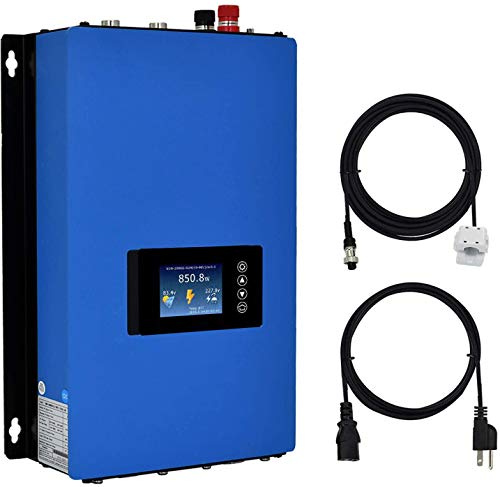
Y&H’s 1000W grid-tie inverter emphasizes a limiter sensor and MPPT-based efficiency, ensuring the inverter draws only the required power for the connected load. It operates with a 22-60V DC input range and can power from 36V/48V battery banks. The unit includes a battery discharge mode to manage depth of discharge automatically, making it suitable for small to mid-sized solar arrays paired with backup storage.
Key points:
- MPPT efficiency up to 99% with 80% peak
- Battery-ready operation within 36-48V systems
- Load-limiting design helps prevent overproduction
id=”product-y-h-1200w-grid-tie-inverter”>Y&H 1200W Grid Tie Inverter With LCD

This Y&H model provides a 1200W pure sine wave output with an LCD that displays working status and allows PV/battery mode selection. It targets homeowners who want straightforward monitoring and a clear interface to ensure the inverter operates efficiently within the MPPT window. It’s compatible with single-phase 110-240V outputs and is designed to work with properly matched solar arrays and battery systems.
Key points:
- LCD status display for easy monitoring
- Supports PV mode, battery mode, and limiter mode
- Open circuit voltage considerations ensure stable output
id=”product-anjfylque-hybrid-solar-inverter”>Anjfylque Hybrid Solar Inverter 3.6kW

Anjfylque presents a 3.6kW hybrid inverter with built-in 80A MPPT and a 300VDC input rating. It supports parallel operation (up to six units) for higher capacity and uses a WiFi-enabled app for real-time monitoring. The unit can run 120V/240V split-phase outputs and supports both lead-acid and lithium batteries. It includes comprehensive protections against over-voltage, over-load, and short circuits, ensuring stable performance for home backup systems.
Key points:
- All-in-one solar charger plus MPPT controller
- Parallel-ready for scalable systems
- WiFi monitoring and robust protection features
id=”product-tingen-1000w-grid-tie-inverter”>TINGEN 1000W Grid Tie Inverter

TINGEN’s 1000W grid-tie inverter targets compact solar setups with a clear LCD display and four operating modes, including battery integration. It supports 24V battery connections and claims MPPT efficiency above 99%, optimizing the solar harvest. The device is designed for easy operation and ensures stable grid-connected output with straightforward configuration for homeowners exploring backup options.
Key points:
- Four operating modes including battery support
- High MPPT efficiency for small to medium systems
- Clear LCD parameters for quick status checks
Buying Guide: Key Considerations For Grid Tie Inverters With Backup
When selecting a grid-tie inverter with battery backup, consider these factors to ensure compatibility with your solar array, battery chemistry, and local grid requirements.
- Grid compatibility and backfeed safety: Ensure the unit complies with local utility interconnection standards (IEEE 1547, UL 1741) and anti-backfeed protections to avoid backflow into the grid without permission.
- MPPT range and efficiency: Look for a wide MPPT input range and high efficiency (prefer 98–99%+). This improves energy harvesting from varied sun conditions and panel configurations.
- Battery integration: Verify supported chemistries (lead-acid, Li-ion/LiFePO4, etc.), voltage ranges (e.g., 24V, 36V, 48V), and whether the system supports seamless transitions between solar, battery, and grid.
- Scalability: If you anticipate growth, check parallel operation capabilities for multiple inverters to reach higher total output or 3-phase configurations.
- Monitoring and control: Built-in LCDs or mobile app access help track performance, consumption, and health of the system.
- Warranty and support: Longer warranties and accessible customer support reduce risk for a high-investment installation.
- Installation considerations: Assess weight, heat management, outdoor rating, and required fusing or breakers to match your electrical panel and local codes.
Choosing between a battery-free design with grid backfeed and a true hybrid system with battery backup depends on your need for continuous power during outages versus maximizing immediate solar feed to the grid. A higher capacity unit paired with a compatible battery bank provides larger resilience for critical loads. Always consult a licensed professional to confirm local codes, safety requirements, and system design.