As an Amazon Associate I earn from qualifying purchases. These links may earn this site a commission when you buy, at no extra cost to you.
Finding a reliable GFCI outlet for kitchen spaces helps protect against electric shock near water sources while meeting code requirements. This article highlights five top options, reviews their key features, and provides a practical buying guide to help you choose the right model for your kitchen setup.
| Product | Brand | Key Feature | Amperage |
|---|---|---|---|
| Leviton GFNT1-W | Leviton | Self-test, LED indicator | 15 A |
| ELEGRP GFCI 15 Amp | ELEGRP | Self-test every 5 seconds, TR | 15 A |
| Leviton GFTR1-W | Leviton | Tamper-resistant, LED indicator | 15 A |
| Leviton GFTR2-W | Leviton | Tamper-resistant, LED indicator | 20 A |
| DEWENWILS 20A WR | DEWENWILS | Weather-resistant, self-test | 20 A |
Leviton GFCI Outlet GFNT1-W
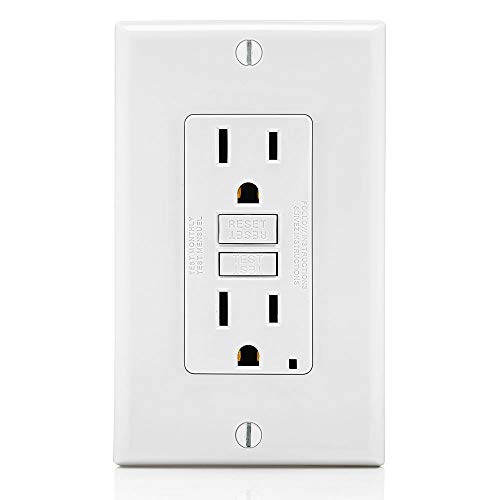
Leviton’s GFNT1-W is a 15-amp GFCI receptacle designed to continuously protect against ground faults. It features a built-in LED indicator and a patented reset/lockout mechanism to prevent a failed reset when wiring is incorrect or a fault is detected. The outlet regularly performs automatic self-tests to ensure ongoing safety, a useful feature in busy kitchens where reliability matters.
Key considerations include NEC compliance near water sources and the need for reliable self-testing. The GFNT1-W is well-suited for countertop areas, sinks, and bar stations where splash risk is present. Installation should follow local electrical codes, and the device should be wired to a dedicated circuit if required by local code.
ELEGRP GFCI 15 Amp, Self-Test

The ELEGRP GFCI 15 Amp outlet emphasizes proactive safety with a self-test every 5 seconds and rapid fault interruption (0.025 seconds) in the event of a ground fault. The design uses durable, high-impact thermoplastic materials and includes safety features such as 6kV surge protection, Reset-Disable, and Reversed Wiring Prevention. It is UL-listed and supports decorative wall plates, making it a practical kitchen upgrade for enhanced protection near sinks and food prep areas.
In kitchens, faster fault response and frequent self-tests offer peace of mind. Consider the surrounding wall box depth and plate compatibility when planning installation to ensure a clean, code-compliant look behind any countertop or cabinet setup.
Leviton GFCI Outlet GFTR1-W

The GFTR1-W from Leviton adds tamper-resistance to standard GFCI protection, with an LED indicator that helps identify status at a glance. It’s designed for kitchens, bathrooms, and other damp areas, ensuring ground fault protection in close proximity to water sources. The patented reset/lockout feature further enhances safety by preventing improper resets after wiring mistakes or faults.
For kitchen remodels or fresh installs, the GFTR1-W provides a reliable balance of safety features and ease of use, while remaining compatible with most standard duplex boxes and wall plates. Always verify local codes regarding outlet spacing and dedicated countertop circuits to maximize protection where it’s most needed.
Leviton GFCI Outlet GFTR2-W

The GFTR2-W is a 20-amp GFCI option from Leviton with tamper-resistant design and LED indicators. It maintains continuous ground fault protection and is suitable for higher-current kitchen appliances or outlets serving multiple devices. The built-in reset/lockout and automatic self-tests align with modern safety expectations for kitchens and other wet areas.
When considering 20-amp circuits, ensure your circuit wiring and panel support the higher amperage, and confirm that any shared circuits with small appliances comply with local codes. The GFTR2-W can be a practical upgrade where 20- amp kitchen circuits are already in place or when heavy-duty countertop usage is anticipated.
DEWENWILS 20A WR GFCI Outlet

DEWENWILS offers a 20-amp weather-resistant GFCI outlet designed for indoor or outdoor use. It features tamper-resistant protection and a self-test function, along with an LED indicator to confirm ground fault protection is active. The set includes a wall plate and a thinner design for easier installation in tight spaces behind kitchen cabinets or outdoor kitchen areas where weather exposure is a concern.
Weather resistance is a key consideration for outdoor kitchen spaces or areas with high humidity. The self-test ensures ongoing protection, while the WR designation helps withstand moisture exposure. Verify the outlet’s compatibility with existing wiring and box depth to ensure a secure, code-compliant fit in your kitchen plan.
Buying Guide
When selecting a GFCI outlet for a kitchen, consider the following factors to ensure safety, code compliance, and practical usability:
- Amperage: Most kitchens use 15-amp circuits for standard outlets, but 20-amp outlets are common for countertop circuits or certain appliances. Choose accordingly based on the expected load and circuit capacity.
- Self-test frequency: Some models self-test more often than required by UL standards. While frequent testing increases assurance, ensure the unit’s test cadence aligns with your maintenance expectations.
- Tamper resistance: Tamper-resistant (TR) receptacles help deter children from inserting objects, a practical safety feature for households with kids or busy kitchens.
- Weather resistance: Outdoor or damp locations require weather-resistant (WR) outlets with dehumidified or sealed housings to resist moisture, splashes, and temperature changes.
- LED indicators and reset/lockout: LED indicators help quickly confirm protection status, while reset/lockout mechanisms prevent incorrect resets in the event of wiring faults or ground faults.
- UL and safety listings: Ensure the product is UL-listed and ETL-listed where applicable, indicating compliance with recognized safety standards.
- Wiring and box compatibility: Verify that the depth and size of your electrical box accommodate the GFCI’s back shell and wall plate. This avoids tight fits or misalignment behind cabinets or under sinks.
- Installation context: For kitchens, plan outlets near sinks, countertops, and prep areas to provide convenient, code-compliant access to protected power.
- Maintenance: Consider models with accessible test buttons and straightforward reset mechanisms to facilitate routine checks without professional assistance.
- Code considerations: NEC guidelines vary by location. In many areas, outlets around sinks and within certain proximities to water require GFCI protection; some jurisdictions also require 20-amp duplex outlets for dedicated kitchen circuits.
Across the options listed, select a model whose amperage, weather resistance (if applicable), and self-test capabilities match your kitchen’s layout and usage. Always follow manufacturer installation instructions and consult a licensed electrician if you’re unsure about wiring, circuit capacity, or local code requirements.