
Best Generator Options for Long Term Power Outage
Power outages can disrupt daily routines, compromise safety, and hinder remote work. A reliable generator or portable power station can keep essential devices running when the grid goes dark. This guide highlights five top options suited for long-term outages, camping, or off-grid living, with a focus on battery chemistry, recharge speed, power output, and expandability. Each product section includes practical use scenarios and key features to help you compare effectively.
| Product | Capacity | Output | Best For |
|---|---|---|---|
| Anker SOLIX C1000 Gen 2 | 1,024Wh | 2,000W (3,000W peak) | Emergency backup and off-grid power |
| Jackery Explorer 300 | 293Wh | 300W continuous | Outdoor camping and travel backups |
| VTOMAN Jump 600X | 299Wh | 600W (1200W surge) | Car jump start and portable power |
| Jackery HomePower 3600 Plus | 3,584Wh | 3,600W | Home backup with expandability |
| PowerSmart 2500-Watt Portable Inverter | n/a | 2,500W | Compact generator for outages |
Anker SOLIX C1000 Gen 2 Portable Power Station
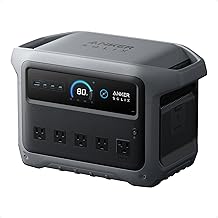
The Anker SOLIX C1000 Gen 2 is designed for rapid recharging and high-output versatility. Featuring 1,024Wh LiFePO4 capacity, it can supply up to 2,000W of continuous power with a 3,000W peak. This makes it suitable for powering essential home devices, laptops, routers, small climate control, and medical equipment during extended outages. UltraFast recharging supports 1,600W input, allowing quick readiness after a disruption—ideal for prep kits and weekend getaways. The device is more compact and lighter than many peers, enhancing portability for storage in a closet, RV, or vehicle. With 10 ports, you can back up multiple devices simultaneously, from phones to cameras, making it a practical cornerstone of a home backup plan.
Use scenarios include: home emergencies with limited space, apartments needing backup for critical devices, and off-grid living with space constraints. The Anker app enables you to optimize charging schedules and monitor performance, providing peace of mind for outage planning. For users seeking rapid recharging and a robust build, the C1000 Gen 2 merges speed, capacity, and portability in a single package.
Jackery Explorer 300 Portable Power Station

The Jackery Explorer 300 is a compact lithium-based solar generator designed for outdoor use and smaller spaces. It offers a 293Wh battery and can safely deliver about 300W continuous power via two Pure Sine Wave AC outlets. The unit weighs roughly 7.1 pounds, making it highly portable for camping, hiking, or travel where weight matters. Recharging is flexible: up to 80% in two hours from a wall outlet, plus 60W PD USB-C support accelerates top-ups when you’re indoors or at a campsite. The system supports recharging via car outlets and is compatible with optional solar panels, enabling off-grid charging when solar conditions permit.
Key advantages include dependable, steady power for devices like laptops, cameras, drones, and small fans. Its multiport arrangement—AC outlets, USB-C, USB-A, and car port—lets you run multiple devices concurrently. For outage planning, the Explorer 300 provides practical portability and reliable performance in a compact form factor, ideal for those who prioritize mobility without sacrificing essential power.
VTOMAN Jump 600X Portable Power Station

The VTOMAN Jump 600X pairs a 299Wh LiFePO4 battery with a 600W continuous power output and 1,200W surge capability. Its standout feature is an integrated car jump-start port, making it a two-in-one tool for roadside emergencies and outdoor power needs. The expandable battery option (up to 939Wh with an extra battery) extends power capacity for longer outages, camping, or RV travel. LiFePO4 chemistry provides long cycle life, typically thousands of cycles, helping justify long-term ownership. The unit includes 2 AC outlets for reliable 600W loads, with PD USB-C and multiple DC outputs to support a range of devices while on the go.
For users who want a multi-purpose device beyond outage use, Jump 600X offers a practical balance between portability, safety, and capacity. It caters to campers needing consistent power for refrigeration or heating devices within the 600W range and provides a dependable backup for roadside starts and electronic devices during emergencies.
Jackery HomePower 3600 Plus Portable Power Station
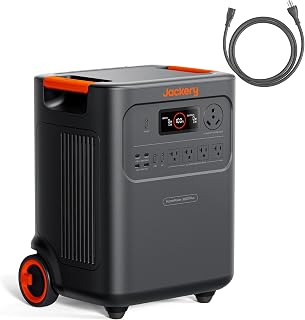
The Jackery HomePower 3600 Plus is a high-capacity solution designed for essential home backup. With a 3,584Wh LiFePO4 battery and a robust 3,600W AC output, it can support larger appliances and multiple devices during extended outages. The expandable architecture allows growing capacity to scale with your daily power needs, potentially reaching well into the kilowatt range when combined with compatible modules. The system’s LiFePO4 chemistry delivers longevity and stability for frequent or long-term use, while its multiple outlets and versatile charging options keep a wide array of devices operational. This model is well suited for homes seeking a more permanent, scalable backup option that still maintains mobility for relocation or temporary safety power during a blackout.
PowerSmart 2500-Watt Portable Inverter

The PowerSmart 2500-Watt Portable Inverter is a compact, cost-conscious option designed to deliver strong standby power for essential loads during outages. This generator-style inverter provides up to 2,500 watts, making it suitable for running critical appliances like refrigerators, sump pumps, and communications gear when the grid is down. Quiet technology helps minimize noise in residential settings, essential for night-time reliability. While it may not offer the same expandability as larger modular systems, its portability and straightforward operation make it a practical backup for smaller homes or apartments that require reliable, immediate power on demand. For users prioritizing affordability and ease of use, it presents a compelling balance of performance and practicality.
Buying Guide: Key Purchase Considerations For Long Term Outages
- Power needs and system type: Assess the essential devices you must keep running during an outage. For higher-demand appliances, a larger-capacity power station (LiFePO4 preferred for longevity) or a generator with sustained 1,000+ watts may be necessary. For lighter needs, compact units with 300–600W can cover lights, charging, and small electronics.
- Battery chemistry and longevity: LiFePO4 batteries offer longer cycle life, better thermal stability, and safer operation compared to some other chemistries. They’re a strong choice for long-term reliability in frequent outage scenarios.
- Recharge speed and sources: Fast recharge reduces downtime between outages. Look for models supporting high wattage input, multiple recharge options (AC, car, solar), and compatibility with solar panels for off-grid charging when weather allows.
- Portability and footprint: Consider storage space, whether the unit will be moved between rooms, an RV, or a shed. Lighter, more compact devices are easier to manage but may sacrifice capacity or outlets.
- Expandability: Some systems offer additional battery modules or expansion packs to grow overall capacity as needs increase. This is useful for longer outages or growing power requirements.
- Outlets and connectivity: Ensure the unit provides the needed outlets (AC, USB-C, USB-A, DC car ports) and supports essential devices you rely on. Multiport options enable simultaneous charging of multiple devices.
- Safety and warranty: Check built-in protections (overcurrent, short-circuit, thermal, and battery management). A solid warranty reduces long-term ownership risk and supports maintenance over years of use.
- Noise and emissions: In residential environments, noise levels matter. Inverter generators tend to be quieter than traditional gas generators, and battery power stations emit no direct emissions.
- Cost of ownership: Initial cost, maintenance, and potential replacement batteries should factor into your long-term budgeting. Balance upfront spend with expected years of dependable service.