
Best Flexible Metal Electrical Conduits for Safe, Easy Wiring and Adaptable Installations
Flexible metal electrical conduits offer a reliable channel for wires in challenging spaces, providing protection against corrosion, abrasion, and environmental hazards while allowing easier routing. This guide highlights five top options, spanning steel, aluminum, and comparable flexible designs, to help you choose based on durability, ease of pulling, and compatibility with fittings. Below is a quick summary of the selected products to aid quick comparisons.
| Product | Brand | Length | Diameter | Material |
|---|---|---|---|---|
| Yariwiz Flexible Steel Conduit Kit | yariwiz Store | 25 ft | 1/2 in | Steel |
| Woods Alflex-Type RWA | Southwire Store | 25 ft | 1/2 in | Aluminum |
| Xadnitu 1/2 in Flexible Conduit | Xadnitu | 25 ft | 1/2 in | Iron Galvanized |
| Sealproof 1/2 in Non-Metallic | Sealproof Store | 25 ft | 1/2 in | PVC (Non-Metallic) |
| Electrical Conduit Kit 3/4″ | Various | 4 ft | 3/4 in | Non-metallic PVC |
Yariwiz Flexible Steel Conduit Kit

The Yariwiz kit combines flexible, steel conduit with a complete set of fittings for quick installations. Its 25-foot length accommodates long runs, while a smooth interior eases wire pulling. Designed to endure corrosion, oil, water, and rough environments, this conduit is suitable for electrical, telephone, and HVAC projects, as well as landscape lighting. The kit includes 4 couplings, 2 elbows, and 7 straps, expanding installation options across spaces with limited access.
Electrical Conduit Kit 3/4″ Non-Metallic Flexible Conduit
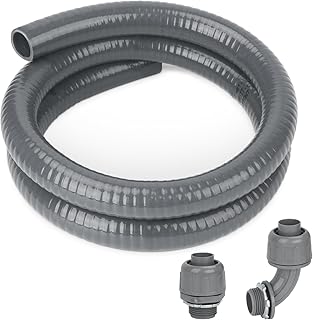
This 4-foot gray non-metallic conduit kit offers high flexibility with built-in straight and 90-degree connectors. While non-metallic, its versatility makes it useful in tight spaces where metal conduits are impractical. The PVC material is designed to resist corrosion, wear, oil, water, and harsh environments, while remaining lighter and easier to handle. It’s well-suited for HVAC lines, outdoor installations, and areas requiring compact bends.
Woods 25-Foot Alflex-Type RWA Conduit

Woods offers a 25-foot, 1/2-inch aluminum flexible conduit that provides mechanical protection for conductors. It is designed for use with NEC Type FMC-compatible connectors and claims faster cuts and significant weight savings compared to steel. Aluminum construction reduces fatigue during long runs and can be advantageous in installations where weight is a critical factor, such as in commercial or automotive settings.
Sealproof 1/2-Inch Non-Metallic Conduit Kit

Sealproof provides a 25-foot Type B non-metallic PVC conduit kit with four straight and two 90-degree connectors. While non-metallic, it is designed for resilience against corrosion, abrasion, oil, water, and harsh environments, including outdoor use and direct burial. It is 50% lighter than metallic conduits and is compatible with a range of connectors, making it a versatile option for HVAC, marine, and outdoor lighting applications.
Xadnitu 1/2 Inch Flexible Reduced Wall Conduit

Xadnitu presents a 25-foot galvanized iron conduit designed for home wiring and low-voltage management. Its reduced-wall design aims to simplify routing in constrained spaces, with rust and wear resistance to improve longevity. The product is suited for applications requiring a strong metal conduit with practical flexibility for interior and exterior use, particularly where a secure protective sleeve is needed for cables.
Buying Guide: Key Purchase Considerations And Comparisons
When choosing a flexible conduit, consider the following factors to align with your project needs:
- Material and environment: Steel and aluminum conduits offer high strength and durability, ideal for rugged settings. Non-metallic PVC conduits are lighter and corrosion-resistant but have different protection profiles; choose based on environmental exposure and mechanical needs.
- Flexibility and ease of pulling: Compare bend radii and wall thickness. Reduced-wall conduits save space in tight runs, but check compatibility with your connectors and fittings.
- Diameter and compatibility: Ensure the conduit diameter matches the connectors and fittings you plan to use. 1/2″ and 3/4″ are common sizes for residential and light commercial wiring.
- UV exposure and outdoor use: Outdoor-rated conduits should resist sunlight, moisture, and temperature changes. Outdoor direct burial suitability is a key consideration for exterior installations.
- Weight and handling: Aluminum and non-metallic options typically weigh less, easing installation in overhead or ceiling spaces.
- Cost and availability: While metallic conduits tend to be pricier, they offer durability in demanding environments. Consider long-term maintenance and expected service life when weighing options.
In addition to core material differences, evaluate the included fittings and accessories. Kits that come with elbows, couplings, and straight connectors reduce the need for separate purchases and streamline installation. For projects involving limited access or tight footprints, prioritize flexible options with interior finishes designed for smooth wire pulling to minimize damage during installation.