
Best Conventional Fire Alarm Control Panels for Reliable Building Safety
When selecting a conventional fire alarm control panel, look for clear zoning, reliable power supply options, and compatibility with standard detection devices. This guide highlights five widely used panels suited for small to mid-size facilities, including schools, offices, and commercial spaces. The top choices emphasize clear signaling, straightforward installation, and practical maintenance. Each product section explains who benefits most, and a quick buying table helps compare options at a glance.
| Product | Brand | Best For |
|---|---|---|
| Edwards FX-5R Conventional Fire Alarm Control Panel | Edwards-Signaling | Small to mid-size buildings needing up to 5 zones |
| FireLite MS-10UD-7 Conventional 10 Zone Fire Panel | Firelite/Honeywell | Mid-sized facilities needing more zones and robust supply |
| FireLite MS-5UD-3 5 Zone Conventional Fire Control Panel | Fire-Lite | Smaller installations with reliable 3A power support |
| Fire Lite MRP2001 Deluge/Pre-Action Control Panel | Honeywell | Deluge and pre-action systems in facilities with complex water suppression |
| MENGQI-CONTROL Enhanced Alarm Module Expansion Panel | MENGQI-CONTROL | Expanding existing systems to meet fire code requirements |
Edwards FX-5R Conventional Fire Alarm Control Panel

Best for facilities that require clear zoning with a straightforward 5-zone layout. The FX-5R is a 120V panel designed for conventional fire alarm setups, offering a moderate NAC current capacity to drive notification devices. Its operating humidity spec indicates suitability for controlled indoor environments. This option is advantageous for small to medium sites needing reliable, simple-to-manage fire signaling across multiple zones. Limitations to note: exact NAC current and environmental ratings should be confirmed for high-humidity or outdoor-adjacent installations.
Firelite MS-10UD-7 Conventional 10 Zone Fire Panel

Best for mid-size buildings that require more expansion without moving to a larger system. The MS-10UD-7 provides 10 zones and integrates with the FLPS 7 Power Supply at 120VAC, supporting broader signaling needs. This panel is better for facilities anticipating growth or needing detailed zoning control for different risk areas. A potential drawback is the greater complexity of maintenance compared to smaller panels; ensure staff is trained for multi-zone management.
FIRELITE MS-5UD-3 5 Zone Conventional Fire Control Panel
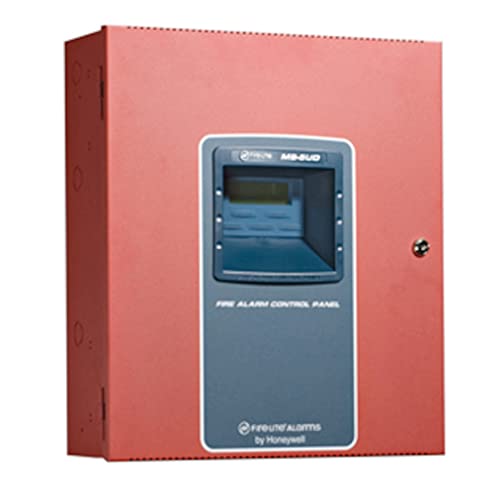
Best for compact installations that still require reliable signaling across multiple zones. The MS-5UD-3 is a 5-zone conventional panel with a 3-amp power supply, suitable for small offices or shops with modest device loads. Choose this if you want a simple, cost-effective option with predictable performance. A limitation is that it supports fewer zones than larger panels, which may constrain future expansion without adding additional hardware.
Fire Lite MRP2001 Deluge/Pre-Action Control Panel

Best for facilities requiring deluge or pre-action configurations, which are common in high-risk areas like warehouses or data centers. The MRP2001 supports complex water-based suppression strategies, aligning with fire codes for specialized risk environments. This option is better for sites needing integrated water system coordination with the alarm control. Limitation: may require more specialized knowledge to configure correctly and synchronize with suppression equipment.
MENGQI-CONTROL Enhanced Alarm Module Expansion Panel

Best for extending existing systems to meet fire code requirements when additional wiring capacity or outputs are needed. The Enhanced Alarm Module expansion panel supports multiple doors and 4-way alarm outputs, making it a practical upgrade for facilities expanding their control capabilities. A caution is that it is an expansion component and relies on compatibility with the core control panel; verify system compatibility before deployment.
Buying Guide
Key purchase considerations help ensure you pick a panel that matches your building’s needs.
- Zone capacity: Choose based on the number of separate risk areas. More zones enable granular control but add wiring complexity.
- Power supply and NAC load: Ensure the panel’s power supply supports the anticipated load from annunciators and devices. Higher loads require larger power supplies or relaxed expansion plans.
- Environment and installation location: Consider indoor vs. outdoor exposure and humidity. Some panels are better suited for controlled indoor spaces.
- Future expansion: If growth is likely, select a panel with room to add zones or modules without replacing the unit.
- Compatibility with existing devices: Confirm compatibility with your current detectors, alarms, and wiring standards to minimize retrofit work.
- Deluge/pre-action needs: If your facility requires water-based suppression coordination, evaluate deluge or pre-action configurations and related controls.
FAQ
- What is a conventional fire alarm control panel?
- A conventional panel monitors a fixed number of zones and devices in a building, signaling when an alarm condition occurs without requiring digital addressing of devices.
- How many zones do these panels support?
- Zoning varies by model: from 3 or 5 zones to 10 zones in the options listed here.
- Which panel is best for a small office?
- The FireLite MS-5UD-3 is a compact, cost-effective choice for small offices with up to 5 zones.
- Is expansion possible after installation?
- Yes, several options support expansion modules or additional panels to meet growing needs, but compatibility should be verified first.