As an Amazon Associate I earn from qualifying purchases. These links may earn this site a commission when you buy, at no extra cost to you.
For woodworking projects that demand smooth edges and precise results, choosing the right fine finish table saw blade is essential. This guide highlights five top-performing options designed for miter and table saw applications, featuring ultra-thin kerfs, carbide tips, and robust wear resistance. Each blade is optimized for hard and soft woods, delivering accurate crosscuts and clean finishes with minimized vibration.
Below is a quick comparison of the selected models to help you narrow your choice. The table lists key specs and the typical applications you’ll encounter with each blade.
| Product | Diameter | Tooth Count | Arbor | ||
|---|---|---|---|---|---|
| WEN BL1080 | 10 in | 80 | 5/8 in | 0.1 in | WEN |
| WEN BL1060 | 10 in | 60 | 5/8 in | 0.1 in | WEN |
| DEWALT DWA11080 | 10 in | 80 | 5/8 in | 0.1 in | DEWALT |
| FOXBC 10-Inch 80-Tooth | 10 in | 80 | 5/8 in | 0.098 in | FOXBC |
| FOXBC 8-1/4 Inch 60T | 8-1/4 in | 60 | 5/8 in | 0.079 in | FOXBC |
WEN BL1080 80-Tooth Fine Finish Blade
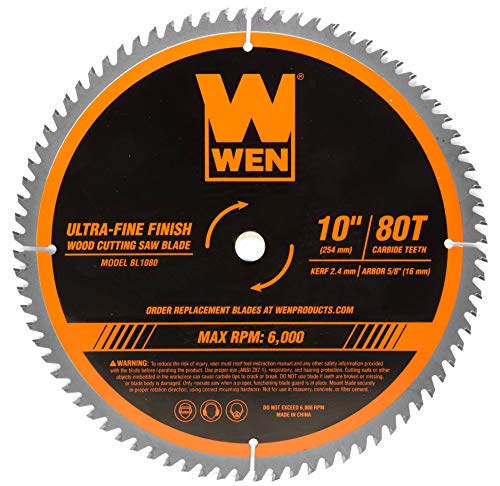
The WEN BL1080 is a 10-inch carbide-tipped blade with 80 teeth, optimized for ultra-fine finish cuts. Its ultra-thin kerf minimizes material waste and reduces power draw, while the carbide tips provide long life and consistent edge quality. Suitable for both hard and soft woods, this blade maintains stability at higher RPMs up to 6000, helping achieve clean crosscuts and minimal chipping on delicate woods.
WEN BL1060 60-Tooth Fine-Finish Blade
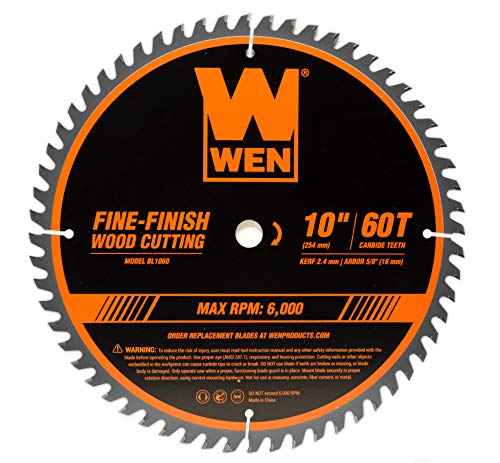
The WEN BL1060 offers a 60-tooth configuration designed for fine finish cuts with a focus on reducing tear-out. A 10-inch diameter and 5/8-inch arbor ensure compatibility with most miter and table saws. Its thin kerf, at about 0.1 inches, promotes smoother cuts and less material removal while still delivering robust performance at the standard 6,000 RPM ceiling.
DEWALT DWA11080 80-Tooth Fine Finish Blade

DEWALT’s DWA11080 features 80 finely tuned teeth and a specialized body slot design to reduce vibration, which helps maintain accuracy and finish quality. The tungsten carbide tips provide extended blade life, while the blade geometry is optimized for cleaner finish cuts. This blade is built to resist wear and maintain consistent cut quality over many projects.
FOXBC 10-Inch 80-Tooth Ultra Finish Blade

FOXBC’s 10-inch blade with 80 teeth and a 0.098-inch kerf emphasizes a fine finish for crosscuts and miter work. The ATB tooth geometry is designed to reduce tear-out on a range of woods while the thick carbide tips promise durability and a long blade life. The 5/8-inch arbor supports common table and miter saws, delivering precise, smooth cuts with minimal vibration.
FOXBC 8-1/4 Inch 60-Tooth Fine Finish Blade

Designed for smaller saws, this FOXBC 8-1/4-inch blade uses a 60-tooth ATB configuration with a 0.079-inch kerf. It’s crafted from tungsten carbide to offer durable performance and a fine finish across fine crosscuts and delicate joinery. The 5/8-inch arbor ensures broad compatibility with common 8-1/4-inch table and chop saws, providing a reliable option for tight spaces and finishing work.
Buying Guide: Fine Finish Blade Essentials
To maximize finish quality, consider blade diameter, tooth count, kerf, and arbor compatibility. Higher tooth counts (60–80) reduce tear-out for plywood and figured woods, but require careful feed rates to avoid burning. Ultra-thin kerfs (around 0.08–0.1 inches) minimize material loss while maintaining rigidity for stable cuts. Carbide tips extend blade life and maintain sharpness through heavy use. Ensure arbor compatibility with your saw (commonly 5/8 inch) and verify the blade’s RPM rating aligns with your tool’s maximum speed to prevent vibration and heat buildup.
Key purchase considerations
- Material and tooth geometry: ATB (Alternating Top Bevel) teeth are common for fine finishes and reduce tear-out on hardwoods and plywood.
- Kerf width: Ultra-thin kerf blades minimize waste and are easier to start cuts in tight or angled setups.
- Tooth count: 60–80 teeth offer a balance of finish quality and cutting speed; higher counts yield smoother finishes but can slow down aggressive ripping.
- Arbor compatibility: Most table and miter saws use a 5/8-inch arbor; confirm your saw’s arbor diameter before purchasing.
- Blade life vs. finish quality: Carbide-tipped blades maintain sharpness longer; ensure you choose blades designed for the materials you work with most (hardwoods, softwoods, or plywood).
In scoring performance, you should balance your typical projects with these blade attributes. For fine finish tasks such as cabinet doors, wall paneling, and furniture components, blades with 60–80 teeth and a thin kerf generally provide the best results with minimal tear-out and crisp edges. When you need a versatile blade for both crosscuts and miter work, the higher tooth counts found in 80-tooth blades offer superior finish quality, particularly with end-grain and delicate woods.