As an Amazon Associate I earn from qualifying purchases. These links may earn this site a commission when you buy, at no extra cost to you.
Choosing the right fine-tooth miter saw blade can dramatically improve the quality of crosscuts on both soft and hard woods. This guide highlights five top-rated blades that deliver clean finishes, minimal tear-out, and reliable performance across common woodworking tasks. Each selection includes a brief overview and what sets it apart to help you compare features, kerf, and tooth count at a glance.
| Product | Brand | Diameter | Teeth | ||
|---|---|---|---|---|---|
| WEN BL1080 | WEN | 10 in | 80 | 5/8 in | Ultra-fine finish; 1/10″ kerf; high RPM compatibility |
| WEN BL1200 | WEN | 12 in | 100 | 1 in | Ultra-fine finish; deep cuts; efficient kerf |
| DEWALT DWA112100 | DEWALT | 12 in | 100 | — | Low vibration; long life; precise finish |
| FOXBC 80T | FOXBC | 12 in | 80 | 1 in | Fine finish; laser-cut kerf; stabilizer vents |
| TOYAKI 120T | TOYAKI | 10 in | 120 | — | Fine finish; smooth operation; reduced vibration |
WEN BL1080 10-Inch 80-Tooth Carbide Tipped Blade
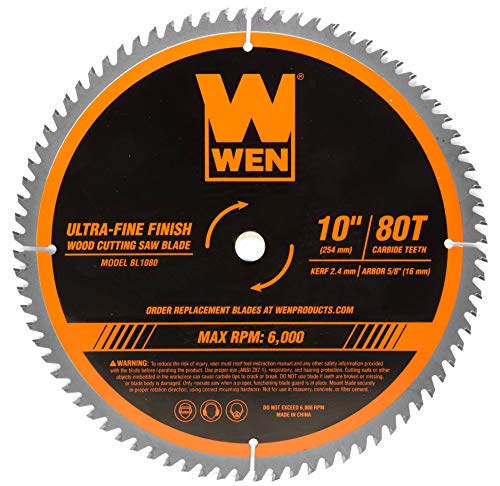
The WEN BL1080 is a 10-inch blade with 80 carbide-tipped teeth designed for fine finish work on miter and table saws. Its 5/8-inch arbor fits standard saws, and its ultra-thin kerf supports minimal material loss while delivering clean, precise cuts. Rated up to 6000 RPM, this blade handles both soft and hardwoods effectively, making it a versatile option for fine finish projects.
WEN BL1200 12-Inch 100-Tooth Ultra-Fine Finish Blade

The WEN BL1200 provides a 12-inch, 100-tooth configuration for exceptionally smooth cuts on larger stock. With a 1-inch arbor and an ultra-fine kerf, this blade reduces tear-out while maintaining robust performance at high speeds. Suitable for both miter and table saw applications, it’s ideal for fine finish cabinetry and trim work.
DEWALT DWA112100 12-Inch 100-Tooth Fine Finish

DEWALT’s DWA112100 offers a high-tooth count for fine finish, engineered to extend blade life and minimize vibration. The patented body slot design helps stabilize the cut and reduce chatter, while the optimized tooth geometry enhances accuracy for precise crosscuts in finished carpentry and cabinetry tasks.
FOXBC 12-Inch 80-Tooth Fine Finish Blade

FOXBC’s 80-tooth blade performs well for fine crosscuts on a 12-inch platform. Its ATB tooth geometry delivers a smooth cut with a thin kerf that minimizes material waste. The 1-inch arbor fits a wide range of miter and table saws, and stabilizer vents help keep the blade cool, reducing warping on longer cuts.
TOYAKI 10-Inch 120-Tooth Fine-Finish Blade
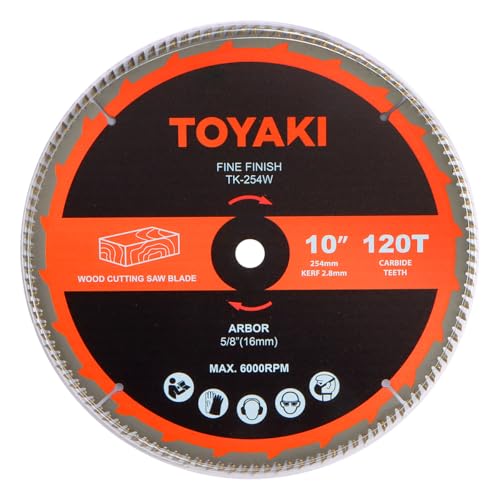
The TOYAKI 120-tooth blade is designed for fine finishes on wood and soft materials, delivering consistent cut quality across its lifespan. The higher tooth count helps minimize tear-out and producing smoother edges, especially in plywood and veneer applications. It aims to balance smoothness with efficient cutting action and reduced vibration.
DEWALT DWA112CMB A Fine Finish Combo Pack

This DEWALT combo pack pairs 40-tooth and 60-tooth blades for versatile fine finish work.Designed to increase accuracy and reduce vibration, the blades feature optimized tooth geometry and a body slot design. The assortment supports varied material types and finishes for woodworking projects that require both speed and precision.
Buying Guide: Key Purchase Considerations
- Tooth Count and Finish Quality: Higher tooth counts (80–120) produce smoother finishes, especially on delicate woods and plywood. Lower tooth counts cut faster but may require more smoothing later.
- Kerf Width: Ultra-thin kerfs (around 0.1 inch or 2.4–2.6 mm) reduce material waste and effort, improving feed rate for finish cuts. Heavier kerfs are sturdier for thicker stock.
- Arbor Size: Match the arbor to your saw (commonly 5/8 inch or 1 inch). Mis-matched arbors can cause unsafe operation or poor alignment.
- Materials and Coatings: Carbide-tipped blades last longer and stay sharp for more precise cuts. Coatings may help reduce heat buildup and warping on tough materials.
- Vibration and Stability: Blades with body-slot designs and stabilizer features minimize vibration, improving cut quality and blade life.
- Saw Compatibility: Check compatibility with your miter saw or table saw (12” blades for larger saws, 10” blades for compact models). RPM ratings should align with your tool’s maximum speed.
- Intended Materials: For hardwoods, softwoods, plywood, or veneer, ensure the blade’s tooth geometry matches the material to avoid tear-out and chipping.
- Maintenance and Replacement: Consider replacement cycles and ease of blade changes. A quick-swap blade design can save time on job sites.
- Warranty and Support: Reputable brands often offer warranties that cover blade defects or early wear, adding long-term value to the purchase.