
Best Extra Loud Wired Doorbells for Clear Indoor Alerts
If you need a doorbell that sounds unmistakably loud across a home or small office, a wired option is often the most reliable. This guide highlights five wired, extra-loud doorbells suited for different environments and needs. Each pick is evaluated for best use cases, potential limitations, and why it stands out for certain buyers, from homeowners seeking simple analog chimes to spaces requiring robust sound for busy entrances.
Summary table of selected products
| Product | Best For | Key Strength | Typical Limitation |
|---|---|---|---|
| Heath Zenith Wired Mechanical Doorbell Chime | Homes with smart doorbells | Authentic 2-melody mechanical tone at 85 dB | Requires standard transformer and wiring; not included |
| 12V Wired Doorbell Chime for Access Control | Offices or small businesses with access control | Very loud 90 dB, clear indoors | Designed for access panels; may be overkill for small homes |
| Builder Chime in White | Multi-entrance homes | Two-note front, single-note rear chime | Transformer not included |
| White Wooden Doorbell Chime Box Wired | Stylish upgrades and dual-door setups | Dual-tone chime with front/rear differentiation | Transformer and button not included |
| All Purpose Door Bell | Budget projects needing basic reliability | Compact size with wide voltage range | Basic features; fewer tone options |
Buyer types: For large, multi-entry homes, look for dual-tone or two-note chimes. For offices or commercial spaces, prioritize durability and volume, such as 90 dB. If you want a stylish interior match, select chimes with wooden or designer housings. Finally, ensure compatibility with your existing transformer and wiring to avoid setup issues.
Heath Zenith Wired Mechanical Doorbell Chime

The Heath Zenith model combines a classic mechanical ding-dong with an audible 85 dB output. Best for buyers who want a traditional doorbell feel and reliable performance with smart video doorbell systems like Ring, Nest, Skybell, Wyze, or Blink wired doorbells. It adapts to most standard wiring setups and requires a 16VAC-10VA low-voltage transformer, a bell wire, and a wired doorbell button (not included). This makes it suitable for homes already running wired doorbells seeking to replace a failing chime or complement smart doorbells.
Who it’s best for: homeowners with existing wired systems who want a familiar, louder mechanical tone that integrates with smart doorbells. Why chosen: durable mechanical chime with broad compatibility and clear, room-filling volume.
Caution: Power components like the transformer and wiring must be compatible with the unit; mismatched voltage can affect performance or void functionality.
12V Wired Doorbell Chime for Access Control System

This chime is designed with access control systems in mind, delivering a crisp 90 dB ding-dong that is audible indoors without harshness. It is ideal for offices, reception areas, or small hotels where visitors trigger a doorbell from an entry keypad. The design uses a durable ABS housing for added longevity in busy environments and is compatible with most access control panels. It is best for facilities that require a straightforward, loud alert tied to door entry points.
Who it’s best for: small businesses or offices needing a reliable, loud interior alert connected to an access control system. Why chosen: high-volume, clear tone that remains audible in busy spaces.
Caution: Verify transformer compatibility with the control panel; the unit is designed for 16V/10VA systems, and mismatched specs may impair function.
Builder Chime in White – Loud Chime

The Builder Chime from Craftmade offers two notes for the front door and a single note for a second door, providing simple multi-entrance identification. It requires a 16-volt transformer (not included) and is designed for wall mounting, making it a clean fit for many home entry setups. This model stands out for homes that want a practical, two-note front door plus an additional rear door signal without overcomplication.
Who it’s best for: households with two primary entry points seeking distinct audio cues. Why chosen: straightforward two-note front and single rear tones with easy wiring.
Caution: Transformer compatibility is essential; note not included and must be purchased separately.
White Wooden Doorbell Chime Box Wired
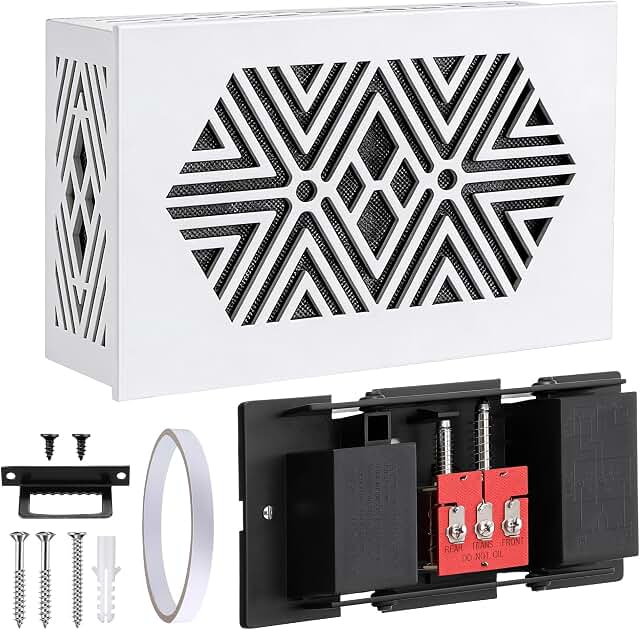
This all-in-one upgrade kit combines a mechanical doorbell chime and a wooden cover box. The chime supports front and rear tones with dual-tone capability, enabling easy guest location identification. The device is designed for seamless replacement of older doorbell systems and includes matched dimensions to fit standard spaces. It is best for homeowners seeking a stylish, integrated upgrade with two distinct sounds and a bespoke wooden finish.
Who it’s best for: buyers prioritizing design and multi-entrance notification in a single, unified package. Why chosen: dual-tone capability with a wooden aesthetic that blends with interior decor.
Caution: Transformer and door button are not included, so ensure you have compatible components on hand before installation.
All Purpose Door Bell

This budget-friendly option provides reliable basic operation with a bright plating finish. It works with an 8 to 16-volt AC supply and has compact dimensions suitable for small entryways. It is best for simple installations where loudness and straightforward wiring beat additional features. This model offers a balance of price and practicality for straightforward doorbell needs.
Who it’s best for: budget-conscious buyers needing a dependable wired bell without extra features. Why chosen: compact profile with broad voltage compatibility.
Caution: Limited feature set means fewer customization options; verify that the tone and mounting fit your location requirements.
Buying Guide
What to consider when choosing an extra loud wired doorbell
- Volume and tone: Choose a chime around 85–90 dB if you need to be heard across multiple rooms. Mechanical chimes deliver classic tones; electronic chimes can offer varied sounds.
- Wiring and transformer: Confirm transformer voltage (commonly 16V/10VA) and ensure you have compatible wiring. Some units do not include transformers or button switches.
- Two-door vs single-door: If you have multiple entrances, a dual-tone or two-note chime helps identify where visitors are at a glance.
- Placement and mounting: Consider wall-mounted or surface-mounted options to match your entry layout and decor. Wooden or styled housings improve aesthetics in visible spaces.
- Durability: ABS housings are common for indoor use; wooden or metal enclosures can offer longer life in busy foyers.
- Smart compatibility: If you use smart doorbells, ensure the wired chime integrates with your existing system and resolves power draw issues that may affect smart devices.
FAQ
- What is a typical loudness range for wired doorbell chimes? Answer: Most loud wired chimes range from 85 to 90 dB, suitable for multiple rooms or busy interiors.
- Do I need a transformer to install a wired doorbell? Answer: Yes, most wired chimes require a low-voltage transformer (commonly 16V/10VA). Some include mounting hardware but not the transformer.
- Can I use a wired chime with a smart doorbell? Answer: Yes, many wired chimes are designed to work with smart doorbells and can replace failing smart chime components.
- Is dual-tone better for multi-entry homes? Answer: Yes, dual-tone or two-note chimes help identify which door is pressed, improving visitor recognition.
- What is a good choice for busy commercial spaces? Answer: A high-volume 90 dB doorbell with a durable ABS housing is typically best for indoor alert reliability.
- Do these chimes require professional installation? Answer: Installation can be straightforward for those familiar with low-voltage wiring; consult a professional if transformer wiring or electrical work is uncertain.