As an Amazon Associate I earn from qualifying purchases. These links may earn this site a commission when you buy, at no extra cost to you.
Choosing the right extension cord for a battery charger is about cable gauge, length, and connector compatibility. This guide highlights five reliable options that balance durability, safety, and ease of use across different charger types. Each product is linked to its Amazon listing for quick reference, with practical details to help you select the best fit for your bike, car, RV, or solar project.
Summary of Selected Products
| Product | Length | Connector Type | Notable Benefit |
|---|---|---|---|
| LEICESTERCN 6FT SAE to O Ring | 6 ft | SAE to O Ring | Heavy-duty copper wire, easy direct battery connection |
| Nilight 2PCS 12FT SAE to SAE | 12 ft | SAE to SAE | Universal 2-pin, flexible and durable |
| Schumacher EC-25 25 Feet | 25 ft | Quick-connect ends | Long reach for Schumacher chargers |
| Battery Tender 12 Foot Extension SAE | 12 ft | SAE quick disconnect | Widely compatible with Battery Tender line |
| SPARKING SAE to SAE 25FT | 25 ft | SAE to SAE | Heavy-duty, dust cover helps moisture protection |
LEICESTERCN 6FT SAE To O Ring Connectors Extension Cord
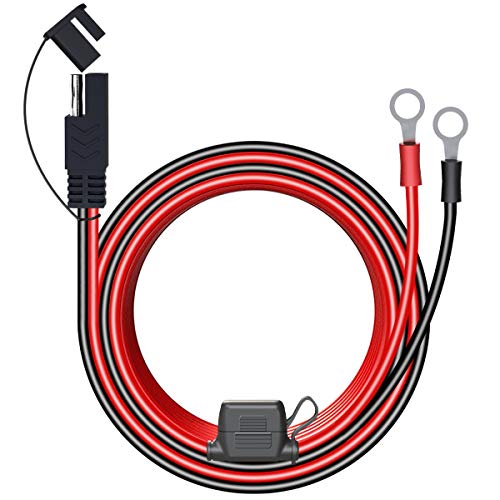
The LEICESTERCN extension cord provides a straightforward setup for battery charging with direct battery connection. The 6-foot length keeps wiring tidy while giving enough slack for typical garage work. Built with 100% copper wire and SPT-2 insulation, this cord is designed for durability in regular maintenance tasks. Red and black conductors clearly indicate polarity, reducing hookup errors during charging or trickle maintenance.
Key features emphasize robust copper conductors and practical use: a 6 ft long SAE to O Ring configuration, heavy-duty color coding, and a simple “plug-and-go” approach to battery charging tasks. This option is suitable for users who want a compact, reliable extension for personal vehicle maintenance or small-scale charging projects.
Nilight 12FT SAE To SAE Extension Cable

ThisNilight extension cable features a full 12-foot length and 16 AWG two-pin copper wiring. The red and black conductors help visually confirm polarity. It is designed to be flexible and durable, compatible with most SAE ports, and suited for extending battery chargers, tenders, and related devices. The cable is built to handle regular charging tasks across motorcycles, trucks, RVs, and small solar projects where an SAE extension is needed.
Schumacher Electric EC-25 Extension Cord

Designed to work with Schumacher battery chargers and maintainers, the EC-25 extends charging reach with a 25-foot extension. It uses an 18-gauge cord, offering rugged durability and a flexible sheath. This option is ideal for setups where the charger sits farther away from the battery, such as in larger garages, parking areas, or when working with taller vehicles. The extension is a practical choice for Schumacher-brand systems but can also accommodate other quick-connect charger configurations.
SPARKING 6FT SAE To SAE Extension Cord

SPARKING’s 6-foot SAE extension offers a heavy-duty 16 AWG, two-conductor design for reliable power delivery in trickle charging and maintenance. The cable includes dust caps to protect the connectors from moisture and dust when not in use. It is suited for daily maintenance tasks on motorcycles, lawn equipment, ATVs, and small trucks. The polarity-reverse adapter adds flexibility for various charging setups, making it a practical compact option for home garages.
SPARKING 25FT SAE To SAE Extension Cord

This 25-foot SPARKING extension is built for longer reach, making it suitable for solar setups, battery tenders, and larger charging areas. The heavy-gauge 16 AWG wire supports consistent power delivery over longer distances, and the included dust cover helps protect the ends from moisture and dust when the connection is not in use. It is a versatile option for hobbyists and professionals who need extended reach without sacrificing reliability.
Buying Guide: Choosing The Right Battery Charger Extension Cord
- Length vs. practicality: Longer cords provide flexibility but add resistance and voltage drop. Choose the shortest length that comfortably reaches your charging location.
- Conductor gauge: For most battery charging tasks, 16 AWG copper is common and adequate for moderate loads. Heavier loads or longer runs may benefit from thicker wire (e.g., 14 AWG).
- Connector compatibility: Ensure the extension uses SAE quick-disconnects or battery-specific ends that match your charger’s ports. Quick-connect and polarity indicators reduce miswiring.
- Durability features: Look for heavy-duty copper wiring, flexible insulation, and protective sheaths. Dust caps or weather-resistant ends help protect terminals in outdoor or garage environments.
- Safety considerations: Use appropriately rated cords (voltage and amperage) and avoid daisy-chaining or running cords through water or high-traffic areas. Inspect for wear and replace damaged cords promptly.
- Brand and compatibility: Consider extensions designed for specific charger families (Battery Tender, Schumacher) for guaranteed compatibility, though universal SAE variants also work broad-based scenarios.
- Maintenance and storage: Coil cords neatly and store in dry spaces. Use dust covers when not in use to protect the connectors from moisture and debris.
In sum, the best extension cord for a battery charger depends on your typical charging distance, the charger model you own, and the environments you work in. The selections above balance practical length options, solid conductor quality, and reliable connectors, helping ensure safe, efficient charging for vehicles, motorcycles, RVs, and solar-powered setups.