
Best EV Charger Testing Equipment for Accurate Assessment and Safe Installations
Choosing the right EV charger testing equipment helps technicians verify safety, compliance, and performance of electric vehicle charging stations. This article highlights five dependable tools, covering basic wiring checks, professional-grade testing, and portable diagnostics. Each product is summarized with key capabilities to help buyers compare at a glance and make informed purchasing decisions.
Product Summary
- Triplett TEV300 Electric Vehicle Charger Test Kit — LED GO/NO GO indicators, compliance testing, and charger socket status indication.
- EVSE LLC 3840 Electrician Vehicle Charger Tester — commercial-grade, weatherproof, measures actual amps/voltage and signals with LEDs.
- FLIR EV45-NACS EV Charger Test Adapter — supports NACS and Type 1, tests protective earth and CCID for safety.
- Denash EVSE Test Adapter — Type 2 plug compatibility tester with European Type 2 plug and voltage signaling.
- EVDoctor EVSE Repair Tool MINI — Go/NoGo testing for all chargers, dual LED status indicators, portable case included.
Triplett TEV300 Electric Vehicle Charger Test Kit
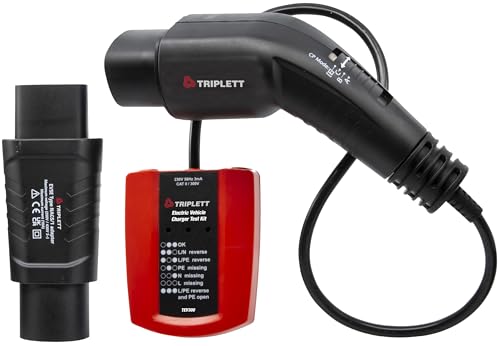
The Triplett TEV300 is designed for basic wiring testing in EV charging systems. It provides LED GO/NO GO indication to quickly assess socket readiness and charger output status. It complies with European EMC and LV directives and EN61010-1 standards, ensuring alignment with common safety requirements. The kit can simulate a PP state for cable testing and indicates charger output status, helping technicians verify connection integrity and protection operation during installation or maintenance.
Key features include simple socket inspection charts, PP cable simulation for a 20 A capability check, and clear visual indicators to guide field testing. This makes the TEV300 suitable for initial site surveys, commissioning checks, and periodic safety inspections in residential or light commercial environments.
EVSE LLC 3840 Electrician Vehicle Charger Tester
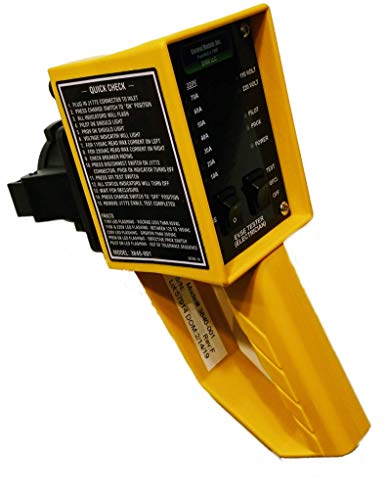
The EVSE LLC 3840 is a commercial-grade, weatherproof handheld tester designed for Level 1 and Level 2 EV chargers. It verifies critical power and safety requirements after installation, including measuring actual amperage and voltage, signal levels, and pulse widths. Results are clearly indicated with high-intensity LEDs, enabling quick on-site validation. The device is self-powered, removing the need for external batteries, which supports field reliability in various environments.
Its deep testing capabilities support commissioning work and post-installation verification for J1772 compliant charging stations. The device’s rugged build and straightforward interface make it suitable for electricians and technicians performing new installations or ongoing maintenance checks across residential garages and small commercial sites.
FLIR EV45-NACS EV Charger Test Adapter
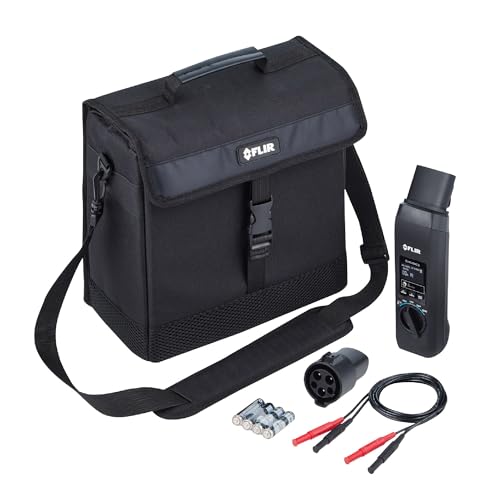
The FLIR EV45-NACS kit is designed for total compatibility with NACS and Type-1 charging systems. It includes a compact Type 1 to NACS converter for versatile testing. The kit focuses on safety by testing protective earth (PE), wiring integrity, and the Charge Current Interrupt Device (CCID) to ensure electrical safety at both residential and commercial EVSEs. This makes it a strong choice for technicians working with mixed charging standards or dual-technology installations.
With a focus on comprehensive safety verification, the EV45-NACS helps confirm that earthing, shielding, and interrupt mechanisms function properly before vehicles connect. This reduces risk during charging and supports compliance with safety standards for both Level 1 and Level 2 charging environments.
Denash EVSE Test Adapter

The Denash EVSE Test Adapter focuses on European Type 2 plug compatibility for European standard AC charging stations. It functions as a versatile tester to simulate vehicle presence and monitor voltage changes during testing. The device works in conjunction with installation testers or multimeters to provide voltage and CP signal readings, facilitating quick validation of European charging setups.
This adapter is useful for compatibility checks during international installations or in shops that prepare adapters for European markets. It helps technicians confirm that CP signaling and load voltage behave as expected, supporting accurate, safe commissioning of Type 2 based EVSEs.
EVDoctor EVSE Repair Tool MINI

The EVDoctor EVSE Repair Tool MINI is designed for quick Go/NoGo testing across J1772, Type 1, Tesla, CSS, and Type 2 chargers. It provides two status LEDs—PILOT (green) and 1 kHz (blue)—to indicate charging readiness and pilot activity. The tool is compact and includes a carrying case for portability. Step-by-step operation guides are included to support basic testing workflows, with more advanced testing assuming user familiarity with EVSE and handle operation. This makes it suitable for installation and repair tasks in the field.
With its focus on speed and simplicity, the MINI version supports rapid checks during commissioning or troubleshooting. It offers a practical, travel-friendly option for technicians who need reliable Go/NoGo feedback without carrying extensive test apparatus.
Buying Guide
- EVSE standards coverage: Look for devices that verify essential protections (PE, CCID), proper wiring, and proper signaling (PP, CP) to ensure safety and compatibility with local codes.
- Compatibility: Consider the charging standards you encounter (J1772, Type 1/2, NACS) and whether you need adapters or converters for mixed environments.
- Portability vs. capability: Portable testers are handy for field work, while higher-end kits may offer deeper measurements (voltage, current, signal levels) and longer-term testing capability.
- Indication method: LEDs and audible cues speed up on-site assessments. Some users prefer devices with digital readouts for precise data logging.
- Power and battery reliance: Self-powered devices avoid battery maintenance and are useful in remote locations; check if units require external power or have internal power options.
- Safety compliance: Ensure devices comply with relevant directives and standards in your region to support regulatory alignment during inspections and audits.
- Support and resources: Availability of manuals, repair guidance, and technical support can reduce downtime when issues arise in the field.
Overall, selecting testing equipment involves balancing the breadth of tested parameters, environmental resilience, and the typical charging standards you service. For teams handling multiple standards and sites, a combination of a comprehensive tester (with safety checks) and targeted adapters may offer the best coverage.