
Best Energy Efficient Thermostat Choices for Your Home
Energy efficient thermostats help reduce utility usage while keeping your living spaces comfortable. The following picks are popular, ENERGY STAR certified options that support remote access, smart schedules, and compatibility with common HVAC setups. This overview highlights five models that balance compatibility, privacy, and ease of installation for American homes.
| Product | Brand | Key Feature |
|---|---|---|
| Emerson Sensi Touch | Emerson Store | Color touchscreen, Energy Star, c-wire required |
| Google Nest Thermostat | Google Store | Wi-Fi, energy savings, works without C-wire in many setups |
| Sensi Smart Thermostat (ST55) | Emerson Store | Easy DIY install, privacy protection, Energy Star |
| Meross Smart Thermostat | meross Store | Matter compatible, flexible scheduling, C-wire required for some configs |
| Amazon Smart Thermostat | Amazon | Alexa integration, energy saving through smart routines |
Every option supports remote control via smartphone apps, which helps you fine-tune energy use whether you’re at home or away. The following sections summarize five top picks with essential features and installation notes to help you decide which model fits your home and routine best.
Emerson Sensi Touch Wi-Fi Thermostat
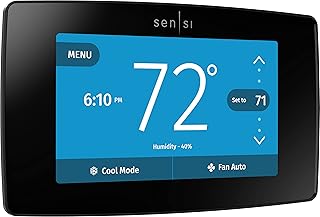
The Emerson Sensi Touch ST75 delivers a full-color touchscreen and straightforward DIY installation. It works with most HVAC systems and requires a common wire (c-wire) for reliable power. ENERGY STAR certification signals energy-saving potential through flexible scheduling, remote access, and usage reports. Privacy protections note that personal data isn’t sold to third parties. The included level and clearly labeled terminals streamline setup for a faster, cleaner install.
Google Nest Thermostat

The Nest Thermostat is a programmable Wi-Fi thermostat designed to optimize energy use while staying convenient. It is ENERGY STAR certified and supports setup without a C-wire in many scenarios, though some systems may need a C-wire or compatible power accessory. Its presence-aware features help it lower heating or cooling when you’re away. Compatibility checks are available via Google’s support resources to confirm system readiness before purchase.
Sensi Smart Thermostat (ST55)

The Sensi ST55 offers a compact, user-friendly design with straightforward installation. It emphasizes privacy protection and does not require a c-wire in many setups, depending on the HVAC configuration. ENERGY STAR certification supports energy savings through flexible scheduling, remote access, and comprehensive usage reports. The device is compatible with major voice assistants and can be installed by homeowners with basic electrical skills.
Meross Smart Thermostat

Meross Smart Thermostat focuses on Matter integration and compatibility with major ecosystems, including Apple Home, Amazon Alexa, Google Home, and Samsung SmartThings. It supports around-the-clock scheduling and energy-conscious routines, with a C-wire requirement that varies by wiring. The device is designed to minimize app clutter by centralizing control through the Meross app and compatible platforms, making it suitable for users seeking cross‑platform automation.
Amazon Smart Thermostat

The Amazon Smart Thermostat provides a seamless upgrade path if you already use Alexa-enabled devices. It supports routines and presence-based adjustments to help reduce energy use. The thermostat is designed to be easy to install and use within the Amazon ecosystem, and it integrates with other smart home devices for automated comfort and efficiency. It emphasizes practical energy savings while keeping setup simple for most homeowners.
Buying Guide
Key considerations when selecting an energy efficient thermostat include compatibility, installation, privacy, and ecosystem integration. Here are common perspectives to help you compare models:
- Compatibility: Check your HVAC type (gas, electric, heat pump, boiler) and whether a C-wire is required or optional. Some models work well without a C-wire, while others perform best with one.
- Energy Savings: Look for ENERGY STAR certification and features like flexible scheduling, adaptive geofencing, and usage reports. These contribute to measurable energy reductions over time.
- Smart Home Integration: Ensure the thermostat supports your preferred platforms (Alexa, Google Assistant, Apple HomeKit, Matter). Consider whether you want a single app experience or ecosystem-wide automation.
- Privacy and Security: Review data handling policies and the option to disable data sharing. Choose brands with transparent privacy protections and robust firmware updates.
- Installation Experience: DIY-friendly models with built-in levels and clear wiring labels reduce setup time. If you’re unsure about wiring, consider a professional installation option.
- User Interface: A readable display, responsive app, and intuitive scheduling are important for daily use and quick adjustments.
For most homes, any of the listed models can deliver energy savings and smarter comfort. Compare installation requirements, compatibility notes, and the ecosystems you already use to determine the best fit for your daily routines and energy goals.