
Best Emergency Light Bars for Firefighters
Emergency light bars are essential tools for firefighters and first responders, delivering high visibility, reliability, and rapid warning signals in diverse conditions. The following five models are selected for strong brightness, 360° coverage, durable construction, and flexible control options. Each product includes multiple flash patterns, waterproofing, and mounting versatility to support urgent response scenarios on various vehicles.
| Product | Brand | Features Snapshot |
|---|---|---|
| Xprite 48″ Crane Series | Xprite | 132 LEDs, 360° coverage, 16 patterns, memory recall |
| XRIDONSEN 37″ LED Bar | XRIDONSEN | 104 LEDs, IP67, 26 patterns, digital controller |
| XRIDONSEN 35″ Traffic Advisor | XRIDONSEN | 48 LEDs, 26 patterns, memory recall |
| XRIDONSEN 35″ Firefighter Bar | XRIDONSEN | 144 LEDs, 26 patterns, quick selection |
| Xprite Dash Strobe Light | Xprite | 16 LEDs, 18 patterns, half-mile visibility |
Xprite 48 Inch Crane Series Emergency Light Bar

The Xprite Crane Series 48″ light bar is built for heavy-duty safety signaling with an array of 132 high-intensity LEDs organized in 44 modules. The robust optical lens system enhances brightness for maximum visibility, and flood lenses boost output to reach up to half a mile. Its 360° housing ensures comprehensive illumination, reducing blind spots during daytime and night operations. A user-friendly controller offers 16 flashing patterns, with a pattern display and memory recall to quickly resume a preferred mode after a power interruption. The durable construction supports demanding responder environments and versatile mounting options for fire apparatus and emergency vehicles. This model is designed to provide clear, immediate warnings in chaotic incidents and high-traffic scenes.
Key advantages include its wide coverage and bright output designed to cut through clutter, improving pedestrian and driver awareness. The combination of a clear housing and powerful LEDs contributes to reliable performance in rain, fog, or urban landscapes. However, operators should ensure proper mounting hardware compatibility with their vehicle roof and verify that the controller interface aligns with in-vehicle power systems. Regular maintenance of seals and connections helps preserve performance in challenging weather.
XRIDONSEN 37 Inch Roof Top Emergency Lights

This XRIDONSEN 37-inch light bar features 104 high-intensity LEDs paired with a spotlight TIR lens to maximize daytime and night-time warning visibility. The aluminum housing is waterproof (IP67) and engineered for durability against rain, dust, and extreme weather, with an impressive lifespan rated up to 50,000 hours. The digital controller allows for 26 flashing patterns plus the ability to save a favorite custom pattern, improving response efficiency. Directional quick-select options and last-pattern memory support rapid, reliable reconfiguration during missions. The product’s rugged construction makes it suitable for police or firefighter applications, especially on POV or larger emergency vehicles.
Considerations include ensuring the controller readability in bright daylight and confirming that the mounting kit fits the vehicle profile. While the IP67 rating offers strong protection, periodic checks of seals and electrical connections help maintain long-term reliability. With its balanced blend of brightness, control sophistication, and weather resistance, this light bar is well-suited for demanding on-road emergencies and rescue operations.
XRIDONSEN 35 Inch Traffic Advisor With 26 Patterns

XRIDONSEN’s 35-inch Traffic Advisor is designed for versatile warning signaling with 48 high-intensity LEDs and TIR spot lenses, delivering bright performance visible through tint and in daylight. The aluminum housing provides durability and a lifespan up to 50,000 hours. The unit offers 26 strobe patterns with memory recall to resume the last mode after power loss. A 12V cigarette lighter plug allows straightforward installation, while the display controller facilitates mode switching and pattern customization. This light bar is suitable for volunteer fire departments and municipal fleets that require reliable, quick-response signals on smaller chasses and cargo vehicles.
Considerations include evaluating the mounting footprint and ensuring compatibility with roof rails or magnetic mounts if needed. Heat dissipation is aided by the aluminum design, but users should confirm electrical load compatibility with vehicle electrical systems. The included patterns cover a broad range of warning scenarios, from hazard caution to directional warnings, supporting clear roadway communication during incidents.
XRIDONSEN 35 Inch Traffic Advisor Firefighter Bar
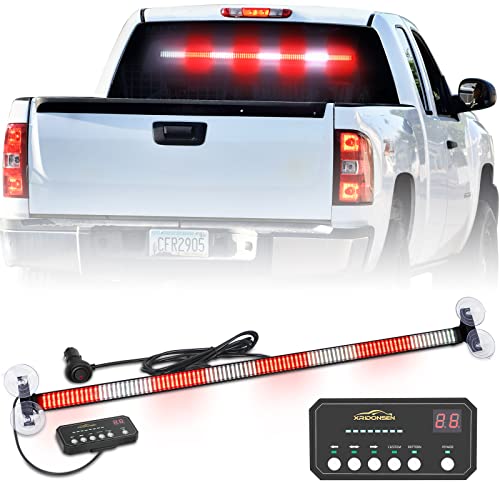
This 35-inch XRIDONSEN Traffic Advisor emphasizes visibility with 144 high-brightness LEDs and a rugged aluminum housing rated for up to 50,000 hours of operation. The unit supports 26 flashing patterns and features a last-pattern memory recall function for quick resumption of the active warning mode. It includes a digital display controller to adjust patterns and set directional flashing, making it suitable for first responder scenarios where rapid orientation is crucial. The bar’s front-facing and rear-facing illumination enhances conspicuity around vehicles and during street-facing incidents.
Key considerations include the ease of manual control under stressful conditions and whether the last-used pattern memory aligns with standard operating procedures. The sturdiness of the housing and lens protection helps resist scratching and condensation, ensuring consistent performance in rain or dust. Ergonomics of the controller placement should be evaluated to minimize distraction during emergencies.
XRIDONSEN 28.4″ 80 LED Roof Top Bar (Blue)

XRIDONSEN’s 28.4-inch blue roof-top light bar uses 80 high-intensity LEDs with a spotlight TIR lens to maximize visibility during the day and night. The waterproof aluminum housing and anti-scratch PC lens provide resilience in challenging weather, with an IP67 rating to withstand rain, sand, snow, and fog. The unit includes a controller with 26 flashing patterns and quick-3 directional selections, plus a last-pattern memory recall and a favorite pattern feature for rapid deployment. The compact footprint makes it suitable for smaller responders’ vehicles or as an auxiliary warning light on larger apparatus.
Purchase considerations include evaluating whether the blue color aligns with agency color schemes and the need for dual-color configurations. While the housing quality supports endurance, operators should ensure secure mounting to avoid wind stress or vibration during high-speed responses. The digital controller simplifies operation in dynamic scenarios, enabling quick mode changes without distracting maneuvers.
Xprite White Red Dash Strobe Light

The Xprite dash strobe light is designed for interior windshield use, offering 16 high-brightness LEDs with visibility up to half a mile. It supports 18 flashing modes, including pulsing and alternating patterns, and memorizes the last pattern used for quick redeployment. The design emphasizes efficient heat dissipation through upgraded PCB technology and a lifespan exceeding 50,000 hours. This light is suitable for firefighter vehicles requiring conspicuous interior signaling, hazard warnings, and escort roles while maintaining low power consumption. It provides a compact alternative for front-seat warning signaling and auxiliary warning roles during incidents.
Considerations include ensuring compatibility with mounting points on vehicles’ windshields and confirming that the dash placement does not obstruct driver visibility. Heat management is a practical benefit, but operators should verify wiring harness compatibility and ensure the device remains within legal vehicle lighting requirements in their jurisdiction.
Xprite White Red Rooftop Emergency Bar With Magnetic Base
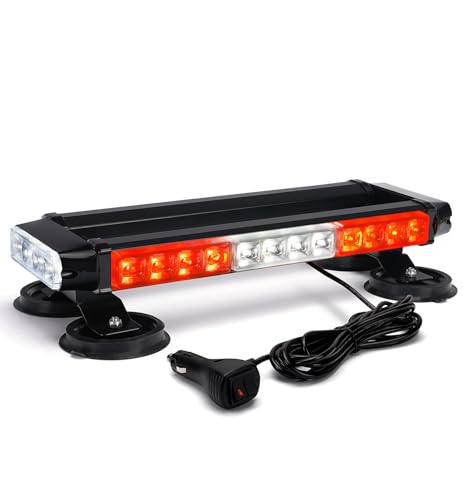
This rooftop light bar from Xprite delivers 360° ultra-bright signaling with 32 LEDs and clear lenses for comprehensive coverage. The device pairs 21 smart flash patterns with memory to resume a chosen mode, ensuring consistent signaling during shifts. An IP68-rated aluminum housing, paired with vortex heat dissipation and anti-condensation drainage, minimizes moisture buildup and fogging. A 50,000-hour lifespan offers long-term reliability for municipal fleets, ambulances, and fire vehicles needing dependable warnings in all weather. The magnetic base enables flexible temporary placement for testing or on-sight operations where permanent mounting isn’t feasible.
Key considerations include evaluating magnet strength for temporary setups on vehicles with metallic roofs and ensuring that magnetic attachments do not interfere with other equipment. The robust construction and multiple patterns support diverse incident types, while the wind resistance and sealing help protect electronics in rain, snow, and dust. Agencies should align pattern selections with standard operating procedures to maximize communication effectiveness on the road.
Buying Guide: Key Purchase Considerations
Brightness and coverage: For safety, select light bars with high LED counts and 360° visibility. Consider whether flood or spot lenses best suit your typical incident environments and traffic conditions.
Durability and weather resistance: Look for aluminum housings, IP-rated seals (IP65/IP67/IP68), and rugged mounting options. Fire and emergency vehicles operate in rain, snow, heat, and dust; gear should withstand these conditions.
Control and customization: Digital controllers with multiple flash patterns and last-pattern memory help responders adapt signals to different scenes. Assess ease of use under stress, including quick pattern changes and reliable memory recall.
Mounting versatility: Roof, dash, and window-mounted options offer flexibility. Ensure compatibility with vehicle geometry, roof rails, magnetic bases, and suction or permanent mounts as needed for your fleet.
Power and compatibility: Verify voltage compatibility (commonly 12V), wiring harness quality, and electrical load. Check that installations meet local regulations on emergency vehicle lighting color and intensity.
Maintenance and service life: Prioritize long LED lifespans (tens of thousands of hours) and easy-to-replace components. Regular checks of seals, ventilation, and lens clarity help maintain performance.
Color and signaling strategy: Red and white combinations are common for fire and EMS use; some departments require dual-color configurations. Align color schemes with agency branding and jurisdictional rules to ensure immediate recognition by other road users.