
Best Electrical Panel Watt Meter for Accurate Power Monitoring and Troubleshooting
Answering the need for precise, real-time power readings in DIY projects, solar setups, or RC applications—this guide highlights the best electrical panel watt meters. These meters measure voltage, current, watts, amp-hours, and watt-hours, helping you optimize efficiency and prevent overloads. The top picks are suited for hobbyists, small workshop setups, and portable power projects. Below is a concise buyer’s table of the five recommended meters followed by detailed sections for each product.
| Product | Brand | Best For | Key Benefit |
|---|---|---|---|
| 150A High Precision Power Analyzer | HTRC | DC power projects and battery tests | High accuracy across DC ranges |
| RC Amp Watt Meter Power Analyzer | whcusmm | RC batteries, solar/wind tests | Supports up to 200A, versatile for renewable systems |
| DC 8-100V 0-100A Meter | bayite | Low-voltage DC projects | Compact, shunt-based for precise readings |
| DROK AC Meter 80-300V | DROK | AC mains monitoring | All-in-one AC watt/volt/amp+power factor |
| ANKG 150A Watt Meter Power Analyzer | ANKG | RC/DIY power testing | Clear LCD with real-time readings |
HTCR 150A High Precision Power Analyzer
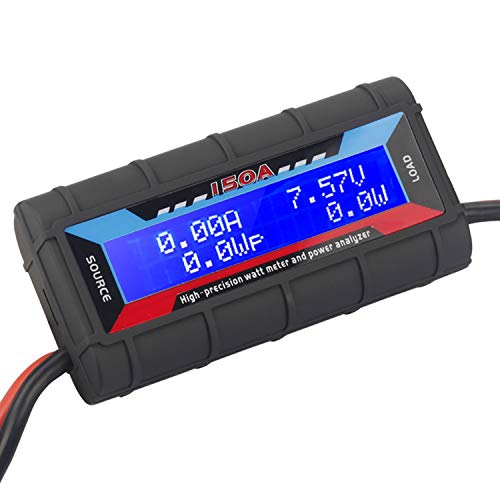
This DC power analyzer provides a wide measurement range, including 0-150A current, 0-60V voltage, and up to 6554Wh. It features a bright blue backlit LCD for easy reading and supports 4.8V to 60V operation with an optional auxiliary battery. Best for DIY power projects and battery testing where precise DC readings are essential. The device excels in measuring Current (A), Voltage (V), Watts (W), Amp-hours (Ah), and Watt-hours (Wh), with clear peak and minimum indicators for troubleshooting. Caution: Ensure wiring complies with 12 AWG or better for higher current paths; exceed-rated voltage may affect accuracy or safety.
Best for: DIY DC power projects and battery testing where stable, detailed DC measurements are needed.
Why selected: Comprehensive DC ranges, fine resolutions, and a durable display support precise diagnostics in compact form.
whcusmm Solar And RC Power Meter (200A)

This meter targets solar, wind, RC batteries, and EV-related testing. It measures voltage, current, power, discharge capacity, and time with a 0-200A current range and 0-100V range (0.01V/0.01A resolutions). It’s ideal for evaluating charging efficiency and energy use in renewable setups. Note the rated limits: do not exceed 100V and 200A. Caution: data accuracy hinges on staying within specifications; not recommended for higher-voltage or higher-current systems than specified.
Best for: Solar and RC battery diagnostics, where high-precision monitoring of energy flow matters.
Why selected: Broad applicability across renewables and hobbyist power systems with a reliable 0.01-level resolution on key readings.
bayite 8-100V 0-100A DC Meter
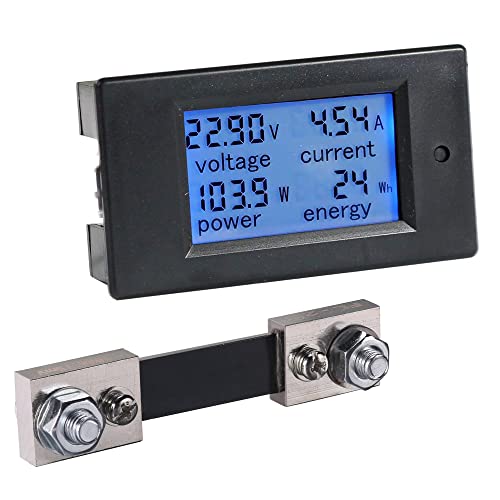
The bayite meter covers a broad DC range (8-100V, 0-100A) with a 0-10kW power capability and 0-9999kWh energy tracking. It includes a 100A current shunt and a blue backlight that homeowners can switch on or off. It stores energy data when power is off, which helps prevent data loss in outages. Caution: backlight usage may drain power on very small setups if readings are left on for long durations.
Best for: Compact, budget-friendly DC monitoring for battery projects and small appliances.
Why selected: Simple installation with a practical energy storage feature and clear visual feedback.
DROK AC 80-300V 100A Meter
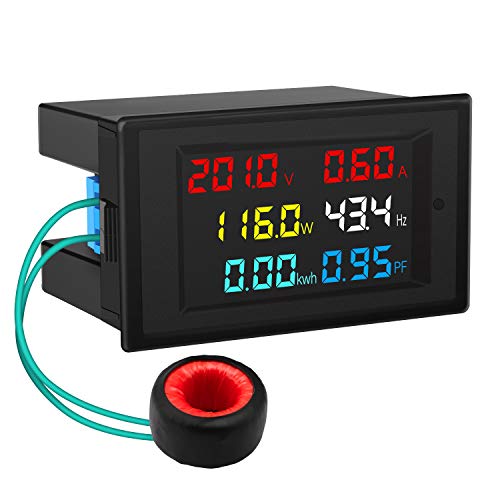
The DROK meter is designed for AC mains monitoring with a 6-in-1 interface that displays voltage, current, active power, energy, frequency, and power factor. Its measurement range covers 80-300V AC and 0-100A, delivering up to 30,000W. It is especially useful for kitchen appliances, home electronics, or any AC-powered device. Caution: accuracy can be affected by highly fluctuating AC loads; ensure proper installation to avoid false readings.
Best for: Home electrical panels and AC-powered devices where a single, comprehensive meter is preferred.
Why selected: All-in-one reading with a robust display for daily energy management and cost awareness.
ANKG 150A Watt Meter Power Analyzer

The ANKG meter provides a clear digital LCD display and real-time readings of current, voltage, and watts. It supports 0-150A, 0-60V, 0-6554W, 0-65Ah, and 0-6554Wh with detailed resolutions. This model is well-suited for RC and DIY power testing where precise instantaneous values are important. Caution: ensure the 150A range is appropriate for your wiring to avoid overloads.
Best for: Real-time, multi-parameter power testing in RC or DIY projects.
Why selected: Strong balance of high current support, fine resolution, and straightforward readouts for quick diagnostics.
Buying Guide: Key Considerations For Choosing A Watt Meter
- DC vs AC monitoring: DC meters are essential for battery banks and solar charging; AC meters suit home mains monitoring.
- Current and voltage range: Match the meter’s range (e.g., 0-150A, 4.8-60V) to your system’s maximum expected values.
- Display and readability: Backlit LCDs improve visibility in dim or bright environments; consider resolution for precise readings.
- Power measurement features: Look for readings of Volts, Amps, Watts, Watt-hours, and Amp-hours, plus peak/minimum values where helpful.
- Data retention: Some meters auto-store readings during outages; this is valuable for post-event analysis.
- Installation compatibility: Ensure wiring gauge and connector types (shunt, CT, or direct) match your setup.
- Installation location: In-dash display vs panel-mounted units affect accessibility and readability.
- Safety and compliance: Use meters rated for your voltage/current ranges; follow all wiring guidelines.
Frequently Asked Questions
- What is a watt meter used for in a home panel? – It measures voltage, current, power (W), energy (Wh), and other parameters to monitor energy use and equipment load.
- Do I need a separate meter for AC and DC systems? – Yes if you operate both AC mains and battery-based DC systems; separate meters provide accurate readings for each type.
- What is the difference between a watt meter and a power analyzer? – A watt meter focuses on basic electrical readings, while a power analyzer typically offers more detailed metrics, higher precision, and broader ranges.
- Can these meters prevent electrical problems? – They help you detect overloads, unusual consumption, and inefficiencies, supporting preventive maintenance.
- How do I choose the right current range? – Match the meter’s current range to your system’s maximum expected current to avoid clipping and ensure accuracy.
- Is data retention important for monitoring? – Yes, if you experience outages or need historical measurements to diagnose energy patterns.