
Best Electrical Insulating Spray Paint for Electronics and Motors
Finding the right insulating spray paint depends on your project and environment. This guide highlights five reliable options for electronics, motors, wires, and automotive tasks. Best for beginners are easy-to-apply coatings with quick dry times. Better for long-term protection are UV- and temperature-resistant formulas. Choose this if you need a flexible, water-resistant layer. Avoid this if the surface requires high-gloss enamel or specific solvent compatibility for specialized equipment. The selections below are chosen for clear performance benefits, straightforward application, and practical compatibility with common electrical components.
Product Snapshot
| Product | Best For | Key Benefit | Limitations |
|---|---|---|---|
| Sprayon Red Insulating Varnish | Motors and coils | High-gloss red insulation with decent coverage | Not UV-rated in data |
| WEICON Isolation Spray | Circuit boards and wiring | Clear, invisible barrier against moisture, dust, and corrosion | Temperatures up to +248°F |
| STANIOS 620-1525 Tool-Crib Red (Pack of 2) | Transformers and coils | Durable varnish with glossy finish | Limited application notes in data |
| Plasti Dip Liquid Tape | Wires and terminals | Flexible, rubberized coating that resists cracking | Rubberized finish may be less durable in extreme heat |
| Hy-Tech Insulating Ceramic Flat Paint | General insulation and coatings | Environmentally friendly, durable scrub resistance | Fluid ceramic paint may differ in gloss |
Sprayon Red Insulating Varnish, 20 oz.
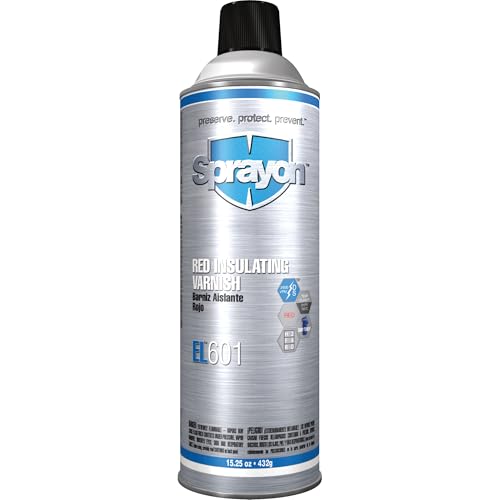
Best for: motors, coils, and general electrical insulation where a red, glossy varnish finish is acceptable. This 20 oz can offers coverage of roughly 15 to 20 square feet and dries in 2 to 4 hours, enabling mid-project rework without excessive downtime. The product is formulated with a low VOC content and a practical 70–90°F application window, making it suitable for small shop environments.
Why chosen: It provides a straightforward, durable insulating layer with clear application and cure times. Best for hobbyists or tech repair tasks needing quick protection after wiring or soldering.
Caution: Do not rely on it where extreme UV exposure is a concern unless additional UV protection is applied separately.
WEICON Isolation Spray – Clear Insulating & Protective Coating

Best for: circuit boards, wires, switches, and electronics in environments with moisture or dust exposure. This spray forms a clear barrier that remains invisible on components while protecting against moisture, dust, oil, and corrosion. It dries quickly and is convenient for DIY repairs and quick long-term protection.
Why chosen: The product advertises UV and chemical resistance, plus a broad operating temperature range from -40°F to +248°F, which suits automotive or workshop settings.
Caution: Avoid applying to surfaces that must be disassembled easily, as the coating can add a minor layer thickness over connectors.
STANIOS 620-1525 Tool-Crib Red Insulating Varnish Spray (Pack of 2)
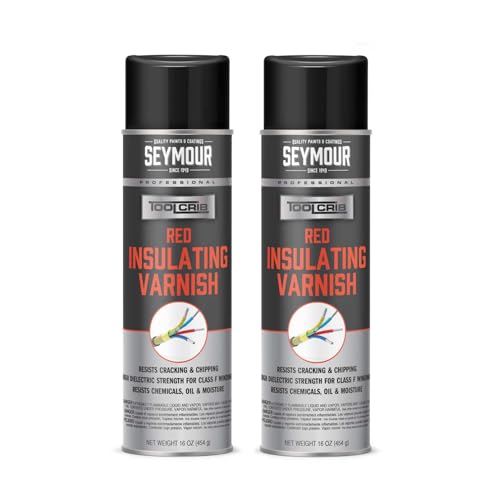
Best for: electrical insulation of motors, coils, and transformers in batch projects where two cans are convenient. The red varnish offers a high-gloss finish and aims to prevent current leakage while protecting surfaces from electrical discharge.
Why chosen: It provides a practical solution for projects requiring multiple cans and consistent coverage across several components, with a durable finish that resists cracking and chipping.
Caution: While high-gloss finishes are visually appealing, users should ensure compatibility with underlying plastics or paints before applying.
Plasti Dip Liquid Tape Electrical Spray

Best for: wires, terminals, and connections that require a flexible, rubberized insulation. Plasti Dip forms a barrier that resists moisture and corrosion while remaining flexible enough to tolerate some movement or vibration.
Why chosen: The coating’s rubberized texture helps protect delicate connections in automotive, marine, and home repair projects where flexibility matters.
Caution: The rubbery finish may be less protective in extreme heat environments compared to ceramic or varnish alternatives; verify operating temperatures for critical applications.
Insulating Ceramic Flat Paint – 1 Gallon

Best for: projects requiring a durable ceramic-coated layer with good scrub resistance and a flat, Velvet finish. This option is environmentally friendly and non-toxic, with soap-and-water cleanup after application.
Why chosen: For broader insulation needs beyond wiring, this product can serve as a protective overcoat on metal housings, enclosures, and equipment shells, helping to insulate and shield in a single coat.
Caution: Ceramic paints can be less flexible than rubberized coatings; apply with proper surface preparation to avoid cracking on flexible joints or bends.
Buying Guide: Key Considerations for Selecting Insulating Spray Paint
- Application surface: Consider whether you are coating wires, boards, motors, or enclosures. Some products are better suited to flat surfaces, others to intricate shapes.
- Flexibility vs. rigidity: Rubberized coatings offer flexibility; varnishes and ceramics often provide higher rigidity and abrasion resistance. Choose based on movement, vibration, and exposure.
- Protection needs: If moisture, dust, or chemical exposure is a primary concern, prefer products with clear moisture resistance, UV stability, or high-temperature tolerance.
- Dry time and cure: Shorter dry times reduce downtime. Some products require multiple coats or longer cure periods for full protection.
- Finish appearance: Clear versus colored options affect visibility of insulation. Red or colored varnishes are common for quick identification in electrical work.
- Safety and cleanup: Look for low VOC formulations when possible and easy cleanup with soap and water for water-based options.
- Compatibility: Verify compatibility with plastics, rubbers, and existing coatings in your project to avoid peeling or poor adhesion.
Frequently Asked Questions
- What is insulating spray paint best for on electronics? It protects against moisture, dust, and electrical discharge for components like boards, wires, and connectors.
- Do these coatings handle high temperatures? Several options tolerate wide temperature ranges, but always check the product’s specified max temperatures for your environment.
- Can I spray over existing coatings? Surface preparation improves adhesion; remove oils, dust, and old coatings as needed before applying a new layer.
- Are clear coatings better than colored ones? Clear coatings are less noticeable on components, while colored coatings help with quick identification and inspection.
- Is it necessary to cure in a ventilated area? Yes. Many products emit fumes during application and drying; ensure proper ventilation and follow safety guidelines.
- How should I remove an insulating coating if needed? Gently peel or use appropriate solvents recommended by the coating’s manufacturer, depending on the material type.