
Best 3 Inch Electrical Conduit Options for DIY and Professional Wiring
Answering the common question “Which 3 inch conduit should I choose for my project?” this guide highlights practical 3 inch conduit options and components that suit home DIY, garages, workshops, and outdoor installations. The top picks include PVC Schedule 40 conduit pipes, LB conduit bodies for turns, and essential fittings like adapters and locknuts. The buyers best served are DIY installers seeking simple, code-friendly solutions and contractors needing reliable, easy-to-assemble parts for longer runs.
Summary of selected products:
- CKVIHAV 3Inch Grey Electrical Conduit PVC Pipe 17″ Long — Ideal for short runs and DIY wiring with strong insulation.
- CKVIHAV 3 Inch Rigid PVC Conduit Body Type LB — Best for 90-degree turns and accessible wiring pulls.
- 3 Inch Schedule 40 PVC Electrical Conduit Pipe – Rigid Non-Metallic (36″ Length) — Professional-grade, UV-resistant, and suitable for direct burial or outdoor use.
- CL 3″ SCH 40 90 DEG X 36″ ELB — Right-angle conduit elbow for tight spaces near walls or equipment.
- Male Adapter, 3 in Conduit, PVC — Essential connector for joining conduit to boxes or fixtures.
CKVIHAV 3Inch Grey PVC Conduit Pipe, 17″ Length

The CKVIHAV 3Inch Grey Electrical Conduit Pipe is a Schedule 40 PVC solution with an outer diameter of 3.50 inches and an inner diameter of 3.03 inches. It is designed for interior and exterior use, offering high plasticity, UV resistance, and corrosion resistance. This conduit excels in DIY cable sleeve projects and standard electrical wiring installations. Best for short runs and straightforward installations in garages or sheds where easy insulation and clean cuts matter. A potential limitation is to confirm exact fitment and compatibility with local codes before purchasing for specific applications.
Who this is best for: DIYers and light contractors needing a reliable, easy-to-cut conduit for indoor/outdoor wiring protection in moderate environments. Why selected: balances ease of installation with robust insulation and weather resistance.
CKVIHAV 3 Inch Rigid PVC Conduit Body Type LB

This LB-type conduit body enables a 90-degree turn in conduit runs, providing easy access for pulling, splicing, or maintenance of electrical wiring. Made from rigid PVC, it offers low-temperature and UV resistance, plus corrosion resistance for long service life. The flat-back design helps mounting near walls, saving space. Best for installations where a clean pull point is needed around corners. Limitation: LB bodies must be paired with compatible conduit and covers for weather sealing in outdoor locations.
Who this is best for: electricians and advanced DIYers planning corner transitions in conduit runs. Why selected: simplifies pulling and maintenance while conserving wall space.
3 Inch Schedule 40 PVC Electrical Conduit Pipe — 36 Inch Length
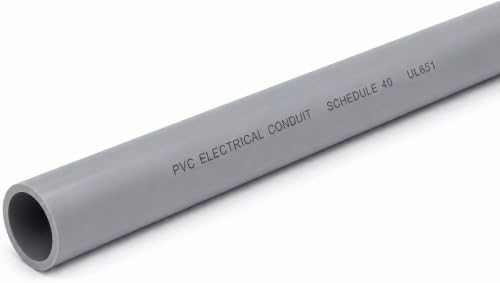
This rigid non-metallic conduit (RNC) complies with UL 651 and is ETL listed, offering protection for conductors up to 90°C. It features UV inhibitors for outdoor exposure and direct burial suitability with proper encasement. The pipe is corrosion-proof and does not rust, making it ideal for coastal or humid environments. Best for code-compliant outdoor installations and long runs where reliable protection matters. Caution: verify local burial and installation requirements for specific projects.
Who this is best for: contractors and installers needing UL/ETL-compliant conduit for outdoor or underground use. Why selected: strong code compliance, durability, and weather resistance.
Male Adapter, 3 in Conduit, PVC

This 3-inch PVC male adapter provides a standard connection between PVC conduits and boxes or fixtures. It is UL-listed for PVC conduit systems and offers straightforward threading for secure assembly. Best for replacing damaged adapters or adding a new connection point in existing runs. Caution: ensure compatibility with the specific conduit series and box threading.
Elbow PVC 45-Degree 3″

The 45-degree elbow is a standard Schedule 40 PVC fitting that enables directional changes in 3″ conduit runs. It is designed for easy integration with existing PVC conduit and helps maintain proper spacing and alignment near walls, equipment, or enclosures. Best for reducing bends and keeping runs compliant with code. Limitation: may require additional fittings to achieve complete routing in complex layouts.
Sigma ProConnex 49108 3″ Rigid Conduit Locknut, 1-Pack

This 3-inch rigid conduit locknut secures threaded conduits to boxes or enclosures, providing a stable electrical setup. It is designed for compatibility with 3″ rigid conduit and threaded connectors, offering straightforward installation. Best for ensuring tight, vibration-resistant connections in larger conduit runs. Caution: ensure correct threading and fit with your particular enclosure and conduit type.
Buying Guide: Key Considerations for 3-Inch Conduit Purchases
- Material and environment: Decide between PVC Schedule 40 (non-metallic) for corrosion resistance and UV stability, or metal alternatives if needed for higher mechanical strength or grounding considerations.
- Code conformity: Verify UL/ETL listings (e.g., UL 651) and local electrical codes to ensure the conduit type, burial method, and fittings meet requirements for indoor, outdoor, or direct burial installations.
- Diameter and compatibility: Confirm the outer and inner diameters (for example, 3.50″ OD and 3.03″ ID) to match conductors, couplings, and boxes. Ensure fittings like elbows, LB bodies, and adapters align with the chosen conduit.
- Installation practicality: For tight spaces, LB conduit bodies and 45-degree elbows can ease pulling and routing. Consider the ease of cutting, primer/solvent cement usage, and mounting clearance near walls or equipment.
- Durability and exposure: UV inhibitors and weather resistance are important for outdoor or coastal use. For underground installations, plan for proper burial encasement and moisture protection.
- Accessories and compatibility: Have a plan for locknuts, adapters, and gaskets to secure joints and maintain integrity under vibration or movement.
Frequently Asked Questions
- What is the difference between PVC Schedule 40 and Schedule 80 conduit?
– Schedule 40 is lighter and easier to cut, suitable for most indoor and many outdoor applications. Schedule 80 is thicker-walled and more impact-resistant, used where higher protection is needed. - Can I bury 3 inch PVC conduit directly?
– Yes, with proper encasement and according to code requirements. Check UL/ETL listings and burial depth guidelines for your locale. - Why would I use an LB conduit body?
– It provides easy access for pulling and maintenance at turns, helping to route long runs with fewer obstructed sections. - Are PVC fittings weatherproof?
– PVC conduit and many fittings are designed for outdoor use, but ensure seals, gaskets, and enclosures are rated for moisture exposure if needed. - What is a conduit locknut used for?
– It secures threaded conduit to boxes or enclosures, creating a stable, vibration-resistant connection. - Do I need specialty tools to install PVC conduit and fittings?
– Basic tools like a hacksaw or PVC cutter, primer, and solvent cement are typically sufficient for standard installations.