
Best Electric Outdoor Wall Heaters for Patios and Garages
Finding the right electric outdoor wall heater means balancing heat output, weather resistance, and installation flexibility. This guide highlights five top options that cover a range of spaces—from covered patios to garages and cafes. Each heater is evaluated for best use case, including who it’s best for, simple installation notes, and a practical limitation to consider. Ideal buyers include commercial spaces seeking steady warmth, homeowners needing year-round comfort, and small outdoor setups where wind and cold season use are a factor.
Summary table of selected products:
| Product | Best For | Approx. Power | Mount Type |
|---|---|---|---|
| DR. INFRARED HEATER DR-239 | Commercial or residential patios and workshops | 3000W | Wall or ceiling |
| ThermoMate Infrared Patio Heater (3000W) | Open patios and garages needing strong heating | 3000W | Hard-wired, wall/ceiling |
| Paraheeter Hanging Patio Heater | Versatile wall or ceiling mounting | 1500W | Wall or ceiling |
| SereneLife Infrared Heater | Budget-friendly patio or cafe spaces | 1500W | Wall-mounted or hanging |
| Bromic Tungsten 6000W | Large outdoor areas needing rapid warmth | 6000W | Wall or ceiling |
DR. INFRARED HEATER DR-239 3,000W

Best for: Commercial or residential patios and workshops that require instant warmth. This 3000W heater uses carbon infrared heat to warm people and objects directly, with no warm-up period. It operates on 220V-240V and includes wall and ceiling mounting kits along with a remote for easy control.
Why selected: High heat output, IP55 weatherproofing, and flexible mounting suit spaces where quick, clean heat is needed. The remote control and mounting options add convenience for variable setups. A key limitation is its higher power draw, which may require a dedicated circuit in some installations.
ThermoMate Infrared 3,000W Patio Heater

Best for: Outdoor spaces like patios, decks, and garages that need strong direct heat with timer control. It delivers 3,000W of infrared heating and includes a 24-hour timer with a remote for easy scheduling.
Why selected: Fast heat with wind-resilient infrared warmth and a dedicated hard-wired setup. The timer feature supports energy planning. Limitation: Requires hard wiring to a dedicated circuit and a specific mounting height, which may complicate DIY installs.
Paraheeter Hanging Patio Heater 1,500W

Best for: Small to medium outdoor spaces where wall or ceiling mounting is preferred, with flexible placement. This 1,500W unit provides sun-like warmth and clean operation with built-in safety features.
Why selected: Its 2-in-1 versatility and clean operation make it a practical choice for spaces needing quiet performance and simple setup. Limitation: Lower wattage means slightly less coverage in very large outdoor areas.
SereneLife 1,500W Infrared Heater
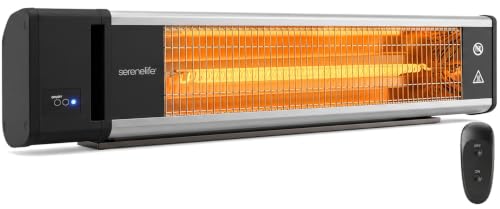
Best for: Budget-conscious buyers needing portable or wall-mounted heat for patios, cafes, and garages. It offers instant warmth with a remote and IP65 weather resistance for outdoor use.
Why selected: High efficiency carbon fiber elements with weather resistance at a favorable price point. Limitation: Slightly less heat coverage than larger 3,000W and 4,500W models; best in smaller or moderately shaded areas.
Bromic Tungsten 6,000W Smart Heat

Best for: Large outdoor spaces needing rapid, uniform warmth and a premium aesthetic. Dual quartz infrared elements deliver potent heat with a wide coverage area.
Why selected: Very high output suits expansive patios or decks, and the stainless steel construction plus modern design supports long outdoor use. Limitation: Higher power requirements and installation considerations for bigger spaces may increase initial setup effort.
ThermoMate Infrared Outdoor Patio Heater 4,500W

Best for: Covered decks and garages that require broader heat with a 24-hour timer. This unit offers flexible heat levels across 2,250W to 4,500W and a 24-hour timer for controlled warmth.
Why selected: Strong warmth range and timer control support energy planning. Limitation: Must be hard-wired to a dedicated circuit; installation considerations apply for ceiling mounting.
Buying Guide
What to consider when selecting an electric outdoor wall heater:
- Heat output vs. space size: Larger areas benefit from 3,000W–6,000W units; smaller spaces can use 1,500W heaters for comfort without excess heat.
- Mounting options: Wall and ceiling mounting offer flexibility. Some models support recessed installation for cleaner look.
- Weather resistance: Look for IP ratings (IP55 or higher) to withstand rain and humidity outdoors.
- Power requirements: Ensure your electrical system can handle the unit’s voltage and amperage; some require dedicated circuits.
- Safety features: Tip-over protection, automatic shutoff, and grounded plugs improve safety in outdoor areas.
- Control features: Remote, timer, and Wi-Fi control add convenience for scheduling and use in cafes or managed spaces.
Practical installation notes
- Plan placement to avoid direct contact with water sources and ensure proper clearance from décor or furniture.
- Confirm mounting height recommendations in the user manual to maximize heat distribution and safety.
- For hard-wired units, consider consulting an electrician to verify circuit capacity and wiring code compliance.
Frequently Asked Questions
- What is infrared heat, and how does it differ from other electric heaters?
– Infrared heat warms objects and people directly, not the air, which can feel faster and more efficient in outdoor spaces. - Can these heaters be used indoors?
– Many are suitable for covered outdoor use; check product specifications for indoor suitability and ventilation requirements. - Do I need a professional to install a hard-wired unit?
– For safety and code compliance, a licensed electrician is often recommended, especially for high-wattage units. - How weatherproof are outdoor infrared heaters?
– Look for IP ratings like IP65 or IP55 to indicate resistance to rain and dust; installation indoors should follow manufacturer guidance. - Are there quiet options available?
– Most carbon infrared heaters operate quietly; some models emphasize a fanless design for silent operation. - What should I consider for energy efficiency?
– Heat only the occupied area, choose appropriate wattage, and use timers or remote controls to minimize idle heating.