
Best Electric Fence Fault Finder Guide for Quick Fault Location
Electric fences require reliable power and fast fault detection to keep livestock safe and fencing costs down. This guide highlights top fault finder tools designed to locate shorts, leaks, and power drops quickly. Each product includes real-time voltage and current readings, directional fault indicators, and compatibility with various fence types. Use the buying table below to compare features at a glance, then explore in-depth product sections to see which tool best fits your setup and energizer brand.
| Product | Brand | Key Benefit | Typical Use |
|---|---|---|---|
| Gallagher Smart Fence Volt & Current Meter | Gallagher Store | Smart directional fault location with dual voltage/current readouts | Shorts and fault direction on any fence line |
| Electric Fence Tester and Fault Finder, 15KV | Unknown Brand | High-voltage range for robust fault checks | Voltage testing from 200V to 15,000V |
| Speedrite Digital Fault Finder | Speedrite Store | Simultaneous current and voltage with direction and history | Fence fault location with previous reading comparisons |
| ALLOSUN GK503B NEON Electric Fence Tester | allsun Store | Neon indication for quick reading in sunlight | Low impedance fences; portable testing |
| Digital Electric Fence Tester with Beep Alarm | Unknown Brand | Beep alert and LCD readout for easy fault tracing | 200V–15,000V pulse voltage testing |
Gallagher Smart Fence Volt & Current Meter

The Gallagher Smart Fence Volt & Current Meter combines voltage and current measurements with a built-in directional fault finder. The device displays precise numbers on a digital screen and uses directional arrows to indicate the path to the fault, saving time during repairs. It is designed to work with any fence type—including high-tensile wire, braid, tape, polywire, and netting—and is suitable for both portable and permanent installations. This tool is ideal for farmers, ranchers, and hobbyists who want rapid fault localization without sacrificing measurement accuracy.
Key features include dual measurement of voltage and current, which helps verify fence energizer performance and spot drops that indicate faults. The user-friendly display provides real-time numbers, making it easier to compare readings across zones and identify abnormal power flow. Compatibility with various energizer brands means it can slot into existing setups without major changes, making it a versatile choice for mixed fences and evolving properties.
Electric Fence Tester and Fault Finder, 15KV

This tester covers a wide voltage range, from 200V up to 15,000V, making it suitable for robust fault-detection across different fence installations. The device is designed to help quickly identify faults, with a focus on accurate readings and reliable operation under varied field conditions. The product emphasizes a straightforward interface, enabling technicians to assess both voltage and directional fault indicators for precise repair work.
Speedrite Digital Fault Finder
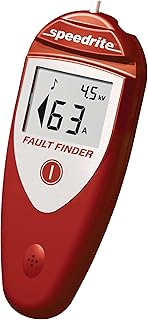
The Speedrite Digital Fault Finder presents a three-parameter readout that includes current, voltage, and the direction of current flow. It also records prior current readings for quick comparisons, enabling users to observe trends over time. An audible current indicator adds a secondary alert for quick checks during field work, while a convenient belt clip keeps the device accessible during inspections. This combination supports efficient fault localization, especially on longer fence lines with multiple zones.
Users should evaluate how the device handles ambient light and exposure in outdoor environments, as this model emphasizes readability and portability. The inclusion of historical data helps verify consistency in readings after repairs, which can reduce repeat fault checks. Overall, the Speedrite option is suitable for users who value both real-time feedback and a simple way to reference previous measurements during troubleshooting.
ALLOSUN GK503B NEON Electric Fence Tester

The GK503B Neon Electric Fence Tester emphasizes a neon-indicator readout that glows brighter with higher voltages, offering quick visibility in bright daylight or low-light conditions. The device is designed for standard-duty, low-impedance fences and is compact enough to carry in a pocket. It requires a simple test: hook onto the wire, attach the ground probe, and observe the neon indicators to gauge voltage levels. Its portability makes it a practical option for farmers who need to conduct quick spot checks while moving along a fence line.
While neon indicators are durable, sunlight can sometimes affect visibility, so users should consider testing in different lighting if accuracy is critical. The GK503B is best suited for garden-scale to medium-length fence systems where quick, on-the-spot checks are more important than in-depth electrical analysis. It complements more comprehensive fault-finder kits by providing an ultra-portable option for field checks.
Digital Electric Fence Tester with Beep Alarm

This tester covers a broad voltage range from 200V to 15,000V and includes a beeper that activates with each pulse. The audible cue accelerates fault detection when visual attention is limited or when multiple zones require testing. The device features a high-sensitivity probe suitable for direct contact with wires, ropes, and braided materials, and an LCD display with backlight to present voltage, current, and current direction clearly. This combination makes it a robust option for daytime and nighttime inspections alike, especially in larger properties where hands-free alerts are beneficial.
The beeper function can help teams coordinate fault-finding efforts across long fence lines and multiple zones. When selecting this model, consider how often you require audible alerts and whether the backlit LCD is sufficient for your typical field conditions. It’s a solid choice for operators who prioritize immediate, audible feedback alongside precise numerical readings.
Buying Guide: How to Choose the Right Electric Fence Fault Finder
Purpose and fence type: Decide whether you need a directional fault finder, simple voltage tester, or a device offering both. Consider your fence type (high-tensile, braided, tape, polywire, or netting) and whether your energizer brand is compatible with a given tool.
Measurement capabilities: Look for dual voltage/current readings for a complete view of fence performance. If you manage large systems or multiple zones, a model with a historical readout can help you track trends and verify repairs over time.
Readability in all conditions: Outdoor sites vary in light and weather. Neon indicators and backlit LCDs improve visibility. Some tools use audible alerts; evaluate which feature best fits your workflow and environment.
Portability and ease of use: For frequent field checks, a compact, pocketable tester or a device with a belt clip can save time. Users should balance the need for portability with the desire for more features and higher voltage ranges.
Durability and compatibility: Ensure the device is built to withstand field conditions and is compatible with your energizer and fence configuration. A versatile tool that works with different fence types provides long-term value, especially on expanding properties.
Price-to-value: Higher-end models with directional arrows, beeper alerts, and historical data can justify higher costs for busy farms or ranches. For hobbyists and smaller properties, simpler testers may suffice while still delivering accurate fault detection.
In summary, the best electric fence fault finder for your setup depends on fence type, frequency of use, and whether you prioritize directional guidance, audible alerts, or data history. The products listed here cover a range of needs from quick spot checks to comprehensive fault tracing across large properties. Use the comparison table to identify candidates, then match features to your specific fencing system for efficient maintenance and faster fault repair.