
Best Dual Input DC to DC Charger Solutions for RVs, Vans, and Boats
Looking for a reliable dual input DC-DC charger that can harness solar power and an alternator to keep two batteries charged? This guide highlights five top options, explaining who each is best for and why. You’ll find clear comparisons, practical buying tips, and a concise FAQ to help you pick the right charger for your dual-battery setup.
Summary of selected products:
| Product | Best For | Key Benefit |
|---|---|---|
| Renogy Smart 30A DC-DC MPPT Battery Charger | Small to mid-size RV or van systems | Strong MPPT with dual inputs and 30A output |
| Renogy 12V 50A Smart DC-DC Battery Charger with MPPT | Higher-capacity setups | Up to 50A, excellent MPPT efficiency |
| Renogy 12V 30A Smart DC-DC MPPT Battery Charger | Balanced, budget-friendly dual-input | Compact, dual-input 30A MPPT |
| VEVOR DC to DC Charger with MPPT | Versatile, cost-effective dual-input | 520W, 40A, broad battery compatibility |
| Victron Orion XS Smart DC-DC Charger | Premium, configurable systems | 98.5% efficiency, IP65, Bluetooth |
Renogy Smart 30A DC-DC MPPT Battery Charger
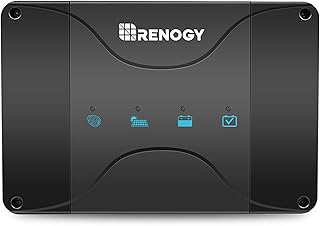
This dual-input charger prioritizes solar energy when both solar panels and an alternator are active, reducing fuel usage in RVs, vans, and boats. It supports lead-acid, AGM, gel, flooded, and Li batteries and includes overvoltage, current, and temperature protections. Best for operators who want efficient solar-first charging in moderate-duty systems.
Who it’s best for: compact dual-battery systems in RVs or camper vans where solar generation is steady and engine idling costs matter. Caution: metal or heat-sensitive environments can affect long-term performance if cooling is inadequate.
Renogy 12V 50A Smart DC-DC Battery Charger with MPPT
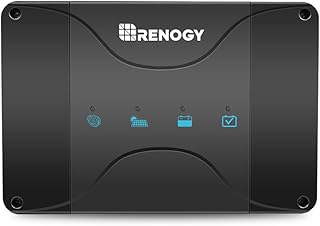
With up to 50A of output and advanced MPPT, this charger excels in larger RV or marine setups where a strong solar input is available. It can initiate charging even from a dead battery and offers protection against isolation, over-voltage, over-current, and overheating. Best for: bigger dual-battery systems that rely on both solar and alternator power.
Who it’s best for: travelers with substantial solar capacity or higher daily energy use. Caution: higher price point and larger footprint may not suit ultra-compact rigs.
Renogy 12V 30A Smart DC-DC MPPT Battery Charger

This dual-input unit offers a balanced, budget-friendly option with MPPT and three-stage charging (bulk, boost, float). It prioritizes solar when available and protects against reverse polarity and other common fault conditions. Best for: smaller dual-battery needs where cost is a consideration.
Who it’s best for: budget-conscious RV or van owners who still want MPPT benefits. Caution: lower max amperage means slower charging in heavy-use cycles.
VEVOR DC to DC Charger with MPPT

This charger delivers 40A and 520W with MPPT to maximize solar input, plus dual input from solar and alternator. It supports LiFePO4, lead-acid, GEL, AGM, and calcium batteries. It’s a practical choice for mixed-battery fleets or portable power stations. Best for: users needing higher input flexibility at a reasonable price. Caution: some users may want confirmation on installer compatibility with certain alternator setups.
Victron Orion XS Smart DC-DC Charger
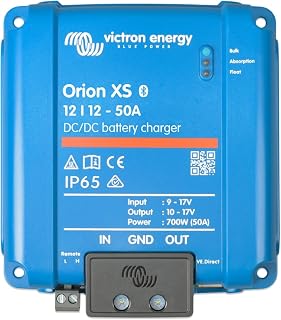
The Orion XS stands out for configurability and high efficiency, delivering up to 700W at 12V or 12/24V setups with IP65 protection for harsh environments. It offers Bluetooth configuration and robust safety features to protect alternators and service batteries. Best for: premium, durable dual-battery installations requiring precise control.
Who it’s best for: users who value fine-grained control, remote monitoring, and top-tier efficiency. Caution: higher complexity and cost may be unnecessary for simple setups.
Buying Guide
What to Look For in a Dual Input DC-DC Charger
- Input compatibility: Ensure the unit supports both solar (PV) and alternator inputs, and matches your battery chemistry (lead-acid, AGM, gel, flooded, Li, LiFePO4).
- MPPT efficiency: Higher MPPT efficiency means more solar power converted to usable battery energy, especially in partial shade or cloudy conditions.
- Output current and power: Match the charger’s max amperage to your battery bank size and typical draw. Larger systems benefit from 50A or more.
- Protection features: Look for over-voltage, over-current, temperature, reverse polarity, and anti-short protections to protect both vehicle electricals and batteries.
- Battery compatibility and lifecycle: Consider whether the charger performs bulk/boost/float charging suitable for your battery type and how it handles dead batteries.)
Which Charger Should You Choose?
- Best for compact rigs with moderate solar: Renogy Smart 30A or Renogy 30A MPPT unit.
- Best for higher capacity and frequent long trips: Renogy 50A MPPT model.
- Best value with solid features: VEVOR MPPT charger offers strong performance at a reasonable price.
- Best overall control and reliability: Victron Orion XS for premium setups requiring advanced configuration.
Installation and Use Considerations
- Professional wiring may be needed to correctly integrate dual inputs and ensure alternator trigger and ignition methods work as intended.
- Remote temperature sensing can improve charging accuracy in variable climates; check if your system supports it.
- Remote monitoring via Bluetooth or app can simplify ongoing adjustments and fault detection.
Frequently Asked Questions
- What is a dual input DC-DC charger? A charger that accepts energy from both solar panels and a vehicle’s alternator to charge a secondary battery bank.
- Do these chargers work with lithium batteries? Yes, many support Li, LiFePO4, and other chemistries, but verify the exact battery compatibility in the product specs.
- Is MPPT essential for RV setups? MPPT improves solar efficiency, especially in varying sun exposure, making it highly beneficial for off-grid use.
- Can I install this myself? Some installations are straightforward, but many setups benefit from professional installation to ensure correct wiring and safety.
- What should I consider when choosing amperage? Larger batteries or higher daily use require higher amperage (50A or more) to minimize charge time and keep batteries topped up.
- Are these chargers safe for alternators? Yes, these devices include protections and design features to prevent backfeed or overload to the alternator, but proper installation is essential.