
Best DIN Rail on/Off Switches for Simple, Reliable Control
Answering the need for compact, accessible control, these DIN rail on/off switches and related mounting solutions are ideal for electrical panels, automation hubs, and distributed control systems. The top picks below are best for installers seeking quick DIN rail mounting, clear status indication, and dependable operation in 24V to AC environments. Each product is suited to a specific use case, from home automation and industrial panels to portable control setups.
| Product | Best For | Why This Choice |
|---|---|---|
| Insteon DIN Rail On/Off Switch | Smart homes and multi-light setups | Remotely controllable with optional sense wires; clips onto 35mm DIN rail for quick integration. |
| NOENNULL Din Rail Push Button | Industrial control and local actuation | DIN rail mounting with 230V capability; robust for AC circuits in workspaces. |
| Baomain 24V 2-Pole Contactor | High-current, multi-circuit control | Dual-mode, two-pole, and 25A rating for reliable automation and safety interlocks. |
| Deskbloom Din Rail Push Button | Lightweight, 24V control panels | IP20-friendly with modular design; versatile for hospitals, workshops, and homes. |
| HCDC DIN Rail Paddle Switch | Compact, durable control modules | 2-channel ON-OFF with 10A per channel; straightforward wiring for panel installations. |
Insteon DIN Rail On/Off Switch

- Brand: Insteon
- Mounting: Clips onto 35mm DIN rail
- Features: Remote control capability, optional sense wires for hard-wired switch control, compatible with latching, single momentary, and dual momentary switches
Who this is for: Best for smart-home installations where a DIN rail switch must integrate with a centralized control system. Why selected: It offers straightforward DIN rail mounting and flexible wiring options to accommodate various switching schemes. Caution: Ensure compatibility with your existing control hub and that sense wiring is installed if hard-wired control is needed.
NOENNULL Din Rail Push Button

- Brand: NOENNULL
- Voltage: AC 230V, 50/60Hz
- Mounting: DIN rail; IP20 protection
Who this is for: Suitable for distribution boxes, CNC lathes, and workshop controls requiring a robust 230V push button. Why selected: Simple, reliable DIN-rail installation with clear 230V switching capability. Caution: IP20 rating means protection against dust and water is limited; use in appropriate environments.
Baomain 24V 2-Pole Contactor

- Brand: Baomain
- Mode: Auto/Manual with 3-position switch
- Rating: 24V AC, 25A; dual contacts (1NO + 1NC)
Who this is for: Best for self-contained panel control where dual-circuit switching and manual override are required. Why selected: Provides a robust solution for HVAC, motors, and lighting panels with independent circuits. Caution: Designed for more advanced panel wiring; ensure proper isolation before service.
Pro Bamboo Kitchen DIN Rail Bracket Kit
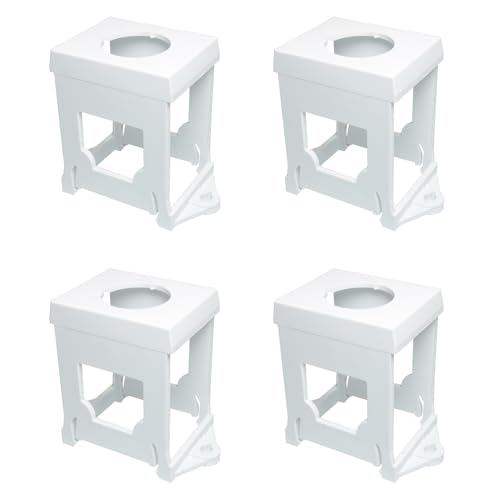
- Brand: Pro Bamboo Kitchen
- Set includes: DIN rail mounting bracket for 22mm pushbutton switches or potentiometers
- Mounting dimensions: 22mm mounting hole; 50.6mm length; 40.8mm width; 57.8mm height
Who this is for: Ideal for builders who need a sturdy, heat-resistant bracket to mount 22mm pushbuttons. Why selected: Easy installation and durable plastic construction. Caution: Bracket does not include the switch; choose compatible 22mm actives accordingly.
Deskbloom Din Rail Push Button

- Brand: Deskbloom
- Voltage: 24V, IP20 protection
- Application: Hospitals, workshops, and residential complexes
Who this is for: Best for modular 24V control panels in critical facilities where IP20 protection and versatile usage are valued. Why selected: Optimized for 24V control with easy DIN rail mounting. Caution: Primarily suited to 24V systems; adapt accordingly for other voltages.
HCDC DIN Rail Paddle Switch

- Brand: HCDC
- Rating: 10A per channel, 250VAC or 50VDC
- Type: 2-channel ON-OFF paddle switch
Who this is for: Best for compact, two-channel control modules in panel installations where safe, visible ON/OFF states are important. Why selected: Clear two-channel configuration with removable cover for straightforward servicing. Caution: Check current requirements; 10A per channel may limit high-load applications.
Buying Guide
What to consider when choosing a DIN rail on/off switch kit or mounting bracket:
- Voltage and current ratings: Ensure the switch supports your system voltage and amperage. For example, 230V AC rounds out heavy-duty controls, while 24V panels suit automation logic and signaling.
- Mounting method: DIN rail compatibility (35mm or 15mm variants) affects compatibility with existing panels and space constraints.
- Number of circuits: Single-pole vs. multi-pole solutions determine whether you need one switch or multiple independent contacts.
- Wiring and terminations: Check terminal spacing and connector types to match wire gauge and ease of installation.
- Protection and environment: IP ratings (IP20, IP54, etc.) indicate dust and moisture tolerance. Choose accordingly for the intended environment.
- Ease of integration: For smart-home setups, look for switches that support remote control or integration with hubs and sense wiring.
- Physical size and form factor: Brackets and mounting dimensions should fit your enclosure or panel without crowding neighboring components.
FAQ
- What is a DIN rail on/off switch used for?
It controls electrical circuits within a panel or enclosure by mounting on a standardized DIN rail for compact, organized installations.
- Can these switches handle 24V control circuits?
Yes, several options are designed for 24V systems, with ratings specified per product.
- Do I need a separate mounting bracket for a DIN rail switch?
Some products include brackets; others require a dedicated DIN rail mounting bracket compatible with the switch diameter.
- Are sense wires required for remote control?
Some models offer optional sense wiring to enable hard-wired control alongside remote commands.
- What environment protection should I look for?
IP20 is common for indoor use; higher IP ratings are better for dusty or damp locations.
- How many poles should I choose?
Choose based on the number of circuits you need to control; multi-pole devices can manage several loads from a single unit.