
Best Digital Thermostats for Baseboard Heaters in 2026 for Smart Comfort
Answer: For baseboard heaters, a digital thermostat that supports high-voltage, line-powered systems and offers precise temperature control, scheduling, or smart home integration provides the best value. The top picks here are suitable for different needs: simple, reliable control for two-wire systems; Wi‑Fi enabled models for remote control; and 7‑day or 5‑2 day programming for energy savings. This guide helps buyers choose based on installation type, features, and smart‑home compatibility.
Who should buy these: homeowners with electric baseboard or convector heaters who want precise temperature control, reduced energy use, or voice/app control. Beginners may prefer easy-install, non-programmable options; tech enthusiasts may opt for full smart home integration. Below is a quick summary of five strong choices to consider, followed by detailed sections for each product.
| Product | Best For | Key Feature |
|---|---|---|
| Honeywell TH1100DV1000 Pro-Digital | Simple control; two-wire heat-only | Backlit display, 40–90°F scale |
| Mysa Smart Thermostat LITE | Remote control with scheduling | Wi‑Fi, 7‑day scheduling, HomeKit/Alexa/Google |
| Honeywell Home RLV3120A1005 | Accurate non-programmable control | ±0.27°F accuracy |
| Honeywell TL8230A1003 | 7‑day programmable flexibility | Energy savings via scheduling |
| meross Smart Thermostat (High Voltage) | Full smart features for baseboard | Works with Matter, HomeKit, Alexa, Google |
Honeywell TH1100DV1000 Pro-Digital 2-Wire

The Honeywell TH1100DV1000 is a simple, digital thermostat designed for two-wire baseboard heating. It provides a standard 40 to 90°F temperature scale and a backlit display for easy reading. Best for buyers who want reliable on/off control without smart features or remote access. It is best for straightforward installations where digital readouts and consistent ambient temperature display are valued.
Best for: basic, budget-conscious setups or replacement in older homes where only two wires are available. Why selected: its simplicity minimizes installation complexity and reduces potential wiring issues. Caution: lacks Wi‑Fi or smart scheduling, so remote control is not possible.
Mysa Smart Thermostat LITE
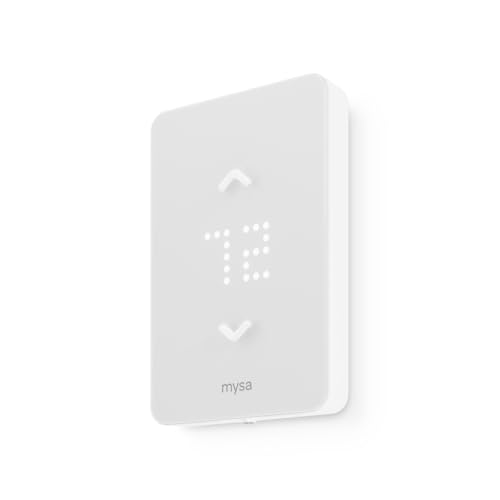
The Mysa LITE provides remote control via Wi‑Fi and a robust scheduling interface. It supports 7‑day programming and integrates with Apple HomeKit, Amazon Alexa, and Google Home. This model is best for users seeking energy savings and convenient, app-based operation without running a hub. It keeps track of temperatures remotely and can preheat rooms before occupancy.
- Best for: homes wanting full mobile control with voice assistants.
- Why selected: strong scheduling features, direct Wi‑Fi connectivity, and smart‑home compatibility.
- Caution: requires four wires and careful wiring; not ideal for older two-wire baseboards.
Honeywell Home RLV3120A1005 Digital Non-Programmable

This digital non-programmable thermostat is designed for electric baseboard heating and convectors with two wires. It emphasizes precise temperature control with an accuracy around ±0.27°F and quiet TRIAC switching to minimize audible noise. Best for: users who want steady temperature without programming or remote connectivity. Why selected: high accuracy and silent switching reduce temperature swings. Caution: lacks scheduling or remote control features.
Honeywell TL8230A1003 7‑Day Programmable
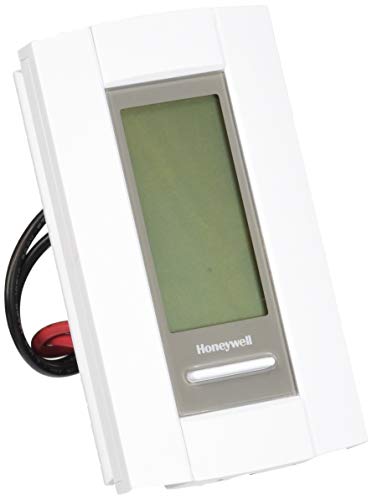
The TL8230A1003 offers 7‑day programming to establish varied schedules across weekdays and weekends. It features electronic temperature control with precision around ±1°F, which can contribute to modest heating savings when compared to non-programmable models. Best for: households with regular routines who want predictable energy usage. Why selected: flexible scheduling helps align heating with daily life. Caution: slightly higher accuracy requirement may still allow minor temperature fluctuations during peak times.
Honeywell Home RLV4305A1000 5‑2 Day Programmable

The RLV4305A1000 5‑2 Day Programmable offers weekday and weekend programming with a high precision of ±0.27°F for electric baseboards. Its TRIAC switching provides silent operation and steady temperature control. Best for: users who want a compact, predictable schedule for working days and weekends. Why selected: strong balance of scheduling capability and precise temperature management. Caution: does not include smart home integration; no remote control.
meross High Voltage Smart Thermostat

The meross High Voltage Smart Thermostat is designed for 120–240V baseboard, convectors, and fan-forced heaters with Wi‑Fi and Matter compatibility. It supports Apple HomeKit, Alexa, Google Home, and SmartThings for voice and app control. Best for: tech-forward homes seeking robust smart integration and remote scheduling. Why selected: broad ecosystem compatibility and Matter support. Caution: requires a compatible high‑voltage wiring setup; installation may demand professional guidance if unsure about wire counts.
meross Matter Smart Thermostat for Electric Baseboard
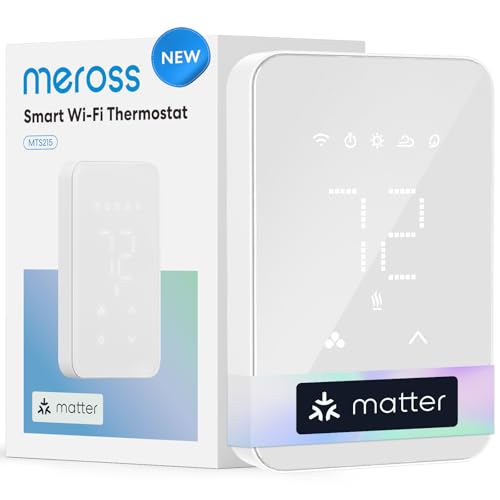
Meross’ Matter Smart Thermostat for high‑voltage systems supports full smart features and Matter compatibility. It works with Alexa, HomeKit, Google, and SmartThings for unified smart‑home control. Best for: buyers who want flexibility across ecosystems and future-proof smart home integration. Why selected: universal compatibility with Matter reduces ecosystem lock-in. Caution: compatibility notice indicates not for 24V HVAC systems, and installation requires four wires for proper operation.
Mysa Smart Thermostat for 240V Baseboard Heaters

This Mysa model is designed for 240V baseboards and fan-forced heaters and supports remote control through a free app. It requires four wires, including a neutral or second live wire. Best for: households with high‑voltage baseboard systems seeking mobile control and alerts. Why selected: strong remote management and compatibility with HomeKit, Alexa, and Google. Caution: not suitable for older or two-wire baseboard configurations without proper wiring.
Buying Guide
What should I consider when choosing a digital thermostat for baseboard heaters?
- System type: Confirm voltage (120V vs 240V) and the number of wires. Some models require four wires and a neutral, while others work with two wires only.
- Programming vs. non-programmable: Decide if you want 7‑day or 5‑2 day schedules or simple manual control with no scheduling.
- Smart home integration: If you use HomeKit, Alexa, Google, or Matter, pick a model that supports your ecosystem.
- Accuracy and noise: Look for high accuracy (±0.27°F or close) and TRIAC switching for silent operation to minimize temperature swings and noises.
- Ease of installation: Consider whether the thermostat is designed for quick replacement and whether you need professional help for high‑voltage wiring.
Typical buyer questions
- Do digital thermostats work with baseboard heaters? Yes, many are designed specifically for electric baseboards and convectors.
- Is it better to choose a thermostat with Wi‑Fi? If you want remote control and scheduling, yes, but it adds installation considerations.
- Can I install these myself? Some models are DIY-friendly; others require professional wiring, especially for high voltage.
- What’s the best option for energy savings? Smart or programmable models with scheduling typically offer the most savings when used effectively.
- Are there compatibility limits with smart home ecosystems? Some thermostats support multiple ecosystems, including Matter-enabled devices.
Table: Quick product summary
- Honeywell TH1100DV1000: Simple, non‑smart, two-wire baseboard control. Best for basic setup.
- Mysa LITE: Smart, Wi‑Fi, 7‑day scheduling; strong for remote control and automation.
- Honeywell RLV3120A1005: High accuracy, non‑programmable; ideal for precise but simple control.
- Honeywell TL8230A1003: 7‑day programmable; flexible scheduling for energy savings.
- meross High Voltage/Matter models: Comprehensive smart features with broad ecosystem support.
FAQ
- Can I use a smart thermostat with a two-wire baseboard system? Some models require four wires; check the installation notes for compatibility.
- Do these thermostats work with HomeKit only? Many support multiple ecosystems, including HomeKit, Alexa, and Google.
- What is the advantage of a non-programmable thermostat? Simplicity and reliability; fewer features mean fewer potential failure points.
- Will a thermostat improve heating efficiency? Programmable or smart models often save energy when schedules align with occupancy.
- Is professional installation recommended? For high‑voltage baseboard systems, professional wiring is often advised.