As an Amazon Associate I earn from qualifying purchases. These links may earn this site a commission when you buy, at no extra cost to you.
Finding a reliable digital hydrometer for battery testing can simplify maintenance for workshops and DIY enthusiasts alike. This article highlights five top-rated models that cover 6V, 12V, and 24V systems, with emphasis on accuracy, durability, and ease of use. Each product section includes a direct link to Amazon, a visual, and a concise feature summary to help you compare at a glance.
Summary of selected products
| Product | Brand | Key Feature | Voltage Range |
|---|---|---|---|
| EZRED SP101 Battery Hydrometer | EZRED | Clear reading, rugged professional tool | 1.100 – 1.300 SG |
| Watris Veiyi Rapid Battery Hydrometer Tester | Watris Veiyi | Instantaneous, wide voltage support | 6V, 12V, 24V |
| KONNWEI KW208 12V Car Battery Tester | KONNWEI | Comprehensive load testing with AI-like accuracy | 12V |
| SMGDA Battery Hydrometer | Smgda | Cross-volt range, durable construction | 6V, 12V, 24V |
| Mighty Max Battery Golf Cart Hydrometer | Mighty Max Battery | Compact handheld, practical for field work | 6V, 12V, 24V |
EZRED SP101 Battery Hydrometer
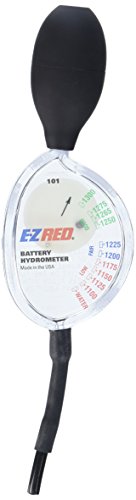
EZRED’s SP101 is designed for service stations and garages, offering visibility for both customers and technicians. The device provides a straightforward density reading without requiring temperature compensation tables, making it accessible for professional and non-professional users alike. The hydrometer covers a wide specific gravity (SG) range of 1.100 to 1.300, enabling quick determination of battery state of charge. Its rugged build supports frequent use in demanding environments.
Watris Veiyi Rapid Battery Hydrometer

Watris Veiyi’s model emphasizes accuracy and versatility. It reads the SG of lead-acid storage systems instantly without heating or complicated readings. It supports 6V, 12V, and 24V configurations, making it suitable for golf cart batteries, deep-cycle arrays, and solar setups. Built from native ABS material, it offers impact resistance and durability in field or shop environments. This tool is noted for quick readings and straightforward operation, helping technicians assess battery health efficiently.
KONNWEI KW208 12V Car Battery Tester

KONNWEI KW208 is a cost-effective battery load tester designed for 12V automotive batteries. It provides a full battery health picture, including voltage, internal resistance, cold-cranking amps, and charging status. The device supports cranking and charging system tests, with a reliable set of galvanised alloy clamps for secure connections. It emphasizes speed and accuracy, delivering results within milliseconds, and is compact enough to store in a glove box for on-demand diagnostics.
SMGDA Battery Hydrometer

SMGDA’s hydrometer handles multiple voltages (6V, 12V, 24V) with a broad SG range of 1.100–1.300. It emphasizes consistent readings regardless of battery temperature and aims to measure true battery charge state while helping to detect overcharging conditions. The housing is constructed from sturdy plastic designed to withstand regular use in garages or workstations, supporting long-term reliability for fleet maintenance or personal use.
Mighty Max Battery Golf Cart Hydrometer
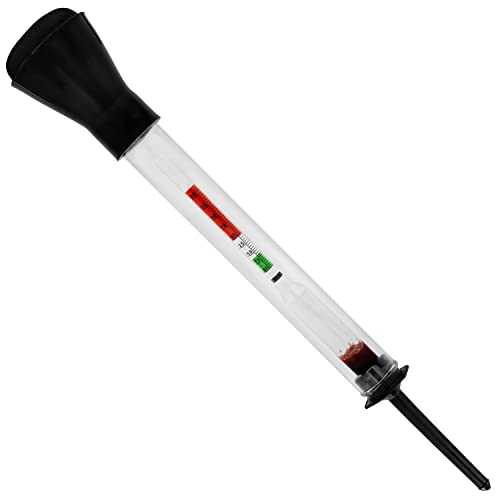
Mighty Max Battery offers a compact handheld hydrometer tailored for golf cart and deep-cycle applications. Its straightforward density readings help users assess state of charge quickly, making it a practical tool for field service, maintenance yards, or personal battery checks. The device is designed for easy handling and quick interpretation of results, supporting efficient decision-making about charging or replacement needs.
Buying Guide
Key considerations when choosing a digital battery hydrometer:
- Voltage compatibility: Ensure the device supports your system voltage. Some models cover 6V, 12V, and 24V, while others are optimized for a specific voltage range.
- Measurement range and accuracy: Look for a device with a clear SG scale and a range aligned to lead-acid battery chemistry (typically 1.100–1.300 SG). Higher accuracy reduces guesswork during diagnostics.
- Ease of use: Devices should provide quick readings without complex setup. A readable display, minimal tinkering, and intuitive operation save time in busy environments.
- Durability: For shop or field use, choose models with rugged housings and impact-resistant materials that withstand drops and frequent handling.
- Reading stability: Some units rely on stable readings despite temperature influences or battery hot/cold states. Look for models that compensate or minimize these effects.
- Portability: Handheld and compact designs are beneficial for on-site testing and storage in vehicles or toolboxes.
- Connections: Secure, corrosion-resistant terminals and accessories that fit multiple battery types improve reliability over time.
- Maintenance and replacement parts: Consider availability of replacement parts, tips, or probes to extend device life.
Comparison across perspectives:
- Professional workshops: Prioritize durability, a wide voltage range, and quick, repeatable readings to support fleet maintenance.
- DIY users: Value ease of use, clear displays, and compact design for home battery checks and hobby projects.
- Fleet operators: Look for devices with robust construction and reliable data interpretation to minimize downtime and service costs.