
Best Diesel and Backup Power Generators for Reliable Home and Jobsite Power
When you need dependable backup power, choosing the right generator matters. This guide highlights diesel and other reliable backup options to suit homes, RVs, jobsites, and emergencies. Diesel models excel in endurance and running longer between refuels, while inverter and multi-fuel options offer portability and efficiency. The top picks below are ideal for different buyers: diesel for extended runtimes and heavy use; gas or dual-fuel for flexibility; and compact power stations for outages or outdoor adventures.
| Product | Best For | Power Type | Key Benefit |
|---|---|---|---|
| Generac XD5000E | Small to mid-size emergencies and remote jobsites | Diesel | Long runtime with high reliability |
| DuroMax XP13000HX | Whole-home backup and high-demand loads | Gas/Propane (dual fuel) | Very high power versatility |
| Oxseryn 4400-Watts | RV use, camping, and light home backup | Gas (inverter) | Clean power with ECO mode |
| Oxseryn Power Equipment 4400 Watts | Portable backup for small loads | Gas (inverter) | Low noise and multiple outlets |
| BLUETTI Elite 30 V2 | Emergency power with solar flexibility | Portable power station | UPS, compact and chargeable |
Generac 6864 XD5000E 5000-Watt Diesel-Powered Portable Generator
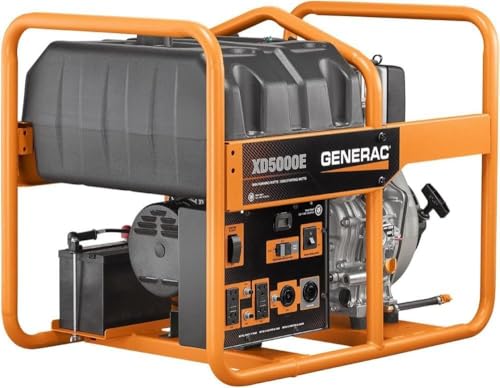
The XD5000E is designed for demanding applications where diesel endurance matters. It features a sturdy steel frame with an integrated lifting eye for transport on jobsites and remote locations. With a total harmonic distortion of 6%, it is suitable for powering tools, appliances, and sensitive electronics with smoother operation. A 12-gallon diesel tank provides long runtimes, reducing refuel frequency during extended outages.
Best for: professional job sites and emergency power where durability and long-running capability matter. Limitations: larger footprint than small portable units; diesel storage and handling considerations apply.
DuroMax XP13000HX 13,000-Watt Dual Fuel Portable Generator

With 13,000 watts of power, the XP13000HX is built for whole-home backup during storms or outages. It runs on gasoline or propane, giving flexibility for fuel availability and cost. The unit uses a robust 500cc OHV engine and copper windings, aiming for durability and long life. It is a strong choice for homes or small businesses needing significant backup power.
Best for: homes and small businesses needing high surge capacity and dual-fuel flexibility. Limitations: heavier and noisier than portable inverter units; dual-fuel operation requires proper maintenance of both fuels.
Oxseryn 4400-Watts Inverter Generator Open Frame
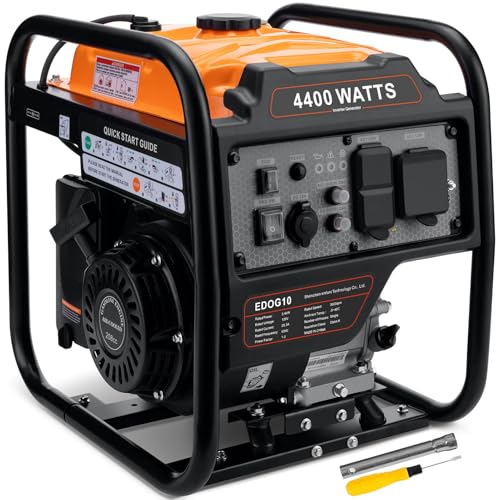
This open-frame inverter delivers 4400 peak watts and 3400 running watts, with multiple outlets for versatile power. It includes ECO mode for efficiency and is RV-ready with a 2-gallon fuel tank. The lightweight design supports portability, making it suitable for emergencies, RV use, and light home backup.
Best for: RVers and homeowners needing portable, clean power with efficient fuel use. Caution: small fuel tank may require frequent refueling on longer outages.
Oxseryn Power Equipment 4400 Watts Inverter Generator

Another 4400-watt inverter option from Oxseryn emphasizes multi-output versatility with 2×120V AC ports, a 12V DC port, and an RV port. It runs up to 14 hours at 25% load with ECO mode. A 2-gallon fuel tank with a fuel gauge helps monitor consumption and readiness for emergencies.
Best for: travelers and homeowners seeking a compact power source with clear fuel monitoring. Limitation: not ideal for very high-load appliances due to smaller fuel and power profile.
BLUETTI Elite 30 V2 Portable Power Station

BLUETTI Elite 30 V2 is a compact power station with a 288Wh LiFePO4 battery and 600W continuous power (1500W surge in Power Lifting Mode). It features a 10ms UPS for quick transition during power interruptions and serves as a solar generator for outdoor use and basic home backup. It is not diesel-powered but provides clean, silent backup power.
Best for: outages with quiet operation and solar integration. Limitation: lower total energy compared to larger generators; best for lighter loads.
Buying Guide: Key Purchase Considerations
- Power needs: Assess total wattage of essential devices and select units with enough running and surge watts. Diesel units typically deliver longer runtime for higher loads, while inverter generators excel with sensitive electronics.
- Fuel type and availability: Diesel offers endurance but requires storage considerations. Gas/propane dual-fuel adds flexibility, and portable power stations rely on batteries or solar input.
- Portability vs. capacity: For job sites or camping, balance weight, size, and fuel capacity. Heavier units may stay on-site; lighter units are easier to move.
- Runtime and efficiency: Look for fuel tank size and endurance at a typical load. Inverter models often provide better fuel efficiency and lower noise.
- Safety and protection: Ensure features like low-oil shutdown, CO detection, and safe startup/shutdown sequences are in place when selecting units for home or RV use.
- Noise considerations: Inverter generators generally run quieter than standard portable gas engines. For camping or neighborhoods with noise limits, this matters.
Frequently Asked Questions
- What is the difference between diesel and gasoline generators? Diesel units tend to run longer between refuels and handle heavy loads better, while gasoline units are typically lighter and easier to start in cold weather. Dual-fuel options offer flexibility if you have multiple fuel sources.
- What wattage should I choose for home backup? Start by listing critical appliances and devices (refrigerator, well pump, lights, heating or cooling). Choose a unit with sufficient running watts and a surge watt rating to handle startup surges.
- Are inverter generators suitable for house backup? Yes, inverter generators provide clean, stable power suitable for electronics. They’re ideal for essential devices and low-to-moderate loads, often with better fuel efficiency and lower noise.
- Do I need a transfer switch for home backup? A transfer switch is recommended for whole-home backup to safely redirect power from the generator to your circuits. It reduces the risk of backfeeding and improves reliability during outages.
- Which option is best for RV use? Portable inverter generators with RV outlets and ECO mode are well-suited for campgrounds, offering quiet operation and fuel efficiency for extended trips.
- How important is runtime? Longer runtimes reduce the need for frequent refueling during outages. Diesel units generally offer longer runtimes, but fuel availability and storage should be considered.