
Best Deep Cycle Marine Battery Solutions for Trolling Motors
Finding the right deep cycle marine battery for a trolling motor involves balancing weight, capacity, cycle life, and resilience to marine conditions. This guide highlights five top options and explains how they perform on the water. Each product section includes a concise spec snapshot and practical considerations to help you choose the best fit for your boat and usage patterns.
Summary of chosen products
| Product | Brand | Type | Key Strength |
|---|---|---|---|
| Weize Deep Cycle AGM 12V 100Ah | WEIZE | AGM Lead-Acid | Low self-discharge, maintenance-free |
| LiTime 12V 100Ah Trolling Motors LiFePO4 | Litime | LiFePO4 | Bluetooth monitoring, low-temp protection |
| MARSENERGY 12V 100Ah Lifepo4 (Group 24) | MARSENERGY | LiFePO4 | Long cycle life, lightweight |
| FLLYROWER 12V 100Ah Lifepo4 With BMS | FLLYROWER | LiFePO4 | High cycle count, robust BMS |
| HRBEENERGY 12V 100Ah Lifepo4 With Built-in 100A BMS | HRBEENERGY | LiFePO4 | Ample protection, compact design |
Weize 100Ah AGM Deep Cycle Battery
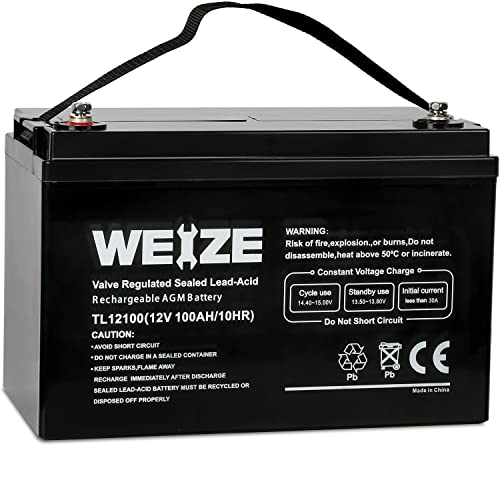
The Weize Deep Cycle AGM 12V 100Ah battery uses an absorbed glass mat (AGM) design to minimize acid leakage and maintenance needs. Its compact dimensions and sealed construction suit trolling motor setups, RVs, and off-grid systems. With a 1–3% monthly self-discharge rate, it balances storage stability with reliable on-call power. The battery tolerates typical marine temperatures and offers a robust 1100A short-term discharge capability, making it suitable for short bursts or sustained trolling motor use when fully charged.
Key considerations: AGM advantages include maintenance-free operation and spill-resistant design, but lead-acid chemistry may be heavier than lithium options and can have a shorter cycle life. Always verify compatibility with your trolling motor’s voltage and use-case cycle demands.
LiTime 12V 100Ah Trolling Motors LiFePO4 Battery

This LiFePO4 battery features Bluetooth monitoring for quick status checks and system assessments from a phone. It offers smart low-temperature protection that prevents charging below 32°F and discharging below -4°F, which helps maintain performance in cold water environments. The LiTime unit includes multiple safety protections (overcharge, over-discharge, short circuit, etc.) and an IP65-rated build for dust and water exposure—well-suited to harsh marine conditions.
Key considerations: LiFePO4 chemistry delivers high cycle life and a lower weight than lead-acid options, but it may require a compatible BMS-aware charging setup. Ensure your trolling motor and charger support lithium charging profiles to maximize lifespan.
MARSENERGY 12V 100Ah Lifepo4 Battery (Group 24)

MARSENERGY offers a 12V 100Ah LiFePO4 battery designed to fit Group 24 configurations, delivering long cycle life with a stated 4500–15000 deep cycles under appropriate conditions. The battery weighs about 21 lb and is advertised as compact enough to upgrade many Group 24 lead-acid boxes. It emphasizes resilience across extreme temperatures and rough handling, including immersion and vibration tests, with a focus on reliable deep cycling rather than starting power.
Key considerations: Lithium iron phosphate cells deliver superior cycle life and density, but ensure correct sizing for your boat’s battery box and charger. BMS features are important for safe operation during charging and discharging cycles.
FLLYROWER 12V 100Ah LiFePO4 Battery With BMS

FLLYROWER highlights a high-cycle LiFePO4 design with a built-in BMS that provides comprehensive protection, including low-temperature cut-off and protection against overcharge, over-discharge, over-current, and short circuits. The battery advertises up to 16500 deep cycles, aligning with customers seeking long-term durability for marine trolling motor use, RVs, and off-grid setups.
Key considerations: The elevated cycle life is attractive for frequent use, but ensure correct integration with your charger and battery management system. Parallel and series configurations can expand capacity or voltage if needed for larger shore power or solar setups.
HRBEENERGY 12V 100Ah Lifepo4 Battery With 100A BMS

HRBEENERGY combines a 100Ah LiFePO4 pack with a built-in 100A BMS and robust protection features. The battery is designed for marine, RV, and home energy storage applications, offering a lighter alternative to lead-acid while maintaining reliable performance under trolling motor use. The included BMS enhances safety against common failures and helps extend overall life when used with compatible chargers.
Key considerations: Confirm compatibility with your trolling motor’s current draw and charging equipment. A proper lithium-compatible charging profile will ensure long-term benefits and sustained performance in marine conditions.
Buying Guide: Deep Cycle Marine Batteries for Trolling Motors
- Battery chemistry: AGM lead-acid is maintenance-free and rugged but heavier with fewer cycles. LiFePO4 (lithium) provides longer cycle life, significantly lower weight, and better efficiency, though usually with higher upfront costs and the need for a lithium-friendly charger.
- Cycle life and depth of discharge: Look for 4500–15000 cycles for LiFePO4 options and consider how deep you regularly discharge. Higher cycle life translates into longer service life in trolling motor use.
- Weight and form factor: For smaller boats or limited storage, lighter lithium batteries offer superior handling and installation flexibility compared to heavier lead-acid models.
- Charge and temperature management: Cold-weather charging can be problematic for some chemistries. Ensure the chosen battery has low-temperature protection or a charger that supports cold-weather operation.
- BMS protection: A reliable BMS protects against overcharge, over-discharge, short circuits, and overheating. This is especially important for LiFePO4 batteries in marine environments where conditions can vary.
- Charging ecosystem compatibility: Verify that your trolling motor charger and any solar or generator charging setups are compatible with lithium or AGM charging profiles to prevent premature degradation.
- Physical fitment: Ensure the battery size matches your boat’s battery box and mounting space. Group sizing (like Group 24) often dictates fit more than capacity alone.
- Cost of ownership: While lithium upfront costs are higher, the longer life and reduced weight may lower total cost of ownership over time. Consider your boating frequency and seasons when evaluating value.
- Maintenance: AGM and lead-acid options require less upfront maintenance but still benefit from proper storage and periodic charging to maximize longevity.
- Warranty and support: Check warranty terms and availability of support, especially for remote marine locations where service access matters.