
Best Copper Coil Heat Exchangers for Efficient Heat Transfer and Brewing or Heating Needs
Choosing the right heat exchanger means balancing material durability, heat transfer efficiency, and compatibility with your setup. Copper coil heat exchangers are often favored for their high thermal conductivity and rugged construction, making them suitable for wood-fired heaters, home brewing, and hot water systems. This article reviews five copper- or copper-containing coil options and related heat-exchanger designs to help you compare performance, installation, and maintenance considerations.
Product Overview
- QUELECO Stainless Steel Heating Coil Heat Exchanger — Food grade stainless steel coil, customizable dimensions, 3/4″ NPT, wood-fired heating performance for outdoor baths.
- Vigorous Wort Chiller — 3/4″ x 25 ft stainless steel coil made for easy brewing sanitation and durable service life.
- NY Brew Supply W3850-CV — Copper wort chiller with vinyl and brass components; includes tubing and fittings.
- Water to Air Heat Exchanger 18×18 — Copper tubes with aluminum fins, designed for wood-fueled outdoor heating and cooling applications.
- NICE CHOOSE Cooling Coil Pipe — 304 stainless steel wort chiller with corrosion resistance and quick wort cooling capabilities.
QUELECO Stainless Steel Heating Coil Heat Exchanger

The QUELECO unit uses a food-grade stainless steel coil designed for outdoor wood-fired heating. It emphasizes customization, allowing you to tailor dimensions, water connectors, and heat exchange capacity to fit specific setups. The outer diameter and wall thickness specify robust tubing, with a 1″ outer diameter and 0.06″ wall, plus a 3/4″ male NPT connection. This configuration supports hot water generation without electricity or gas, relying on wood combustion to heat water for outdoor baths or similar applications. The stainless steel choice improves corrosion resistance and service life, reducing maintenance costs over time.
Key considerations include the potential trade-off between copper’s higher thermal conductivity and stainless steel’s longevity in demanding environments. For extreme outdoor conditions or salt exposure, stainless steel may outperform copper. However, if copper is preferred for its historical heat-transfer performance in certain systems, evaluate compatible copper components and coatings to minimize galvanic corrosion when mixed metals are present. For customization-heavy projects, confirm lead times and installation flexibility with the seller.
Vigorous Wort Chiller

The Vigorous Wort Chiller is a stainless steel coil designed for beer brewing and wort cooling. With a 3/4″ diameter and 25 feet of coil, it offers a practical balance between flow rate and cooling power, and it aligns with standard ASTM A269 specifications for brewing equipment. Stainless construction provides straightforward maintenance and corrosion resistance, and its long coil length supports efficient heat transfer from hot wort to cooling water. This option is well-suited for home brewers seeking a reliable, easy-to-clean immersion chiller that fits typical brewing vessels.
When evaluating, consider flow rates, immersion depth, and how the coil is integrated into your existing brewing setup. The stainless steel chassis helps resist corrosion from sanitizing solutions, but ensure compatible fittings and hose connections with your pump and water source. If you brew frequently, modular coil lengths or extension options can be advantageous for tweaking cooling performance across batches.
NY Brew Supply W3850-CV Super Efficient Copper Wort Chiller
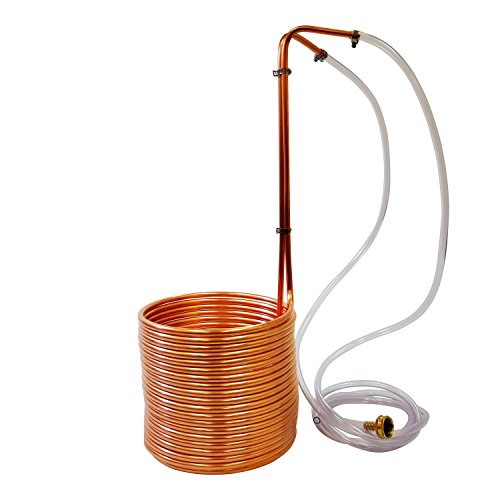
The NY Brew Supply W3850-CV emphasizes copper-based wort chilling with included tubing and brass fittings. Copper’s high thermal conductivity can deliver rapid temperature drops, which is attractive for brewing. The kit-style package suggests a straightforward assembly with compatible vinyl components and garden hose fittings. Copper chillers typically perform well, but they require attention to corrosion protection and safe handling, especially in water sources with mineral content that could promote galvanic reactions with other metals in the system.
Consider this option if you prioritize quick thermal response and are comfortable coordinating copper tubing with standard hose connections. Ensure compatibility with your brewing vessel’s port sizes and confirm that the included fittings fit your water source and pump. For longer-term durability, inspect the copper for any signs of pitting or oxidation and plan periodic sanitization as part of your brewing hygiene protocol.
Water To Air Heat Exchanger 18×18

This water-to-air heat exchanger combines 3/8″ seamless copper tubes, 12 aluminum fins, and multi-row copper tube geometry to boost heat transfer. The design aims to deliver high performance in both heating and cooling modes without electricity consumption, leveraging existing heat sources such as boilers or solar panels. The unit emphasizes easy slip-in installation into plenums, minimizing the need for specialized tools. The wavy-fin configuration increases contact areas, contributing to improved heat transfer efficiency and overall system energy savings.
This product suits installations where a compact, energy-efficient coil is desired to complement wood-fired or solar-heated spaces. When evaluating, check the maximum BTU rating relative to your space or process and assess installation clearances around existing ductwork. The combination of copper tubes and aluminum fins should be viewed in the context of possible material compatibility and long-term maintenance, including potential corrosion protection strategies if exposed to outdoor elements.
NICE CHOOSE Cooling Coil Pipe

This immersion wort chiller is built from 304 stainless steel, offering robust durability for home brewing. The design promotes quick wort cooling and supports disinfection processes within 15 minutes of boiling, aiding sanitation. Stainless material provides corrosion resistance and long service life, which can be advantageous for frequent brew cycles. The coil is intended for direct immersion in the wort, delivering rapid cooling to reach yeast-pitch temperatures efficiently.
When selecting this option, consider the coil diameter, total length, and compatibility with your kettle and inlet/outlet fittings. Cleaning and sanitation are straightforward with stainless steel, but ensure that any rubber gaskets or hoses used in conjunction with the chiller are food-grade. The versatility of stainless immersion coils makes them a strong option for hobbyists and small-scale production where reliability and ease of maintenance are priorities.
Buying Guide: Key Purchase Considerations And Comparisons
- Material compatibility: Copper offers high thermal conductivity, while stainless steel provides superior corrosion resistance in some environments. Consider whether the device will be exposed to salt air, mineral-rich water, or sanitizing chemicals.
- Heat transfer efficiency: Coil length, diameter, wall thickness, and fin design influence performance. Longer coils generally enable more contact time with the cooling or heating medium, improving transfer efficiency.
- Installation and fit: Confirm NPT or other connectors, hose sizes, and port diameters to match your existing system. Check whether the unit is designed for horizontal or vertical installation and whether a plenum-ready water-to-air exchanger fits your setup.
- Maintenance and sanitation: Stainless steel and copper require different cleaning regimens. Consider ease of disassembly for cleaning, sanitizing, and descaling, especially for brewing applications.
- Energy source compatibility: If using wood-fired heating, ensure the exchanger can withstand thermal cycling and does not require electricity. For hybrid systems, verify compatibility with boilers or solar collectors.
- Durability and warranty: Assess the expected service life under your operating conditions. Look for units with corrosion-resistant finishes and clear warranty terms.
- Cost of ownership: While copper may deliver faster heat transfer, stainless steel can offer longer life in harsh environments. Compare total maintenance costs over the expected lifetime of the unit.
- Installation flexibility: Some options include modular components or ready-to-connect fittings. Determine whether you need additional adapters or custom fabrication to integrate with your vessel or system.
In summary, selecting a copper coil heat exchanger—or a copper-inclusive design—depends on whether rapid heat transfer or long-term durability is the primary goal, the installation context (outdoor wood-fired vs. indoor brewing), and compatibility with existing plumbing or ductwork. Review each product’s specifications, confirm connector sizes, and align your choice with your desired maintenance profile and energy source.