
Best Dryer Converter Adapters and Voltage Tools for 110V and 220V Needs
Finding the right converter plug for a dryer can save time, prevent damage, and reduce the need for rewiring. This guide highlights five top adapters and converters designed to work with older 3-prong and newer 4-prong dryers, plus travel-friendly voltage converters for high-wattage appliances. Each pick is evaluated for safety, compatibility, and practicality in typical American homes and travel scenarios.
Summary of chosen products
| Product | Brand | Key Use | Power Range | Notes |
|---|---|---|---|---|
| WELLUCK 3 to 4 Prong Dryer Adapter | WELLUCK | Old to new dryer outlets | 30A, 250V | Direct male-to-male adapter |
| CircleCord 4 Prong to 3 Prong Adapter | CircleCord | New dryer to older outlets | 30A, 125/250V | Right-angle, 4P to 3P |
| PlugSaf 4 Prong to 3 Prong Adapter | PlugSaf | Combo 3P/4P conversion | 125/250V, 30A | ETL listed, compact |
| Strightinc 4 Prong to 3 Prong Adapter | Strightinc | 4P dryer to 3P outlet | 30A, 250V | Old vs new outlet compatibility |
| Mapambo 2000W Travel Converter | Mapambo | Voltage conversion for travel | Up to 2000W | 6-in-1 with USB ports |
WELLUCK 3 to 4 Prong Dryer Adapter

Designed to convert a 3-prong dryer plug to a 4-slot wall outlet, this WELLUCK adapter offers a practical, cost-effective solution when upgrading or relocating a clothes dryer. It serves as a direct Male-to-Male electrical connection, reducing the need to rewire or replace equipment. The design emphasizes ease of use, with a flexible 4-prong cord and 180-degree bending capability, helping you position cords in tight laundry spaces.
Key features include a longer extension for easier plugging and unplugging, plus a right-angle molded plug and receptacle with an easy-grip design. It targets scenarios where older outlets must serve newer dryers without a full electrical upgrade, delivering a quick fix with safety-conscious construction.
CircleCord Dryer Adapter 4 Prong to 3 Prong

This CircleCord adapter provides a safe, ETL-listed path for matching a newer four-prong dryer with an older three-prong wall socket. A versatile combination, it functions with both NEMA 14-30P male plugs and NEMA 10-30R receptacles, supporting up to 7500 watts. The right-angle design promotes space efficiency and reduces congestion behind the dryer, making it a practical choice for apartments or homes with limited outlets. It minimizes wiring changes while preserving dryer performance.
PlugSaf 4 Prong to 3 Prong Dryer Adapter

PlugSaf offers a compact NEMA 14-30P to NEMA 10-30R adapter with 10-gauge construction designed for 125/250V operation. The 1.5-foot cord and flat plug design save space, allowing easier placement in tight laundry areas. The device emphasizes safety and reliability with robust insulation, durable wiring, and quick-release grip for safe removal and insertion. It suits households upgrading to newer dryers while retaining older three-prong outlets.
Strightinc 4 Prong to 3 Prong Dryer Adapter
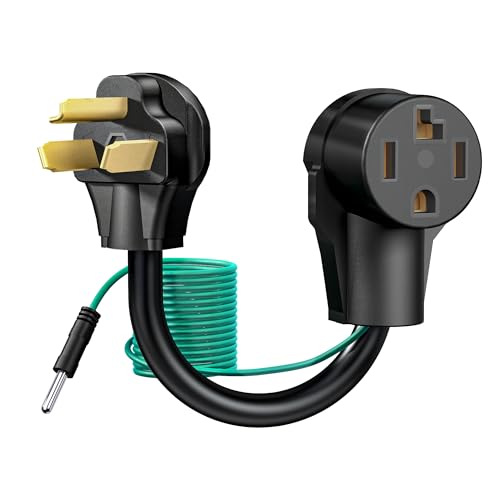
This Strightinc adapter enables a four-prong dryer to connect with a three-prong outlet. It targets installations in homes built before 1997 or in apartments with older NEMA 10-30 outlets. The device uses a right-angle connector and a molded design to maximize stability and reduce strain on cords. It’s positioned as a practical, no-hassle solution for users needing a quick dryer hookup without rewiring.
Mapambo 2000W Travel Converter

Mapambo’s 2000W travel voltage converter is designed for high-wattage devices like hair dryers and kettles. It supports 220V to 110V conversion, with a compact six-in-one layout that includes USB ports for charging multiple devices. Its thoughtful weight and dimensions make it ideal for travelers who need reliable power compatibility in over 150 countries. Note that its high-watt port is best used with devices within its rating, and it is not a universal replacement for all appliances.
Buying Guide: Key Considerations For Dryer Adapters And Voltage Converters
Selecting the right adapter or converter hinges on outlet configuration, load expectations, and safety features. Here are essential considerations to help buyers compare options:
- Outlet compatibility: Confirm whether your dryer uses a 3-prong or 4-prong plug and whether the home outlet is 3-prong or 4-slot. Pick adapters that match both the dryer plug type and the wall outlet without forcing a risky fit.
- Current rating and wattage: Dryers typically draw high current. Look for adapters rated for 30A and up to 250V (or higher as needed). Check wattage compatibility (commonly 7500W max for many dryers) to avoid overheating.
- Safety certifications: ETL or UL listings indicate adherence to safety standards. For any high-wattage device, choose adapters with robust insulation, flame resistance, and grounded connections.
- Physical design: Right-angle plugs save space in tight laundry closets. A sturdy grip and durable, heat-resistant materials help with repeated plugging and unplugging without wear.
- Travel considerations: For voltage converters, ensure the device supports high-watt appliances and includes a clear mode for converting voltage vs. simply plugging in adapters. Verify country plug configurations if you travel internationally.
- Ease of use and maintenance: Favor adapters with straightforward connections and clear markings. Consider models with protective features like overheating guards and fuse protection when available.
- Installation vs. rewiring: Using a dryer adapter avoids rewiring, but always follow appliance manuals and electrical codes. If you are uncertain about electrical safety, consult a licensed electrician.
- Portability and space: Compact, low-profile designs help in laundry areas with limited space. Check cord length to ensure reach without creating tripping hazards.
These considerations help balance practicality with safety, particularly when dealing with high-watt appliances like clothes dryers. The listed products provide options for both upgrading older outlets and traveling with high-watt devices, allowing informed decisions across different home layouts and travel scenarios.