As an Amazon Associate I earn from qualifying purchases. These links may earn this site a commission when you buy, at no extra cost to you.
Choosing the right compound miter saw blade can dramatically improve crosscut accuracy, edge quality, and overall efficiency on the job. The following blades are among the top options for American woodworkers seeking premium performance, consistent finishes, and reliable longevity across a variety of hardwoods, softwoods, and laminates. Below, each product is presented with its standout features, how it performs, and why it may fit your saw setup.
Selected products at a glance:
- Freud Thin Kerf Sliding Compound Miter Saw Blade, LU91R012 — 12″, 72T, TiCo Carbide, ATB grind
- CMT 253.060.08 ITK Industrial Finish Sliding Comp Miter Saw Blade — 8.5″, 60T, ATB/Flat
- WEN BL1080 10-Inch 80-Tooth Ultra-Fine Finish Blade
- WEN BL1060 10-Inch 60-Tooth Fine-Finish Blade
- Makita A-93681 10-Inch 80 Tooth Micro Polished Mitersaw Blade
Freud Thin Kerf Sliding Blade

The Freud LU91R012 uses a negative 5° hook angle to moderate aggressiveness, helping push material toward the fence without grabbing or tearing. Its Premium TiCo Carbide Blend delivers high-density crosscut performance, edge retention, and durability for tough woods. The thin kerf design reduces material waste and lowers horsepower requirements, enabling smoother cuts with less motor load. Ideal for framers and cabinetry where clean, repeatable crosscuts matter across soft and hardwoods alike.
CMT ITK Industrial Finish Blade

Designed for fine finish crosscuts, the CMT ITK blade delivers a glass-smooth cut on miter joints. It is engineered for use on compound miter saws cutting soft and hardwoods, plywood, and laminates. With a 0.087″ kerf and 7° hook angle plus a 1-flat + 2/15° alternate teeth grind, this blade balances precision with a robust cutting action, suitable for precise cabinetry and trim work where a pristine edge is essential.
WEN BL1080 Ultra-Fine Finish Blade
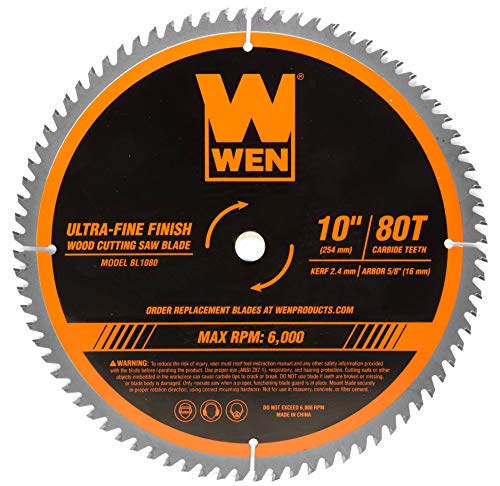
WEN’s BL1080 features an 80-tooth carbide-tipped design ideal for ultra-fine finish work on miter and table saws. It has a 10-inch diameter, a 5/8-inch arbor, and supports up to 6000 RPM. The ultra-thin 1/10-inch kerf minimizes material loss and reduces hustle on the motor, producing clean, precise crosscuts in soft and hardwoods alike. This blade suits finish carpentry, where smooth faces and tight joints matter most.
WEN BL1060 Fine-Finish Blade
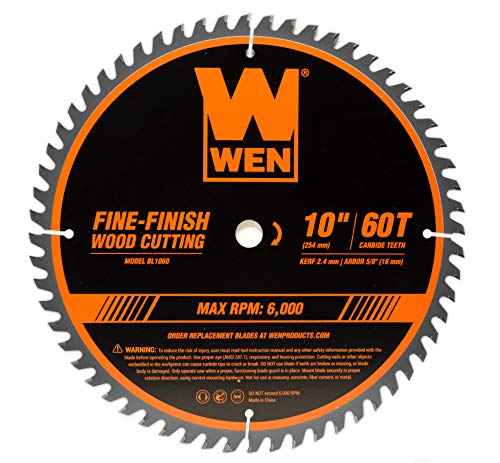
The BL1060 offers a similar finish-focused profile with 60 teeth on a 10-inch blade. Its 5/8-inch arbor and up-to-6000 RPM rating deliver smooth, controlled cuts for finish work. The technology emphasizes clean edges with reduced chipping on laminates and veneers, making it a solid option for trim, cabinetry, and decorative woodworking where edge quality is paramount.
Makita A-93681 Micro Polished 80T Blade

Makita’s A-93681 features a micro-polished, alternate top and face tooth design (ATAF) for ultra-precision cuts. Its Japanese ultra-thin kerf carbide-tipped construction reduces drag and provides smoother passes through both soft and hardwoods. Fully hardened and hand-tensioned steel plates contribute to consistent cuts, making this blade a strong choice for high-accuracy miter work and cabinetry where precision is critical.
Buying Guide
When selecting a compound miter saw blade, consider the following factors to match your project needs and saw compatibility:
- Tooth count and grind: Higher tooth counts (60–80T) excel at fine finishes, while lower counts (24–40T) cut faster through lumber with rougher edges. ATB (Alternate Top Beveled) vs. flat or combination grinds affect finish quality and chip resistance.
- Kerf width: Thin kerf blades remove less material, requiring less power and producing less waste, but they can flex more on heavy cuts. Standard kerf blades are sturdier for thicker boards and demanding jobs.
- Material compatibility: Carbide-tipped blades handle hardwoods and laminates well. TiCo blends or advanced carbides improve edge retention and long-term durability in demanding environments.
- Hook angle and cutting action: Negative or small hook angles reduce tear-out in delicate laminates and plywood, while positive angles may speed through solid stock but increase kickback risk if misused.
- Blade diameter and arbor size: Ensure the blade fits your miter saw’s diameter and arbor (commonly 5/8 inch). Larger blades increase cutting capacity but require sturdy saws to handle the load.
- Finish quality needs: For cabinetry, trim, and finish carpentry, blades designed for fine finishes and minimal chipping are preferable. For framing and rough cuts, durability and speed might be prioritized.
- Maintenance and safety: Always use the correct blade for the material, maintain proper blade alignment, and follow the tool’s safety guidelines to maximize precision and lifespan.
Across the featured blades, users gain options for high-precision finish work and efficient crosscuts with smoother edges. When selecting, balance blade durability, finish quality, and compatibility with your saw’s power and RPM rating to achieve consistent results on American-made wood projects.