As an Amazon Associate I earn from qualifying purchases. These links may earn this site a commission when you buy, at no extra cost to you.
Choosing the right circular saw blade for paneling—whether you’re working with plywood, OSB, or vinyl siding—can dramatically improve cut quality and reduce finishing work. The best blades combine thin kerfs, durable teeth, and proper arbor compatibility to deliver clean edges with minimal splinters. This guide highlights five top blades that excel at paneling tasks, backed by practical features like precision-ground teeth, carbide or high-carbon steel construction, and versatile arbor options. Each option balances speed, longevity, and cost to help you select a blade that fits common paneling projects.
| Product | Brand | Diameter & Teeth | Arbor | Ideal For |
|---|---|---|---|---|
| CRAFTSMAN CMAS2725140 | CRAFTSMAN | 7-1/4″ 140T | 1/4″? actually 7/8″? | Plywood, OSB, Plastic |
| Janchi 3-Pack 5-1/2″ 130T | Janchi | 5-1/2″ 130T | 5/8″ arbor | Plywood, OSB, Paneling |
| DEWALT DW9153 | DEWALT | 6-1/2″ 90T | 5/8″ arbor | Vinyl Cutting |
| FOXBC 6-1/2″ 90T | FOXBC | 6-1/2″ 90T | 5/8″ arbor | Paneling, Vinyl Siding |
| CRALY 6-1/2″ 140T | CRALY | 6-1/2″ 140T | 5/8″ arbor | Plywood, Paneling |
These blades are chosen for versatility across common paneling tasks, including trimming plywood to fit frames, grooving for panel joints, and slicing vinyl siding with minimal chipping. The list below presents five blades with strong cutting performance, good durability, and compatibility with standard 5/8-inch arbors found on most domestic circular saws. Each product is evaluated on tooth geometry, kerf width, and material construction to help you match your specific paneling project.
CRAFTSMAN 7-1/4″ 140T Fine Finish Blade

The Craftsman CMAS2725140 is built for precision and finish. Its fully-hardened plate helps maintain true cuts, while precision-ground teeth produce smooth, accurate results on plywood, OSB, and even lightweight plastics. The heavy-gauge carbon steel construction supports extended blade life, making it a solid option for finish work where clean edges matter. Ideal for paneling tasks that require tight tolerances and reduced post-cut sanding.
Janchi 3-Pack 5-1/2″ 130T Blade (5/8″ Arbor)

The Janchi blades emphasize a balanced approach to paneling projects. The 130 teeth and thin kerf support clean cuts with reduced resistance, helping to minimize heat buildup and wear. The tougher alloy steel construction helps the blades stay sharper longer, making them suitable for plywood, OSB, paneling, and vinyl siding. This 3-pack provides flexibility across multiple blades for various cut types and sheet sizes, with smooth cutting performance for longitudinal and cross cuts alike.
DEWALT 6-1/2″ 90T Vinyl Cutting Blade

The DEWALT DW9153 features a tungsten carbide formulation for extended edge retention, helping maintain sharp cuts over longer project runs. Its anti-stick coating minimizes friction and gum-up, delivering smoother cuts through paneling and vinyl applications. The thin kerf design supports fast, efficient cutting with less resistance, reducing motor load and improving overall cut quality on paneling projects.
FOXBC 6-1/2″ 90T Blade for Paneling

This FOXBC blade is designed with a 0.08″ kerf for fast, smooth paneling cuts. The 6-1/2″ diameter and 90 teeth provide a balance between precision and removal rate, making it suitable for paneling and vinyl siding work. The blade’s three-pack option adds value for users who want to keep spare blades on hand for varied sheet sizes and thicknesses while maintaining consistent results across cuts.
CRALY 6-1/2″ 140T Thin Kerf Blade

The CRALY blade pair emphasizes durability and fast cutting for paneling. With 140 teeth and a 5/8″ arbor, it uses a thin kerf (2.0 mm) to reduce material resistance and minimize burrs. High-hardness steel teeth deliver longer blade life and resistance to wear, making it well-suited for plywood, OSB, and vinyl siding applications where clean edges and minimal touch-up are key.
FOXBC 5-1/2″ 130T 3-Pack

The FOXBC 5-1/2″ blade set offers 130 teeth on a 5/8″ arbor, with both 1/2″ and 3/8″ bushings included for compatibility with different saws. The blades are designed for fast and smooth cutting of plywood, OSB, paneling, vinyl siding, and plastics. A three-pack ensures blades stay sharp across jobs, with improved edge quality and reduced splintering on paneling edges.
FOXBC 7-1/4″ 140T Finishing Blade
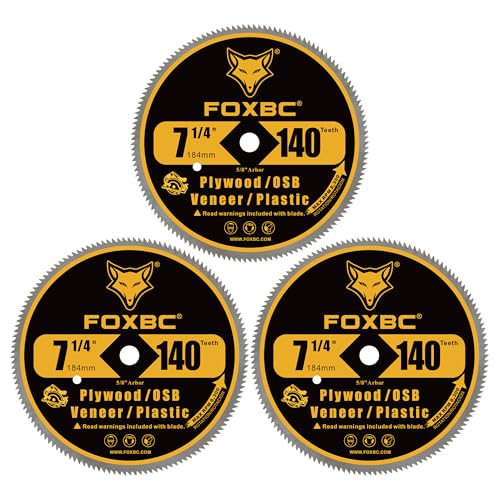
The FOXBC 7-1/4″ blade is targeted at finish-oriented paneling work. With 140 teeth and a 5/8″ arbor, it delivers clean, accurate cuts suitable for plywood, OSB, plastics, and veneers. The included 3-pack offers versatility for handling longer runs and multiple panels while minimizing tear-out and edge splinters on delicate surfaces.
FOXBC 5-3/8″ 78T Replacement Blade

This 5-3/8″ blade is a practical replacement option for paneling and vinyl siding tasks, featuring a 3/8″ arbor and 78 teeth. It’s designed for dependable, fast cutting with less chatter, making it suitable for quick paneling work and projects that require frequent blade changes while maintaining good edge quality.
Buying Guide
Key factors to consider when selecting a blade for paneling include diameter, number of teeth, kerf width, and arbor compatibility. Larger diameters (like 7-1/4″) deliver longer cuts with fewer passes, while higher tooth counts (90–140T) favor smoother finishes on panels and veneers. A thin kerf reduces material removal and can improve battery life on cordless saws, though it may wear faster in dense materials. Arbors must match your saw’s shaft size (commonly 5/8″ in consumer tools).
Material and tooth design influence durability and edge quality. Tungsten carbide blades retain sharpness longer but may carry a higher upfront cost, whereas high-carbon steel blades offer lower cost with adequate life for many home projects. Anti-stick coatings help reduce gum-up on vinyl siding and plastics, promoting consistent cuts. When cutting paneling, consider blades that minimize splintering on the underside and along edges, especially with veneers and fine plywood.
Blade packs provide value for projects with multiple panel types or repeated runs. If you frequently switch between plywood, OSB, and vinyl siding, a 2–3 blade assortment with different kerf and tooth counts can optimize performance and reduce downtime. Always follow manufacturer safety guidance, wear eye and hearing protection, and clamp paneling securely to ensure accurate, safe cuts.