As an Amazon Associate I earn from qualifying purchases. These links may earn this site a commission when you buy, at no extra cost to you.
The right fine-cut circular saw blade can deliver smooth, precise edges on plywood, hardwood, and laminates. This guide highlights five top options and explains what to consider when choosing blades for fine finishing work. All picks are suited for general wood cutting, crosscuts, and thin-kerf needs while aiming for extended blade life and consistent results.
| Product | Brand | Arbor | Tooth Count | Kerf | Notes |
|---|---|---|---|---|---|
| CRAFTSMAN CMAS2725140 | CRAFTSMAN | 5/8″ | 140 | Standard | Fine finish, hardened plate for true cuts |
| FOXBC 6-1/2″ | FOXBC | 5/8″ | 60 | Ultra-thin | Ultra-thin kerf for fast, smooth cuts |
| Diablo Ultra Finish 7-1/4″ 60T | Diablo | 5/8″ | 60 | Standard | Fine finish blade with quality carbide |
| Echo Corner 6-1/2″ | Echo Corner | 5/8″ | 48 | Standard | Fine finish, durable carbide tips |
| FOXBC 7-1/4″ | FOXBC | 5/8″ | 60 | Standard | Ultra finish, compatible with common saws |
CRAFTSMAN CMAS2725140 — 7-1/4 Inch 140 Tooth Fine Finish

The Craftsman CMAS2725140 is designed to maintain true cuts with a fully-hardened plate. Its precision-ground teeth aim for smooth, accurate cuts, contributing to extended blade life through a robust high-carbon steel composition. Ideal for plywood, OSB, and plastic where a fine finish matters.
FOXBC 6-1/2 Inch Ultra Fine Finish 60-Tooth
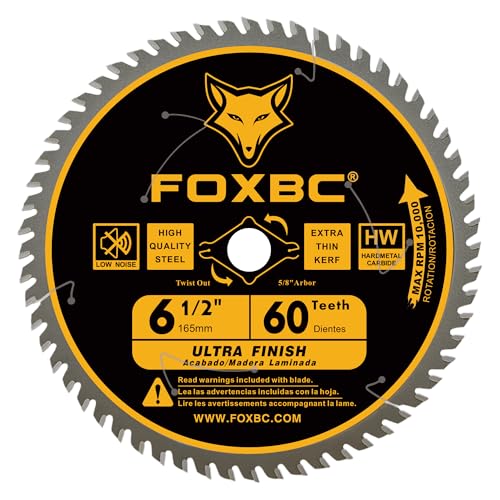
FOXBC’s 6-1/2″ ultra-thin kerf blade features 60 teeth for smooth crosscuts and fast, precise framing. The 5/8″ arbor makes it compatible with many corded and cordless circular saws, handling general purpose wood cutting including softwood, hardwood, plywood, and OSB with reduced resistance.
Diablo Ultra Finish Circular Saw Blade — 7 1/4″ 60T

Diablo’s Ultra Finish blade offers 7 1/4″ diameter and 60 teeth for a fine cut finish. While marketed primarily as a finish blade, it is built to deliver crisp crosscuts and clean edges on a variety of wood types, contributing to smoother refinished surfaces in cabinetry and trim work.
Echo Corner 6-1/2 Inch Fine Finish Wood Cutting Blade
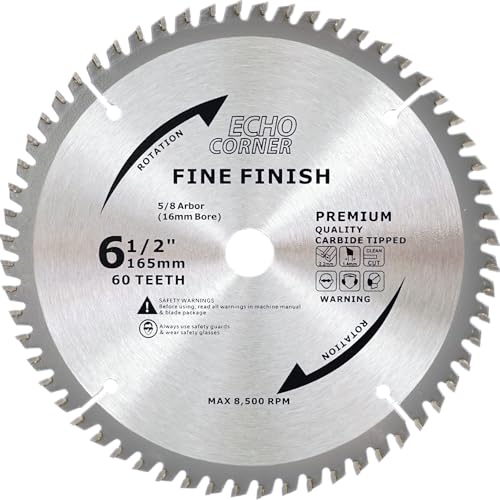
The Echo Corner 6-1/2″ blade emphasizes fine finish with a 60-tooth ATB configuration and a 5/8″ arbor. Its carbide-tipped teeth are designed for durability and long life, delivering clean crosscuts through plywood, MDF, and laminated panels with reduced chipping.
FOXBC 7-1/4 Inch Ultra Fine Finish 60-Tooth
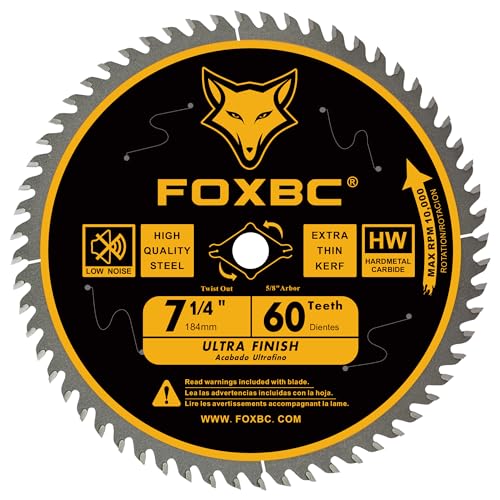
FOXBC’s 7-1/4″ blade is built for ultra-fine finish work with 60 teeth and a 5/8″ arbor. The tungsten carbide construction supports long wear life, offering smooth, precise cuts compatible with standard 7-1/4″ saws and is marketed as a reliable replacement for premium finish blades.
Buying Guide: Key Considerations For Fine-Cut Blades
Choosing a fine-cut blade depends on material, cut type, and tool compatibility. Consider these factors to optimize results and blade life.
- Tooth count and geometry: Higher tooth counts (40–80+) produce cleaner edges; ATB (alternating top bevel) teeth are common for fine finish. For crosscuts in plywood and laminates, aim for blades with 60 teeth or more.
- Kerf width: Thin kerf blades remove less material and reduce load on the saw, enabling faster, smoother cuts with less wobble.
- Blade material and coating: Carbide-tipped teeth last longer and stay sharp through hardwoods and plywood. Chrome or polished surfaces can resist corrosion and wear.
- Arbor compatibility: Most common cords use 5/8″ arbors; confirm your saw accepts the blade’s arbor size to ensure safe mounting.
- Coatings and edge quality: Some blades feature coatings to reduce friction and heat, which can help when cutting dense woods or plastics.
- Application fit: Separate blades often optimize for crosscuts, ripping, or mixed-material work. For fine finishes, prioritize crosscut blades with ATB geometry and minimal kerf.
- Material considerations: Plywood, OSB, MDF, hardboard, and laminates respond differently to blade geometry. For composite panels, look for blades that minimize splintering and chipping.
In practice, select blades that balance tooth count, kerf, and compatibility with your saw. For professional cabinetry or trim work, a dedicated fine-cut blade per material type can improve consistency and reduce finishing work later.