
Best Chargers for Electric Vehicles You Can Install at Home
Home EV charging is convenient, efficient, and often more affordable than public charging. The following selection focuses on Level 2 home chargers that balance speed, safety, and smart features. Each option supports common North American EVs with J1772 connectors and offers weather resistance for indoor or outdoor use. Below you’ll find concise product highlights, practical considerations, and a buying guide to help you compare models side by side.
| Product | Brand | Max Current | Cable | Mounting | Smart Features |
|---|---|---|---|---|---|
| EVIQO Level 2 48 Amp | EVIQO | 48 A | 25 ft | Wall | App control, OTA updates, schedules |
| ChargePoint HomeFlex | ChargePoint | Up to 50 A | 25 ft | Wall | Mobile app, network access, Smart features |
| NexCyber Level 2 EV Charger | NexCyber | Up to 48 A | 25 ft | Wall | J1772, ETL/FCC, app control |
| AIMILER Level 2 EV Charger | AIMILER | 32 A | 25 ft | Wall | Wi‑Fi/app, safety certifications |
| Autel Home Smart EV Charger | Autel | Up to 50 A | 25 ft | Wall | Wi‑Fi, Bluetooth, weatherproof |
EVIQO Level 2 48 Amp EV Charger
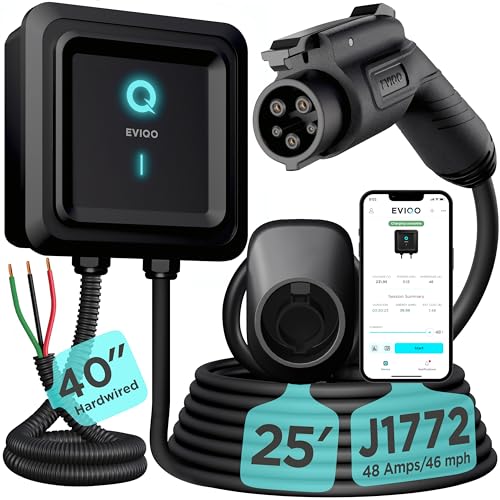
The EVIQO Level 2 48 Amp EV Charger delivers substantially faster home charging capabilities by providing up to 11.5 kW when connected to a suitable 60 Amp circuit. It is UL, Energy Star, ETL, and FCC certified, with a rugged IP66/NEMA 4 housing suitable for outdoor or indoor use. The unit supports adjustable current in 1 Amp increments via the app and a hardware dip switch, allowing customization for different electrical setups. A 25-foot charging cable enhances convenience for wall installations under various garage configurations. The charger emphasizes safety with multiple certifications and features an extended 3-year warranty, backed by US-based support. Smart app scheduling helps users optimize charging during off-peak hours and monitor energy usage in real time.
Key considerations: Installation usually requires a dedicated, high-amperage circuit; ensure wiring and breaker capacity align with local code. The included app and OTA updates add long-term value. For homes with limited space or outdoor exposure, verify the mounting hardware and weatherproof rating match your location’s climate. The 11.5 kW capability is a compelling choice for households with faster EVs or higher daily driving needs, but it may be overkill for drivers who mainly do short commutes.
ChargePoint HomeFlex Level 2 EV Charger

ChargePoint HomeFlex is designed for flexible, high-speed home charging with a maximum capability often cited around 50 A. It emphasizes a robust North American network, 24/7 support, and seamless app-driven control. The accompanying mobile app allows users to monitor charging status, set reminders, and manage smart-home integrations, with data access for ongoing energy management. While WiFi may be required for certain features, the expansive network adds reliability for users who travel and rely on ChargePoint’s growing station footprint. The system is engineered for easy installation in residential settings and is known for its strong customer support and software updates.
Key considerations: A stable WiFi connection improves feature access, especially for app-based controls and remote monitoring. Network familiarity and compatibility with smart home devices can enhance day-to-day usage. If you frequently drive to locations with ChargePoint compatibility, the extensive network can improve trip reliability. Consider installation constraints and whether a professional is needed to confirm electrical capacity, grounding, and weatherproofing requirements.
NexCyber Level 2 EV Charger (WiFi App/Plug-Play)

NexCyber’s Level 2 EV Charger provides up to 48 A of charging current, configurable through NEMA 14-50P plug or hardwired connections. The unit emphasizes broad compatibility with J1772 connectors for most non-Tesla EVs, with a note that some Tesla models may require an adapter. It carries ETL and FCC certification and a three-year warranty. The device is designed to be installed by professionals for optimal safety and performance. A 25-foot cable length helps accommodate various garage layouts, and the product highlights emphasize safety standards and compliance with relevant SAE and UL standards.
Key considerations: If you own a Tesla, plan for a J1772-to-Tesla adapter since Tesla cars typically use a different connector. Confirm the circuit and wire gauge to support 48 A charging, as well as mounting space near the parking area. The product’s WiFi connectivity enables remote monitoring and firmware updates but may require network setup. Consider the importance of a robust app ecosystem in your charging routine and whether the included features align with your usage patterns.
AIMILER Level 2 EV Charger (WiFi App)/Plug‑Play

AIMILER’s Level 2 charger offers 32 A output with a 25-foot cable and a 240V NEMA 14-50P plug. It features a user-friendly app, WiFi connectivity, and the ability to adjust current from 16 A to 32 A. The product highlights emphasize ETL and FCC listings and a practical 6x faster charging compared to Level 1 options. It is designed for home use with safety certifications and compatibility with a broad range of non-Tesla EVs via J1772, noting that a Tesla may require an adapter. The packaging and setup cater to quick, plug-and-play installation with remote firmware updates via the app.
Key considerations: The adjustable amperage provides flexibility for different electrical circuits. Ensure the outlet or breaker you plan to use can support the higher current, and verify the adapter requirements for any Tesla vehicles. The app features can help track charging history and consumption, which is useful for budgeting and energy planning. Installation should comply with local electrical codes, and professional installation is advisable for optimal safety.
Autel Home Smart EV Charger

Autel’s Home Smart EV Charger delivers up to 50 A charging with a 25-foot cable, designed for both indoor and outdoor installation. The unit emphasizes safety with CSA certification and NEMA Type 4 weatherproof rating, enabling reliable operation in diverse weather conditions. Wi-Fi and Bluetooth connectivity support remote monitoring, scheduling, and firmware updates, ensuring the charger remains current with evolving charging standards. The design prioritizes speed and resilience, making it a practical option for households seeking a high-capacity Level 2 solution with strong companion app features.
Key considerations: Consider how often you’ll leverage remote features like scheduling or cost-tracking. Ensure your electrical panel supports 50 A charging, including wire gauge and circuit protection. The weatherproof rating adds value for outdoor installations, but verify your installation location and mounting space. For users who value image-centric app interfaces and robust customer support, Autel’s ecosystem may be appealing.
Buying Guide: Key Purchase Considerations And Comparisons
- Charging speed and circuit requirements: Level 2 chargers typically operate from 16 to 50 A. Higher amperage means faster charging but requires appropriate circuit capacity (breaker, wiring, and electrical panel). Determine present and future needs based on your EV’s onboard charger and daily driving patterns.
- Connector compatibility: Most non-Tesla EVs use J1772 connectors. Tesla drivers may require adapters to use a J1772-based charger. Confirm compatibility with your vehicle model before purchasing.
- Smart features and app integration: Many chargers offer scheduling, energy-use tracking, reminders, and remote troubleshooting through a companion app. A stable WiFi connection improves feature reliability. Consider whether you want roaming network access or home-only operation.
- Weather and installation considerations: Outdoor-ready units with NEMA 4/IP66 protection and weatherproof enclosures reduce weather-related maintenance. Ensure proper mounting, cable management, and proximity to parking space for convenient charging.
- Certifications and safety: UL, ETL, FCC, and Energy Star ratings indicate compliance with safety and efficiency standards. Look for protections such as overcurrent, leakage, and temperature safeguards, along with manufacturer warranties.
- Network of charging locations: If you travel often to use public chargers, a brand with a broad charging network (like ChargePoint) can enhance reliability and convenience. Consider how network access aligns with your travel habits.
- Installation considerations: Some models recommend professional installation to ensure electrical safety and optimal performance. Assess local permit requirements, electrical codes, and potential incentives or rebates for upgrading home charging equipment.
- Future-proofing: OTA firmware updates and modular features help extend the charger’s usable life. If you anticipate waveform changes or feature expansions (like smart grid integration), prioritizing a charger with regular updates can be beneficial.