
Best Cattle Electric Fence Chargers for Predator Control and Livestock Containment
Electric fence chargers are essential tools for protecting cattle, goats, horses, and other livestock from predators while keeping your land secure. The following selections cover AC-powered, solar, and high-energy options suitable for large pastures, weed-heavy fencing, and varied terrain. Each product is chosen for reliability, coverage, and user-friendly features to help you compare options quickly.
Summary of selected products:
| Product | Type | Coverage | Key Benefit |
|---|---|---|---|
| Zareba 50 Mile AC-Powered | AC | Up to 50 miles in ideal conditions; up to 6 miles in heavy weeds | Broad compatibility with fence types |
| 9J Electric Fence Charger Energizer | AC/DC 2-in-1 | Up to 20 miles | LCD display and remote alarm |
| 15.5J AC/DC Fence Charger | AC/DC 2-in-1 | Up to 600 acres | Remote and alarm features |
| Upgrade 20 Miles Solar Fence Charger | Solar | Up to 20 miles; 14-day non-sun operation | Short-circuit alarm |
| Electric Fence Charger 100 Miles | AC | 100 miles/300 acres | High-voltage, durable design |
Zareba 50 Mile AC-Powered Low Impedance Charger

The Zareba EAC50M-Z is designed for robust pasture management with heavy weed conditions. It energizes up to 50 miles in ideal conditions and up to 6 miles when weeds are present. This AC-powered charger supports all fence types, including high-tensile, polywire, and polytape, making it a versatile choice for cattle operations, as well as pigs and horses. The unit’s low-impedance output ensures a reliable shock that discourages escape and predator intrusions while maintaining safety standards for livestock.
9J Electric Fence Charger Energizer

The 9J model combines AC and DC capabilities in a 2-in-1 system with a 12V input and 12KV output. It delivers 9 joules of energy and features an LCD display and remote alarm to monitor fence health and alert operators to potential issues. Ideal for deterring predators and containing cattle, cows, and other livestock, it requires proper grounding (1-3 steel bars at 1.5 meters) to maintain peak performance and prevent contact hazards. This charger suits farms needing a visible status readout and quick response tools.
15.5J AC/DC Fence Charger
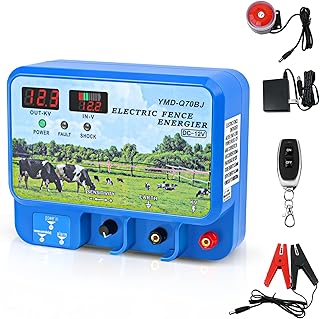
The 15.5J model offers strong energy output with remote and alarm features for predator deterrence and livestock containment. It supports both AC and DC inputs, making it flexible for different farm setups. With robust design and higher joule output, it is suitable for larger properties and operations that require reliable performance over multiple fence circuits.
Upgrade 20 Miles Solar Fence Charger

This solar-powered charger focuses on continuous protection with a built-in short-circuit alarm. It stores energy in a large-capacity battery and can run up to 14 days without sunlight when fully charged. Output ranges from 5700 to 10200 volts, with 0.32 joules of energy, providing a reliable deterrent against predators while keeping livestock secure in off-grid locations. The system is ideal for remote fields or properties with ample sun exposure and limited electrical infrastructure.
Electric Fence Charger AC Powered 100 Miles
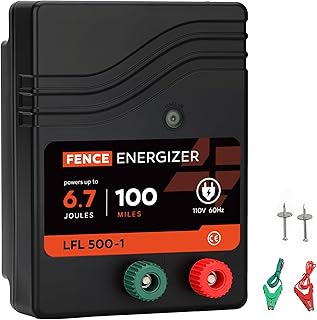
The 100 Miles AC-powered charger is designed for wide-area coverage, capable of electrifying 100 miles or 300 acres. It supports heavy-duty livestock protection, including cattle and horses, while deterring predators. The device features a durable exterior with a built-in lightning arrester and flexible mounting options for T-posts or stakes. It delivers relatively high pulse voltage and emphasizes reliability for large farms and distributed fencing networks.
Buying Guide
Key considerations when choosing a cattle fence charger include coverage area, weed resistance, power source, and fence compatibility. Here are factors to guide your decision:
- Coverage and weed conditions: If your fencing runs through dense weed growth, opt for high-impedance or low-impedance models tested for weed tolerance. Units rated for heavy weed conditions will deliver effective protection with reduced energy loss.
- Power source: Choose between AC-powered, DC, or solar chargers based on land access and infrastructure. Solar options are ideal for remote locations but require sun exposure and battery maintenance. AC units are typically more powerful and consistent when electrical wiring is available.
- Fence compatibility: Ensure the charger supports your fence types (high-tensile wire, polywire, polytape) and the total length you need to energize. Some models offer universal compatibility across fence types.
- Energy output and joules: Higher joule output provides stronger shock, which can deter predators more effectively. Balance energy needs with safety and livestock tolerance to avoid unnecessary risk.
- Monitoring features: LCD displays, remote alarms, and short-circuit alerts help you maintain fence performance with minimal downtime. These features are especially valuable on larger properties.
- Durability and weather resistance: Look for rugged housings, weatherproof seals, and lightning protection for outdoor installations to minimize maintenance.
When evaluating a system, consider how often you must upgrade or service the unit, the ease of installing grounding rods or stakes, and whether you need multi-fence coordination. A well-chosen charger should deliver reliable performance across seasons, provide clear indicators of fencing status, and require minimal daily attention.