
Best Brazing Rods for Copper Pipe: Top Picks for 2025
Choosing the right brazing rods is essential for reliable copper pipe work in HVAC and plumbing. The right rods offer good fluidity, strong joints, and easy handling for both beginners and professionals. This guide highlights five well-regarded options, detailing their materials, sizes, and applications to help you pick the best fit for your projects.
| Product | Brand | Rod Type / Size | Key Benefit |
|---|---|---|---|
| Fox Alloy BCuP-2, 20 pcs | Fox Alloy | 2.0 mm / 5/64″ | Self-fluxing, low temp, good flow |
| CADHENA 1/13″ x 13.78″ (20 rods) | CADHENA | 1/13″ x 13.78″ | Beginner-friendly, wide application |
| UCandy 0.050″ x 1/8″ x 10″ | UCandy | 0.050″ x 1/8″ x 10″ | Low melting point, good gap-filling |
| Vouyar 40 Sticks, 2 mm | Vouyar | 2 mm diameter, 250 mm long | High tensile strength, strong seals |
| Bernzomatic Copper-Phosphorous, 3-piece | Bernzomatic | Standard rods, 12″ length | Refrigeration, electrical and plumbing use |
Below are detailed examinations of five leading brazing rods commonly used for copper piping, focusing on composition, operating temperatures, and typical applications. Each product section follows with practical usage notes and considerations to aid in selecting the right option for specific jobs.
Fox Alloy BCuP-2 Copper Brazing Rods – 20 Pieces
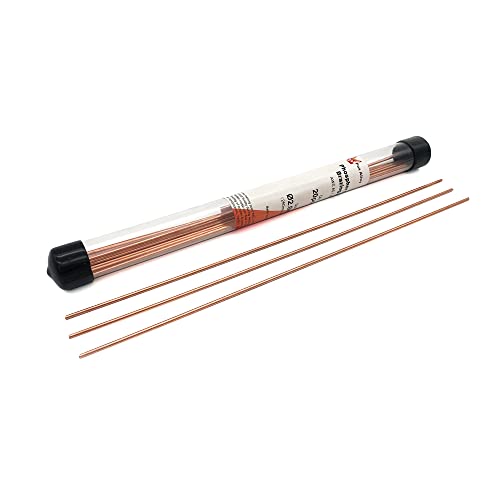
Material: 20 rods of 2.0 mm diameter (5/64″). This kit complies with AWS A5.8 and uses a low-temperature phosphor copper composition. It offers good fluidity and flows into small gaps, aiding tight joints. The lower melting range (640-770°C) makes it suitable for air conditioners and refrigeration applications where heat control is important. The self-fluxing property simplifies preparation and helps produce clean seals with minimal flux management.
CADHENA 1/13″ Brazing Rods, 20 Pieces

Material: 20 rods, 1/13″ diameter, 13.78″ length. Easy to use with a brazing temperature range of 1310-1508°F. The rods are designed to provide a strong, leak-free weld and are suitable for a wide range of copper and copper alloy brazing tasks in motors, plumbing, and refrigeration. A note mentions using silver flux for copper alloys. Composition favors phosphor and copper with minimal impurities to ensure stable flow and strong joints.
UCandy 20 Sticks BCuP-2 Copper Brazing Rods

Material: 20 rods, 0.050″ x 1/8″ x 10″. Low-temperature phosphor copper brazing rods with easy installation and removal. Molten metal flows into small gaps for reliable joints. Melting point is in the 640-770°C range, supporting efficient work. Applications span copper and copper alloy brazing in motors, ventilation, and refrigeration, including DIY projects. The formulation emphasizes good flow and fusion, enabling solid seals with modest equipment.
Vouyar 40 Sticks BCuP-2 Copper Brazing Rods

Material: 40 rods per tube, 2 mm diameter, 250 mm length. Features a low melting point of 640-770°C with good fluidity and strong tensile properties to form hermetic seals. The round sticks are easy to handle and identify, which helps streamline tubing work, especially in HVAC installations and pipe repairs where consistent flow and strong bonds are essential.
Bernzomatic Copper-Phosphorous Brazing Rods

Material: Copper-phosphorous brazing rods designed for refrigeration, electrical, and plumbing tasks. Typically supplied as 12-inch rods and noted for tensile strength around 40,000 psi. This makes them a robust option for structural copper joints and longer runs where durability matters. They are suited to professional HVAC work requiring reliable, corrosion-resistant joints and consistent performance across multiple brazing sessions.
Buying Guide: Key Purchase Considerations
- Rod diameter and length: Smaller diameters (around 1/16″ to 2 mm) are ideal for tight spaces and small-diameter copper tubes, while longer rods support continuous seams in larger work.
- Flux type: Self-fluxing rods save flux preparation time and reduce mess, but some joints benefit from dedicated flux (especially for copper alloys).
- Melting and flow: Look for a low-to-mid melting range (roughly 640-770°C) for easier control on delicate assemblies and to minimize warping around fittings.
- Joint suitability: Ensure the rod composition (Cu-P or Cu-P-Cu alloys) matches the copper tubing and any specific alloy requirements in your project.
- Certification and standards: AWS A5.8 (CuP-2) compatibility is a useful indicator of performance and compatibility with typical HVAC and refrigeration joints.
- Flux requirements: Some rods are strictly self-fluxing; others perform best with flux for certain metals. Consider the joint materials and cleanliness of surfaces when choosing.
- Application scope: Industrial HVAC installations, residential plumbing, and DIY projects may benefit from different rod strengths and formulations. Review recommended applications on product pages to match your task.
- Handling and safety: Brazing rod fluxes and fumes can irritate eyes and lungs. Use in a well-ventilated area and wear appropriate PPE (gloves, eye protection).
This selection provides a range of copper brazing rods suitable for HVAC, refrigeration, and plumbing projects. When choosing, balance ease of use, joint strength, compatibility with copper alloys, and the operating conditions of your work environment. All listed options are commonly used by professionals and hobbyists alike for dependable, durable copper pipe joints.