As an Amazon Associate I earn from qualifying purchases. These links may earn this site a commission when you buy, at no extra cost to you.
Bi-metal reciprocating saw blades combine toughness and flexibility to tackle metal, nails, pipes, and thick wood. This guide highlights five top options, chosen for performance, durability, and value. Whether you’re a professional contractor or a weekend DIYer, selecting the right blade can speed up cutting tasks and extend blade life. The products below cover a range of metal cutting needs from heavy demolition to precise nail-embedded wood work, with attention to tooth configuration, blade length, and heat management.
| Product | Brand | Length | Tooth | Key Benefit |
|---|---|---|---|---|
| DEWALT Reciprocating Saw Blades, Straight Back, Bi-Metal | DEWALT | 6 Inch | 24 TPI | Durable bi-metal design for longevity and flexibility |
| TOLESA Heavy Metal Cutting Blades, 9 Inch | TOLESA | 9 Inch | 14 TPI | Efficient metal cutting with high-density teeth |
| LOZAGU 6-Piece Metal Blades, 9″/14 TPI | LOZAGU | 9 Inch | 14 TPI | Balanced heat dissipation for heavy metal work |
| ELEAD 10-Piece Bi-Metal Set | ELEAD | 6 & 8 Inch Options | 6–18 TPI (varies by blade) | Versatile set for wood and metal with storage |
| Diablo DS0912BW25, Nail-Embedded Wood | Diablo | 9 Inch | 4/6 TPI | Designed for nail-embedded wood with durable bi-metal edge |
DEWALT Bi-Metal 6-Inch 24 TPI Blades

DEWALT’s 6-inch bi-metal blades offer a sturdy backbone with a flexible body to resist bending under load. The 24 TPI count enables faster cutting in metal and wood alike, while the bi-metal construction helps maintain a sharp edge even after heavy use. The blades are described as made in the U.S. with global materials, emphasizing a focus on durable engineering. These blades are suitable for demolition tasks that require robust performance and a reliable cutting edge.
TOLESA 9-Inch Bi-Metal Blades for Metal

TOLESA’s 9-inch, 14 TPI bi-metal blades are built for heavy metal work, including sheet metal, pipes, and profiles. The design emphasizes a thin-wall 0.9 mm and a set-teeth configuration to reduce heat buildup, enabling longer cutting sessions with improved efficiency. The high-density teeth deliver faster cuts compared with standard bi-metal blades, making them suitable for demolition tasks where speed matters and blade life is a concern.
LOZAGU 9″ Bi-Metal Blades for Metal

LOZAGU’s 9-inch blades are designed for metal pipe, sheet metal, and structural profiles up to 7 inches in diameter. They feature a reinforced cobalt edge for better heat resistance and a 0.9 mm thin wall with staggered teeth to reduce friction. The 14 TPI configuration supports faster, more controlled cuts with steady blade life even during prolonged demolition work.
ELEAD 10-Piece Bi-Metal Set
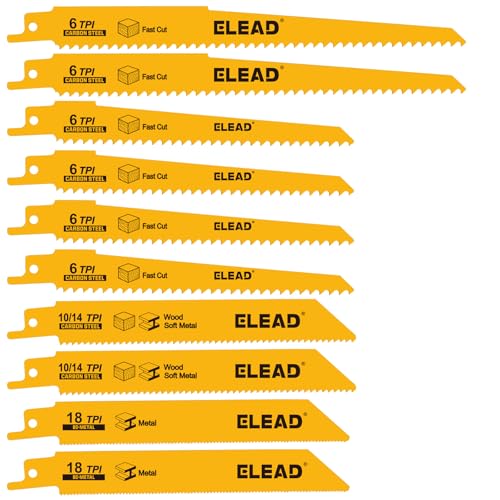
The ELEAD kit provides a versatile mix of blades suitable for wood and metal cutting. It includes two 6-inch metal blades (18 TPI), several 6- and 8-inch wood blades (6 TPI and 10–14 TPI ranges), and a storage box for organization. The bi-metal construction and carbon steel elements are designed to deliver durability across various materials while maintaining sharpness across multiple uses. This set is ideal for users who need a broad blade repertoire in one purchase without swapping blades frequently.
Diablo Nail-Embedded Wood Bi-Metal Blades
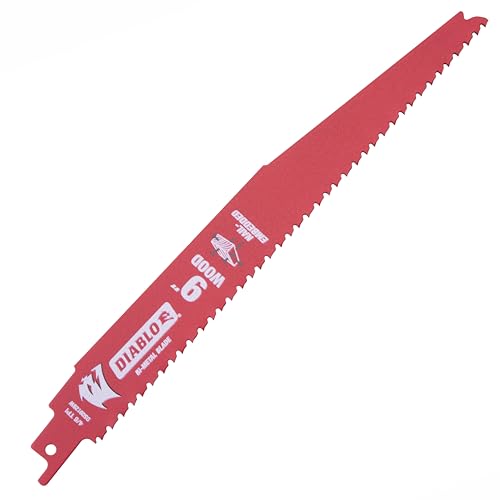
Diablo’s 9-inch bi-metal blade is specifically designed for nail-embedded wood. It features a durable bi-metal construction and a dual-tooth design (4/6 TPI) to address tougher materials while maintaining faster cutting speeds. The Full Contact Arched Edge Design further enhances performance by delivering cleaner cuts in fewer passes, reducing vibration and improving overall material removal. This blade is well-suited for remodeling projects where nailed boards and framing are common.
Buying Guide: Key Considerations For Bi-Metal Reciprocating Saw Blades
Choosing the right bi-metal blade depends on the material you’ll encounter and the work environment. Here are essential factors to consider:
- Blade length and tooth count: Longer blades (8–9 inches) with higher TPI (12–24) cut metal and nails more smoothly, while lower TPI blades (6–10) are often better for wood and mixed tasks. Consider a mix of lengths if you work with both metal and wood.
- Tooth configuration and material: Bi-metal blades use a hardened steel tooth welded to a flexible steel body. A cobalt edge or reinforced teeth helps with heat resistance and minimizes tooth wear when cutting through thick metal or nails.
- Heat management: Thin-wall designs and staggered teeth reduce heat buildup, which prolongs blade life and reduces warping during long cuts.
- Durability vs. flexibility: The best blades strike a balance between rigidity for straight cuts and flexibility to resist snags and bending in challenging materials.
- Specialized applications: Some blades are optimized for nail-embedded wood or heavy demolition. If you frequently encounter nails or cast iron, prioritize blades with a full-penetration edge design and robust bi-metal construction.
- Blade life and cost: Higher-quality bi-metal blades may cost more upfront but offer longer service life in demanding tasks. For frequent use, a multi-pack with varied tooth counts can reduce downtime and blade changes.
- Compatibility: Ensure blade length and shank fit match your reciprocating saw model. Most blades use a standard T-shank or universal shank compatible with common tools.
When evaluating options, consider a mix of 9-inch blades for metal-heavy tasks and a few 6-inch options for tight spaces or wood cutting. For projects involving nails, nails-embedded wood, or mixed-material cuts, blades with reinforced edges and optimized tooth geometry tend to perform more consistently under load. Always follow safety guidelines, wear protective gear, and secure materials before cutting.